
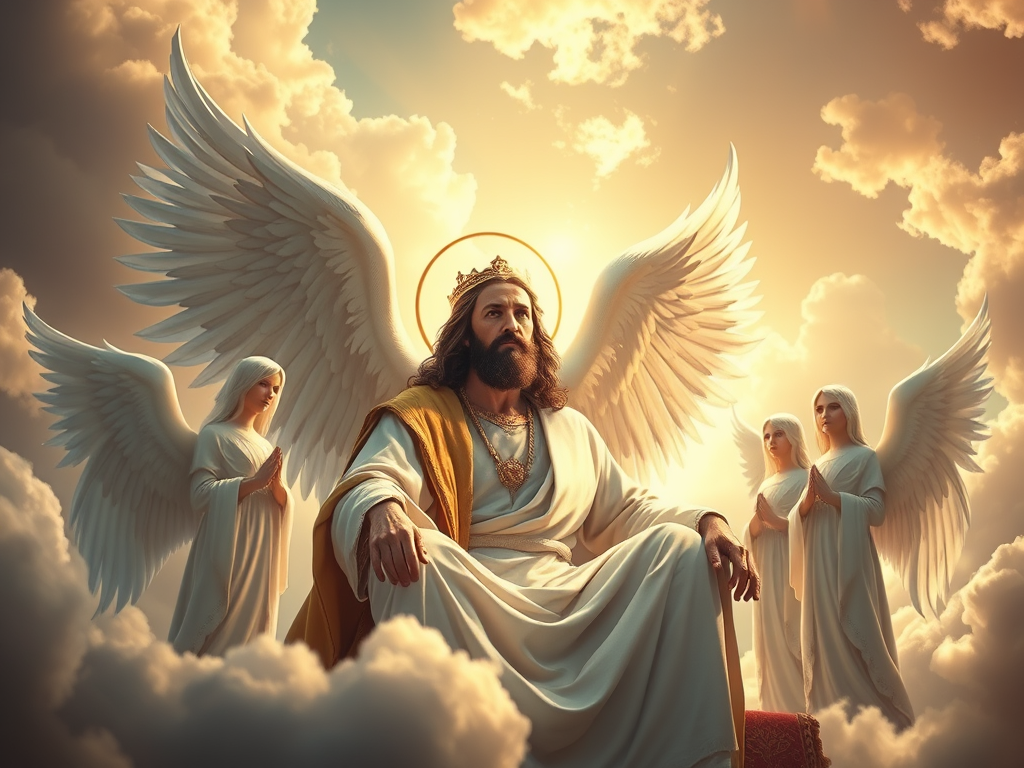
At first glance, Hebrews 1 can feel unnecessary.
To a modern reader, it sounds obvious:
Of course Jesus is greater than angels.
But to a first-century Jewish audience, this comparison was not redundant—it was essential.
The author is not downgrading Jesus.
He is dismantling an entire religious framework that placed angels at the center of how God related to Israel.
1. Angels Were Central in Jewish Covenant Thinking
In Second Temple Judaism, angels were not background figures.
They were believed to be:
- Present at Sinai when the Law was given
- Mediators of divine revelation
- Executors of judgment and providence
- Guardians of nations and cosmic order
Scripture itself affirms this perspective:
“The law was ordained through angels by the hand of a mediator.” (Galatians 3:19)
“You received the law as delivered by angels.” (Acts 7:53)
So in the Jewish mind:
- Law = angels
- Covenant = mediated through angels
- Authority = angelic administration
If Jesus is announcing a new covenant, the question naturally arises:
Does He stand above the angelic order that governed the old one?
2. The Comparison Is About Covenant Authority, Not Power
The author is not asking:
“Is Jesus stronger than angels?”
That would miss the point.
He is asking:
Who has the right to rule the age to come?
Angels were associated with:
- The administration of the Mosaic covenant
- The governance of the old creation order
But Hebrews is announcing something radical:
The old order has ended.
A new creation has begun.
And that requires a new governing authority.
The Son is not another messenger in the system.
He replaces the system entirely.
3. Angels Stand — The Son Sits
One of the strongest contrasts in Hebrews 1 is posture.
- Angels are described as ministering spirits
- The Son is invited to sit at God’s right hand
This is not poetic flourish—it is theological precision.
Standing means:
- Ongoing service
- Incomplete work
- Subordinate authority
Sitting means:
- Finished work
- Royal authority
- Covenant finality
If angels were sufficient, the Son would still be standing.
But the Son sits because:
Nothing remains to be added.
4. The Comparison Guards Against Regression
Hebrews is written to believers under pressure.
Pressure to:
- Return to temple structures
- Re-embrace angelic mediation
- Trust visible religious systems
Some Jewish traditions even emphasized angelic intermediaries as safer than approaching God directly.
The author’s response is decisive:
You don’t move forward by going backward.
You don’t improve Christ by adding angels.
To return to angelic mediation would be to:
- Step down from sonship
- Trade inheritance for servanthood
- Leave the throne room for the outer court
5. The Son Is Not a Messenger — He Is the Message
Angels speak words from God.
The Son is the Word.
This is why Hebrews opens with:
“God has spoken to us by His Son…”
Not through another agent.
Not via a celestial hierarchy.
The Son is:
- God’s final speech
- God’s full self-disclosure
- God’s reigning authority
Once the Son has spoken, no further mediation is needed.
Final Summary
The author compares Jesus to angels because:
- Angels represented the authority of the old covenant
- The audience needed assurance that Christ surpasses that system
- The new creation requires a new throne
- The Son reigns where angels only serve
Hebrews is not minimizing angels.
It is ending their central role.
The message is simple but revolutionary:
The age of servants has given way to the reign of the Son.
And those in Him inherit what servants never could.
Continue reading
Related reading:


Leave a Reply