
The Claim vs. the Reality
If you listen to modern revivalist preachers, you might think “praying for God to come” has been the heartbeat of the church for 2,000 years.
But the truth? This idea is not in the New Testament, not in the writings of the early church fathers, and not in Christian practice until recent centuries.
Revivalism is not an apostolic inheritance — it’s a modern innovation.
1st Century — The Apostolic Era
From Acts to Revelation, the church lived with a settled conviction: God had already acted decisively through Christ’s death, resurrection, and the giving of the Spirit at Pentecost.
- Acts 2: The Spirit comes once for all, fulfilling Joel’s prophecy. From then on, believers are indwelt — no second “Pentecost” is sought.
- Acts 4:29–31: In the face of threats, they pray for boldness, not for God to “show up.”
- Ephesians 1:3: Paul declares believers are already blessed with every spiritual blessing.
- 1 Corinthians 3:16: Believers themselves are the temple — no need to invite God into the room.
The early church prayed for endurance, clarity, love, and boldness — never for God to come or for “revival” as we define it today.
2nd–3rd Century — The Post-Apostolic Fathers
Writers like Ignatius, Polycarp, Justin Martyr, and Irenaeus:
- Defended the gospel against heresy.
- Called believers to live holy lives.
- Encouraged perseverance under persecution.
Their writings are filled with Scripture, exhortations to obedience, and reminders of the Spirit’s empowering presence.
There is no hint of recurring prayers for God to pour out His Spirit again or to “send a move.”
4th Century and Beyond — Institutional Christianity
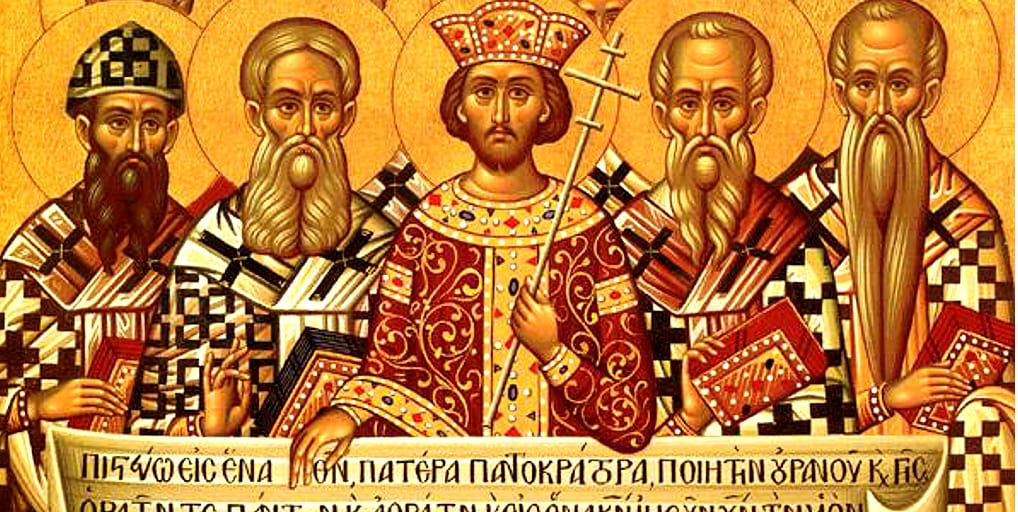
After Constantine’s conversion (4th century), Christianity became a legal and then official religion of the empire. The church shifted toward formal liturgy, councils, and theological debate — not revival campaigns.
The Spirit’s indwelling was assumed; public worship focused on thanksgiving for salvation, not on begging for God to visit.
The Birth of Revivalism — 18th–19th Century
Modern revivalism emerged during the First Great Awakening (1730s–40s) and Second Great Awakening (early 1800s).
- Preachers like Jonathan Edwards spoke of extraordinary seasons of conviction — but these were understood as God’s sovereign acts, not as something we could produce on demand.
- Charles Finney took it further, teaching that revival was “not a miracle” but the result of using the right measures — a shift toward human-controlled outcomes.
From here, “God will move when we…” language entered evangelical vocabulary. The concept of “praying for revival” became a regular church practice — something the apostles never modeled.
20th–21st Century — Charismatic and Pentecostal Influence
In Pentecostal and charismatic movements, revivalist thinking merged with manifest presence theology:
- Songs began to say “Come, Holy Spirit” to people already indwelt by Him.
- “Fire nights,” “outpourings,” and “fresh moves” became central events.
- The assumption took hold that God’s presence comes and goes depending on our spiritual condition.
This is a total departure from New Testament reality.
Why This Matters
If revivalist teaching wasn’t part of the apostles’ doctrine or the early church’s practice, it means:
- It’s not essential to the Christian life — the church thrived for centuries without it.
- It risks undermining what Christ has already accomplished.
- It replaces daily Spirit-filled obedience with chasing emotional highs.
The Bottom Line
From the day of Pentecost onward, the early church never prayed for revival or for God’s presence to “come.” They lived and acted from the reality that He was already with them.
Modern revivalism is not a return to biblical Christianity — it’s a recent invention, born in the 18th–19th centuries, amplified in the 20th, and now normalized in church culture.
The church doesn’t need to “get back” to revival.
It needs to get back to the gospel.
Continue reading
Related reading:

Leave a Reply