
Introduction: Who Is My Neighbor?
The other day I was reading the parable of the Good Samaritan to my son.
I’ve read it countless times before. I know the story almost by heart. But this time something struck me that I hadn’t felt quite so deeply before.
Perhaps it’s because of the world we live in today.
Everywhere we look, people are dividing themselves into groups. We naturally gravitate toward people who look like us, think like us, vote like us, worship like us, speak like us, or were born where we were born. Before long, we begin believing that our group deserves more compassion than everyone else.
I’ve seen racism disguised as patriotism.
I’ve seen nationalism become an excuse for hatred.
I’ve seen immigrants blamed for problems they never created.
I’ve seen people refuse to help others simply because they belonged to a different religion, ethnicity, denomination, or political party.
What saddens me even more is seeing these attitudes among Christians.
I’ve lost count of how many times I’ve read hateful, racist comments online only to discover that the person’s profile proudly declares, “Jesus is King.”
It makes my heart ache.
Because Jesus never taught us to build higher fences.
He taught us to become better neighbors.
The Man Had Nothing in Common with the Samaritan
When Jesus told the story (Luke 10:25–37), the man lying on the roadside wasn’t introduced by his nationality, political beliefs, race, or religion.
He was simply a wounded man.
And the Samaritan was simply someone who stopped.
This is remarkable because Jews and Samaritans despised one another.
Centuries of ethnic, religious, and cultural hostility divided them.
A Samaritan had every social reason to keep walking.
He could have said:
“He’s not one of us.”
“Someone from his own people will help him.”
“Our communities don’t get along.”
“Why should I risk my life for someone who would probably reject me?”
Instead…
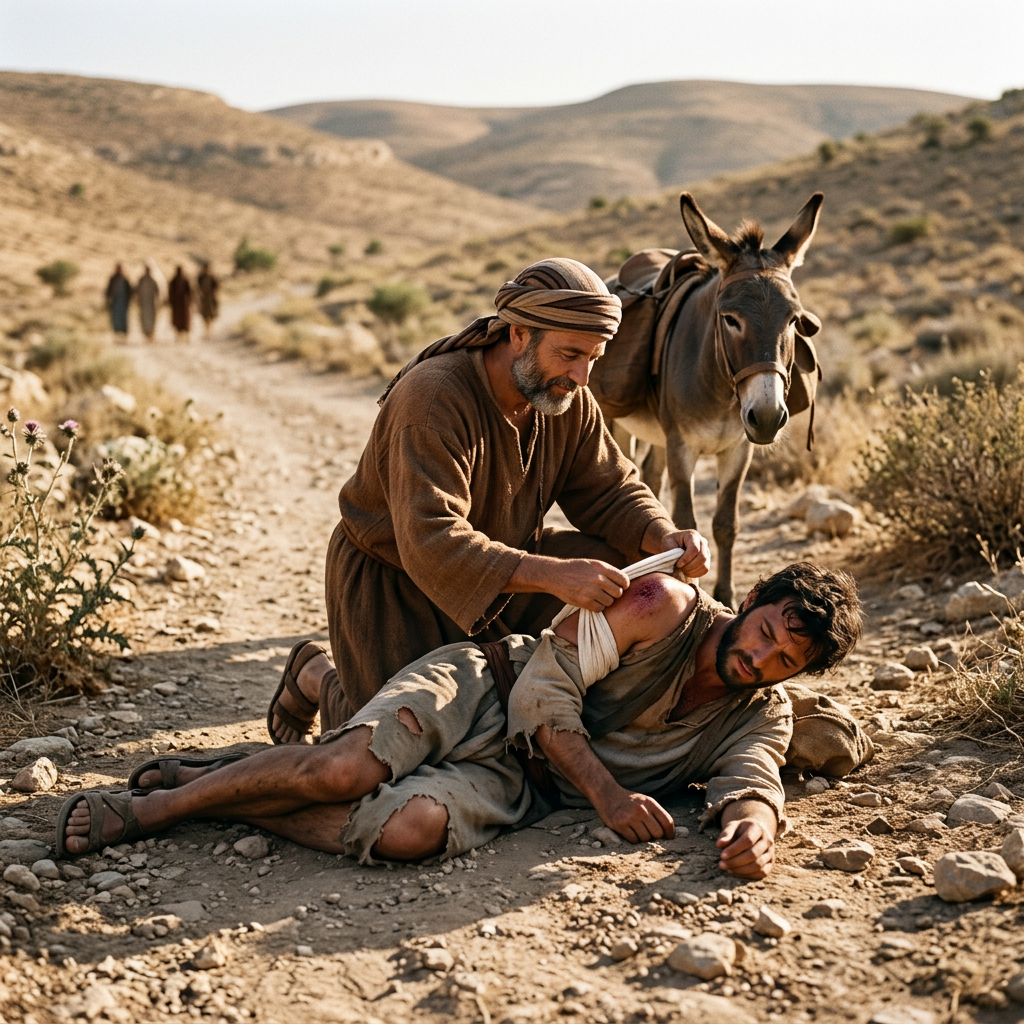
He crossed the road.
He bandaged his wounds.
He poured oil and wine on them.
He lifted him onto his own animal.
He paid for his lodging.
He promised to return and cover any additional expense.
He gave without asking whether the man deserved it.
Love never stopped to ask for a passport.
Love never asked for skin color.
Love never checked political affiliation.
Love simply loved.
Jesus Shattered Tribal Christianity
Sometimes we hear phrases like:
“Americans first.”
“Canadians first.”
“Take care of our own.”
Or even,
“We should only help Christians.”
Years ago, someone I knew wanted to donate to the Salvation Army. Another sincere, well-meaning believer discouraged it, saying something along the lines of, “Others have plenty of people to help them. We should only help God’s children.”
I understand the heart behind the statement.
Scripture certainly teaches believers to care for fellow believers (Galatians 6:10).
But notice the rest of the verse:
“Therefore, as we have opportunity, let us do good to all people, especially to those who belong to the family of believers.”
— Galatians 6:10
“Especially” does not mean “only.”
The family of God receives special care.
But everyone receives our love.
That is exactly what Jesus demonstrated.
Who Was the Neighbor?
At the end of the story, Jesus asked a fascinating question.
He did not ask,
“Which one was his neighbor?”
Instead He asked,
“Which of these three do you think was a neighbor to the man who fell into the hands of robbers?”
— Luke 10:36
The lawyer answered,
“The one who had mercy on him.”
Jesus told him, “Go and do likewise.”
— Luke 10:37
Notice what Jesus did.
The lawyer wanted to define who qualified as his neighbor.
Jesus completely flipped the question.
The issue isn’t:
Who is my neighbor?
The issue is:
Will I be a neighbor?
Neighbor isn’t merely someone who lives next door.
It isn’t someone who looks like you.
It isn’t someone who shares your nationality.
It isn’t someone who belongs to your denomination.
It isn’t someone who votes like you.
A neighbor is anyone whose need God places before you.
Christianity Is Not Tribal
Sadly, we still rebuild the walls Jesus demolished.
Sometimes they’re racial.
Sometimes they’re political.
Sometimes they’re denominational.
Sometimes they’re national.
Black churches uncomfortable with white pastors.
White churches uncomfortable with black pastors.
Christians treating immigrants as enemies.
Believers speaking with contempt about entire groups of people.
None of this reflects the heart of Christ.
Jesus never commanded us to protect our tribe.
He commanded us to love our neighbor.
And then He redefined who our neighbor is.
Everyone.
The Cross Knows No Borders
When Jesus hung on the cross, He didn’t die only for one nation.
He didn’t die only for one political party.
He didn’t die only for one race.
He died for the world.
“For God so loved the world that He gave His one and only Son…”
— John 3:16
The blood of Christ does not recognize the borders we so fiercely defend.
His kingdom welcomes people
from every nation,
every tribe,
every people,
and every language.
(Revelation 7:9)
If heaven will be filled with every ethnicity worshipping together, perhaps we should begin practicing now.
Conclusion
The Good Samaritan is not simply a lesson about helping someone in need.
It is Jesus dismantling every excuse we make for withholding compassion.
The question has never been,
“Is this person one of us?”
The question has always been,
“Will I love the person God has placed in front of me?”
May we stop asking who deserves our love.
May we simply become neighbors.
Because that is exactly what Jesus did for us.
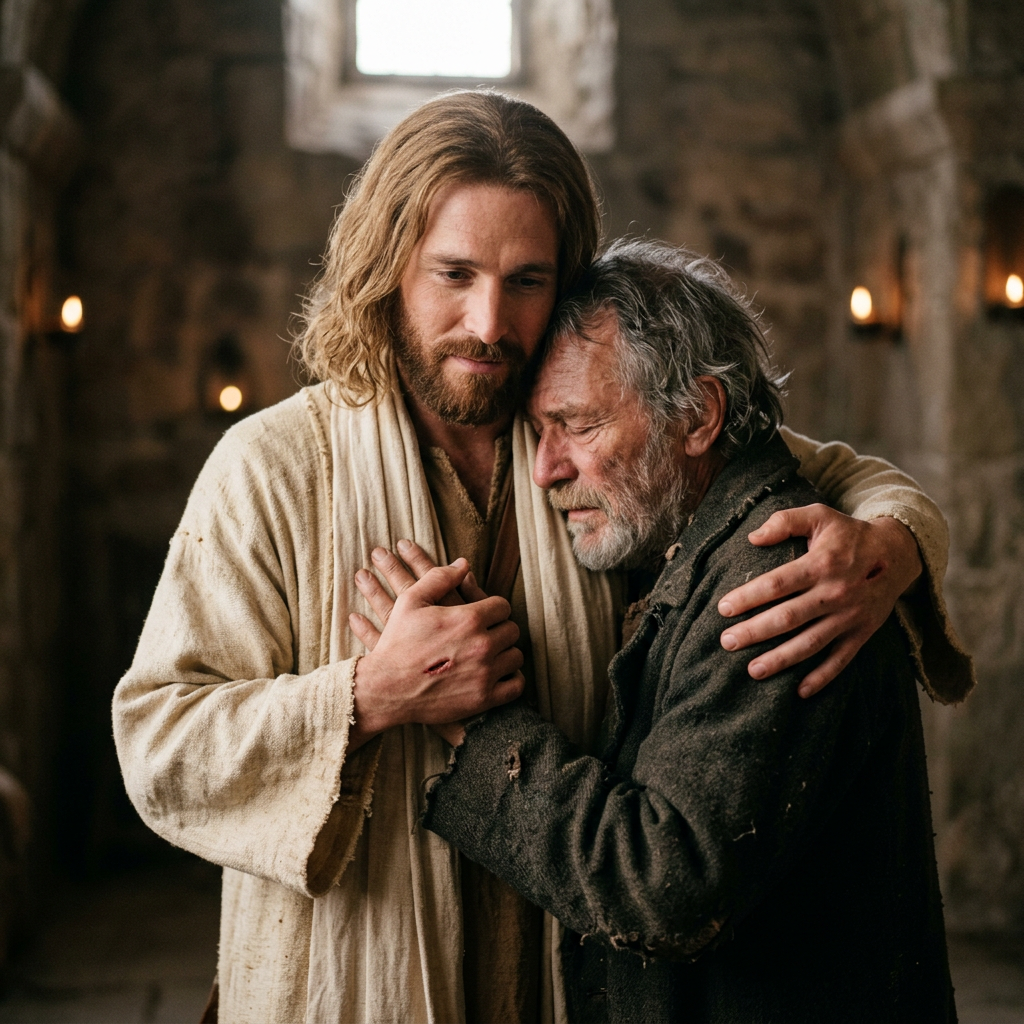
When we were strangers…
He crossed the distance.
He came to us.
He bound our wounds.
He paid our debt.
And He called us His own.
Continue reading
Related reading:


Leave a Reply