
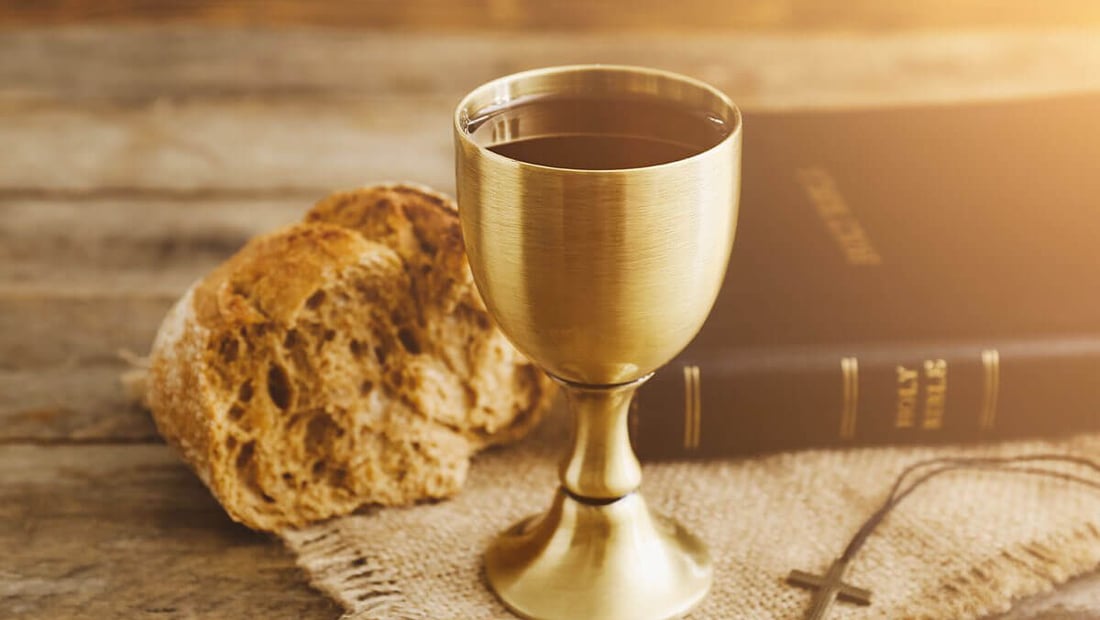
If you’ve ever attended a church service where the Lord’s Supper was served, chances are you’ve heard something like:
“Take this because there’s healing in communion.”
Or,
“If you’re sick, take communion—there’s power in the Lord’s table.”
I absolutely believe in divine healing, but what does the Bible actually say about this?
Let’s explore the truth about communion, healing, and whether the bread and cup carry power—or if it’s something deeper.
The Danger of Misunderstanding Communion
There’s a growing teaching that communion itself—as in, the physical act—contains healing power.
It sounds spiritual. It feels reverent. But it walks dangerously close to treating communion like a magic ritual, rather than a remembrance of a finished work.
Let’s be clear:
Healing is not in the wafer.
Healing is not in the juice.
Healing is in Jesus—and accessed by faith in what He did.
What Does the Bible Actually Say?
The key text people use is 1 Corinthians 11:29-30:
“For anyone who eats and drinks without discerning the body eats and drinks judgment on himself. That is why many among you are weak and sick, and some have fallen asleep.”
People say, “See? If taking it wrong brings sickness, taking it right must bring healing!”
But that’s a false dichotomy. Here’s what Paul was saying:
- The Corinthian church was abusing the Lord’s Supper—turning it into a selfish meal where the rich ate while the poor went hungry.
- They were treating it as common, not holy.
- “Not discerning the body” didn’t mean they lacked revelation—it meant they were being inconsiderate, divisive, and dishonoring what the body of Christ represents.
The “judgment” Paul refers to was a natural consequence of disunity and disrespect, not a supernatural curse or sickness from God.
The Real Power Is in the Cross—Not the Cup
Jesus said:
“Do this in remembrance of Me.” — Luke 22:19
Communion is a remembrance. A holy moment where we stop and say,
“Thank you, Jesus. You finished it all. Your body was broken so I could be whole. Your blood was shed so I could be forgiven.”
There is no power in the act itself.
But yes—there can be healing that flows through faith as we meditate on the finished work. Isaiah 53 clearly says that By His Stripes we ARE HEALED. So healing is available, have faith in it and walk in it.
But it’s the faith in Christ, not the ritual, that heals.
Communion Is Not a Christian Medicine Cabinet
Treating communion like a healing potion reduces it to a transactional act, and worse, creates confusion and takes it away from why God instituted it in the first place.
People start to think:
- “Did I take it wrong?”
- “Do I need to take it daily to stay healed?”
- “Maybe I didn’t believe hard enough…”
But that’s not how the gospel works. Healing—just like forgiveness—is by grace through faith.
Not by chewing, drinking, or repeating a sacred act.
So, Can You Be Healed During Communion?
Yes—but not because of communion.
You can be healed:
- While reading Scripture
- While praying
- While worshiping
- While simply trusting the finished work of Jesus
Communion is a beautiful moment to remember the cross—but the cross is where healing is found.
“By His wounds you were healed.” — 1 Peter 2:24
Not by the act of communion, but by His wounds.
Final Thought: Stop Looking for Power in a Symbol
Communion is a symbol. A sacred one—but still a symbol.
The real power is not in the bread or juice, but in the blood of Jesus, the body broken for us, and our faith in that finished work.
So next time you take communion, don’t hope the bread heals you.
Let it remind you that you are already healed in Christ—and receive that healing by faith.
Continue reading
Related reading:
2 responses to “Communion and Healing: What the Bible Really Says About the Lord’s Supper”
-
Isaiah 53:4-5 “Surely our sicknesses He hath borne, And our pains – he hath carried them And we-we have esteemed him plagued, Smitten of God, and afflicted. And He is pierced for our transgressions, Bruised for our iniquities, The Chastisement of our His bruise there is healing to us. Young’s Literal Translation Bible, 2 Peter 2:24, Matt. 8:17.
-
Hi Brenda,
Thanks for sharing your thoughts. What you said is absolutely true. The Bible is clear that there is healing in the atonement. But the point I’m making is: Healing is in Jesus—and accessed by faith in what He did, not because of the communion. Even if someone got healed by taking part in the communion, the Bible is clear that it should have been by faith.
-




Leave a Reply