
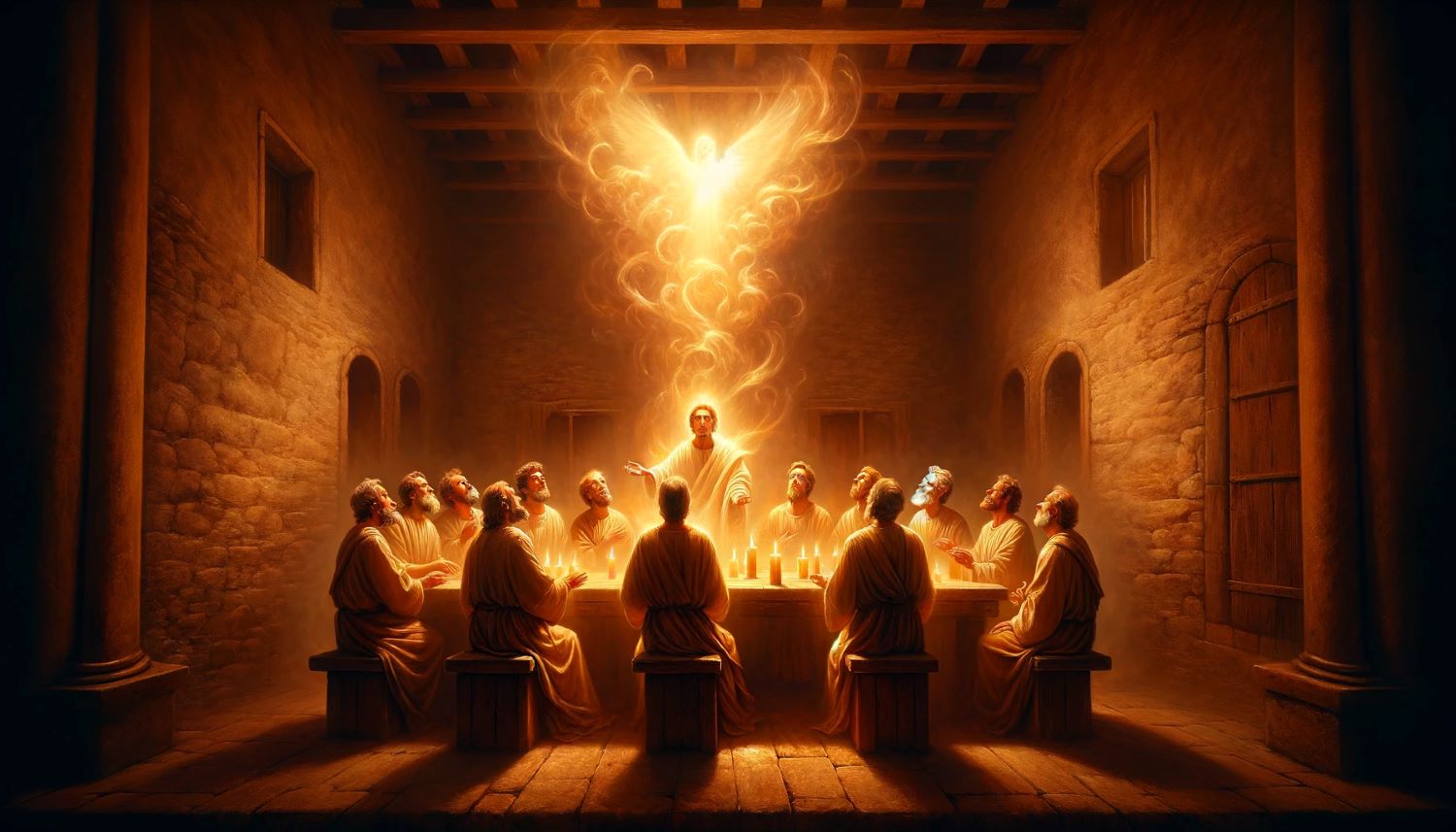
In some Pentecostal and charismatic circles, you’ll hear this line: “He’s saved, but he’s not baptized in the Holy Ghost yet.” Usually it means someone hasn’t spoken in tongues or had a dramatic Spirit encounter.
But is that biblical? Can someone really be saved but not Spirit-baptized? And how does history fit in?
1. Salvation and the Spirit Always Go Together
Paul ties salvation and the Spirit so closely that you can’t separate them:
- Romans 8:9 – “Anyone who does not have the Spirit of Christ does not belong to him.” 👉 No Spirit, no salvation. If you are in Christ, you have the Spirit.
- 1 Corinthians 12:13 – “For in one Spirit we were all baptized into one body … and all were made to drink of one Spirit.” 👉 Every believer is Spirit-baptized into Christ’s body.
- Galatians 3:2 – “Did you receive the Spirit by works of the law, or by hearing with faith?” 👉 The Spirit is received the moment you believe.
Biblically, there is no such thing as a Christian who has Jesus but not the Spirit.
2. Why Pentecostals Say “Saved but Not Spirit-Baptized”
Pentecostal theology developed a two-stage framework:
- At salvation, the Spirit regenerates you (new birth).
- At Spirit baptism, the Spirit comes upon you in power for mission (Acts 1:8).
So when they say “saved but not Spirit-baptized,” they don’t mean someone has zero Spirit. They mean: this person is saved, but hasn’t yet experienced the “second blessing” empowerment (usually with tongues as the evidence).
3. The Problem With That Language
The New Testament never talks this way.
- There is no category of “saved but Spirit-less.”
- Paul insists: all believers have the Spirit, all are Spirit-baptized, all are in Christ’s body.
The problem with saying “saved but not Spirit-baptized” is that it suggests there are two classes of Christians:
- Those with Jesus but not the Spirit.
- Those with both.
But Scripture doesn’t allow that division.
4. What the Bible Actually Teaches
The Bible does distinguish between:
- Spirit baptism (once, at conversion): This is when the Spirit unites you to Christ.
- Spirit fillings (many, throughout life): These are fresh empowerments for boldness, prayer, mission, and holiness.
Examples:
- Acts 2 – the disciples are filled at Pentecost.
- Acts 4:31 – the same disciples are filled again and preach boldly.
- Eph 5:18 – “Be filled with the Spirit” (in Greek: “keep on being filled”).
So the biblical language isn’t “saved but not Spirit-baptized.” It’s “saved and baptized in the Spirit already, but in need of continual filling.”
5. A Historical Note: Lake and Dowie
Interestingly, even early Pentecostal history shows the tension.
- John G. Lake’s ministry (early 1900s): People would write to him describing miraculous healings or experiences of speaking in tongues before they had what Pentecostals called the baptism of the Holy Ghost.
- John Alexander Dowie’s community (late 1800s): His followers often reported healings and even charismatic manifestations without any reference to a “Spirit baptism” event.
In other words: people were experiencing the Spirit’s power before Pentecostals developed the doctrine of Spirit baptism as a second, tongues-marked experience.
That shows the Spirit doesn’t fit neatly into our theological boxes.
Final Thoughts
So, can someone be saved but not baptized in the Holy Spirit?
No. Biblically, every believer receives the Spirit at conversion. That’s what baptism in the Spirit is: being joined to Christ’s body.
But here’s the other side: while all believers have the Spirit, not all believers live in the Spirit’s fullness. That’s why Paul urges us:
“Be filled with the Spirit … giving thanks always and for everything to God the Father in the name of our Lord Jesus Christ.” (Eph 5:18, 20)
The Spirit is not about dividing Christians into “haves” and “have-nots.” He’s about giving us new life in Christ, and then empowering us again and again for mission.
The real question isn’t, “Do I have the Spirit?”
It’s, “Am I letting the Spirit have all of me?”


Leave a Reply