
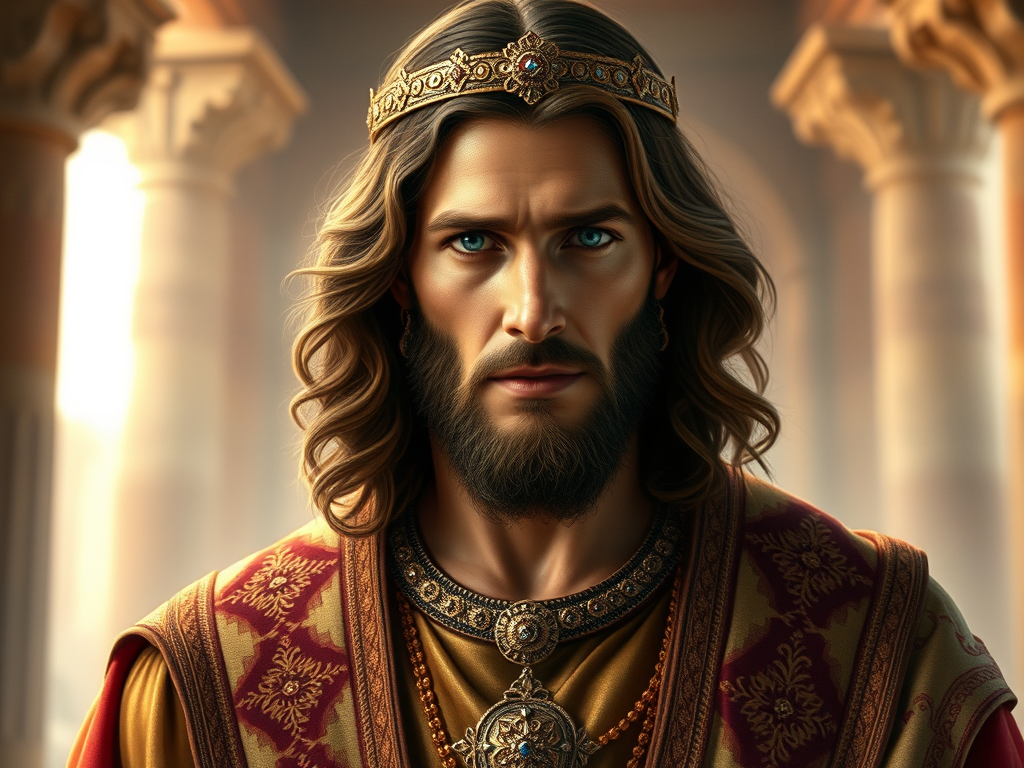
The author of Epistle to the Hebrews is answering one central question:
Why can Jesus truly represent us before God — and why is His priesthood final?
He does this in three points.
Let’s first read Heb 5:1-6
For every high priest taken from among men is appointed on behalf of men in things pertaining to God, in order to offer both gifts and sacrifices for sins; he can deal gently with the ignorant and misguided, since he himself also is beset with weakness; and because of it he is obligated to offer sacrifices for sins, as for the people, so also for himself. And no one takes the honor to himself, but receives it when he is called by God, even as Aaron was. So also Christ did not glorify Himself so as to become a high priest, but He who said to Him, “You are My Son, Today I have begotten You”; just as He says also in another passage, “You are a priest forever According to the order of Melchizedek.”
Heb 5:1-6
1. What every human high priest is supposed to be (vv. 1–3)
Hebrews starts by describing the job description of a priest.
A human high priest:
- is taken from among people
- represents people before God
- offers sacrifices for sins
- understands weakness
- is able to deal gently with the struggling
Why?
Because he himself is weak.
- He doesn’t stand above the people.
- He stands with them.
That’s why verse 3 says he must even offer sacrifices for his own sins.
So the picture is:
- A priest must be human.
- A priest must understand weakness.
- A priest stands between God and people.
Hebrews is setting up a contrast.
2. No one appoints himself — God does (v. 4)
Next point:
No one takes this honor upon himself, but only when called by God…
Priesthood is not self-appointed.
You don’t volunteer for it.
You don’t earn it.
God chooses.
This matters because Hebrews is about to say: Jesus didn’t seize priesthood. God gave it to Him.
3. Jesus didn’t glorify Himself — God appointed Him (vv. 5–6)
Now Hebrews applies everything directly to Jesus Christ.
So also Christ did not exalt Himself to become High Priest…
Instead, God spoke:
“You are My Son; today I have begotten You.”
Then Hebrews quotes again:
“You are a priest forever according to the order of Melchizedek.”
This second quote comes from Psalm 110.
Here’s what’s radical: Jesus is not a priest from Levi’s line. He belongs to the order of Melchizedek — a mysterious priest-king who existed before the Law.
That means:
- His priesthood doesn’t depend on genealogy
- It doesn’t depend on temple rituals
- It doesn’t depend on repeated sacrifices
It’s eternal.
Forever.
Not renewable.
Not replaceable.
Why this matters (especially after Hebrews 4)
Let’s connect this back to what you’ve been studying.
Hebrews 4 said:
- Jesus passed through the heavens
- He sympathizes with weakness
- therefore draw near confidently
Hebrews 5 explains why that confidence is justified.
Because:
✔ Jesus truly became human
✔ He understands weakness
✔ He didn’t appoint Himself
✔ God installed Him
✔ His priesthood is permanent
Human priests:
- had sin
- had limits
- had expiration dates
Jesus:
- has no sin
- no limits
- no end
So your access to God is not fragile. It doesn’t depend on your consistency. It depends on His position.
Simple summary
Hebrews 5:1–6 shows that:
- priests must represent people and understand weakness
- no priest appoints himself — God does
- Jesus was appointed directly by God
- His priesthood is eternal, not temporary
- therefore our access to God is secure
Continue reading
Previous in the Hebrews series: Adam’s Resistance vs Christ’s Surrender
Next in the Hebrews series: Hebrews 5:7–10 Explained
Related reading:


Leave a Reply