
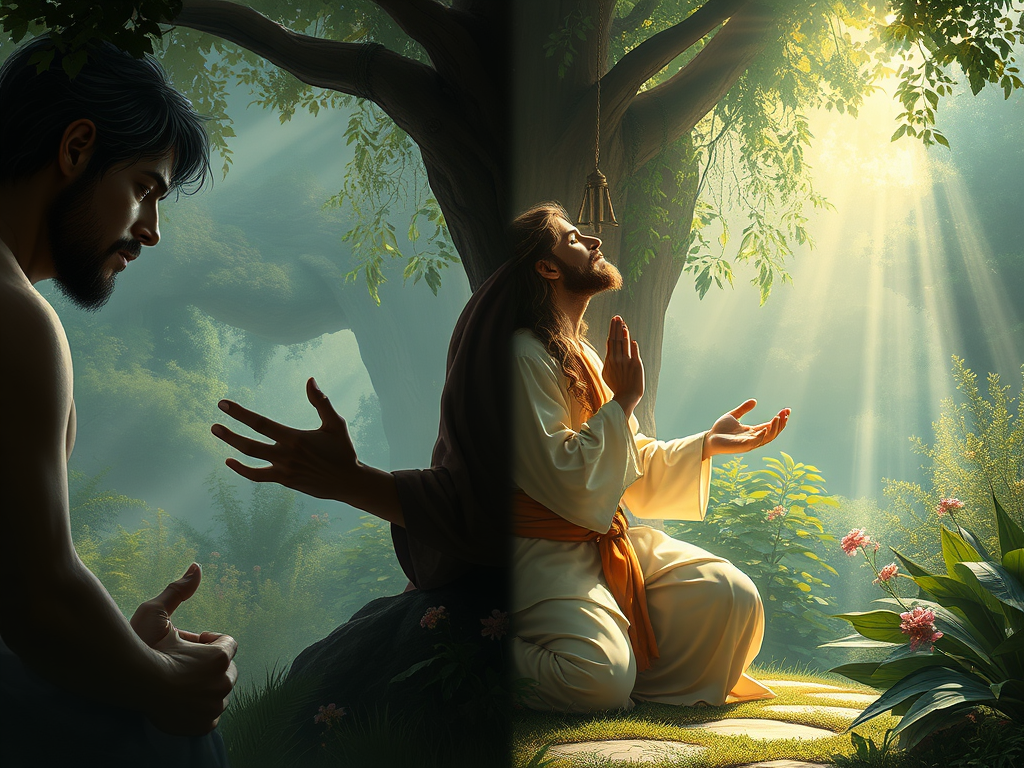
Hebrews 5 gives us a glimpse into one of the most sacred moments in Scripture:
Jesus, in the days of His flesh, offering prayers with loud cries and tears — and being heard because of His piety.
At first, that sounds abstract.
But when you slow down, Hebrews is showing us something profoundly practical:
Redemption did not move forward through force. It moved forward through surrender.
This is profound in — how we understand obedience, spiritual warfare, and even suffering.
Let’s walk through it.
Adam’s Resistance vs Christ’s Surrender
Scripture intentionally places Adam and Jesus side by side.
Adam stood in a garden.
He faced a choice: trust God’s word or take control for himself.
Adam chose independence.
His sin was not merely eating fruit.
It was self-rule.
It was resistance.
In effect, Adam said: my will.
Jesus also stood in a garden.
He faced a far heavier choice. The cross was before Him. Everything in His humanity recoiled.
Yet Jesus said:
Not My will, but Yours.
Where Adam grasped, Christ yielded.
Where Adam distrusted, Christ entrusted.
Where Adam resisted, Christ surrendered.
This is why Jesus is called the “last Adam.”
Redemption is not only about forgiveness of sins. It is the reversal of resistance.
Humanity fell through independence.
Humanity was restored through surrender.
Hebrews 5 shows us how Jesus won:
Not by overpowering circumstances.
By entrusting Himself completely to the Father.
How Obedience Works Under the New Covenant
This is where many believers get confused.
Jesus obeyed perfectly.
He lived under the Law.
He fulfilled every requirement.
He satisfied covenant righteousness.
But His obedience was not meant to become our new standard.
It was meant to become our covering.
Jesus obeyed for us.
That’s the difference.
Under the Law:
Obedience produced acceptance.Under Grace:
Acceptance produces obedience.We do not obey in order to belong.
We obey because we already belong.
Our obedience is no longer about earning favor.
It becomes participation.
Response.
Alignment with who we already are in Christ.
Hebrews shows Jesus surrendering.
Paul later shows us being united with that surrender.
We don’t repeat Christ’s obedience.
We live from it. Hallelujah!
How This Reframes Spiritual Warfare
Modern spiritual warfare often looks like:
Shout louder.
Fight harder.
Strain more.
But Hebrews shows something radically different.
Jesus did not defeat darkness by aggressive confrontation. He defeated darkness by surrendering to the Father.
The cross looked like weakness.
It was actually victory.
The enemy’s oldest strategy hasn’t changed since Eden:
Take control.
Protect yourself.
Grasp.
That’s how Adam fell.
Victory comes the opposite way.
Through trust.
Through yielding.
Through saying, “Father, I place myself in Your hands.”
True spiritual warfare is not striving against darkness.
It is refusing independence.
Scripture puts it simply:
Submit to God. Resist the devil.
Notice the order.
Submission comes first.
Surrender to God is resistance to Satan.
That’s why Christ’s surrender dismantled the powers of darkness.
Not by force.
By trust.
How This Applies to Believers Facing Suffering
Hebrews 5 does not portray a stoic Jesus.
It shows:
Loud cries.
Tears.
Real anguish.
Surrender is not emotional numbness. It is trust in the middle of vulnerability.
Many believers assume:
If I suffer, I must have failed.
If it hurts, I must lack faith.
Hebrews destroys that idea.
Jesus suffered.
Jesus cried.
Jesus surrendered.
And Jesus was heard.
And we have everything that pertains to life and godliness to overcome anything that comes our way. All we need to do is trust and surrender, which is basically to rest in faith.
Jesus shows us that weakness is not collapse.
Weakness is dependence.
And dependence opens the door to resurrection life.
The Thread That Ties It All Together
Adam resisted — death entered.
Christ surrendered — resurrection entered.
Under the Law, obedience earned standing.
Under Grace, standing produces obedience.
Spiritual warfare is not aggression.
It is alignment.
Suffering is not abandonment.
It is an invitation to deeper trust.
Jesus did not try harder.
He entrusted Himself completely.
And the Father answered that surrender with resurrection.
A Final Word
Redemption didn’t happen because Jesus fought harder.
It happened because He surrendered fully.
And now, we don’t live from striving.
We live from His surrender.
Adam grasped and lost everything.
Christ yielded and gained everything.
And now, by grace, we live from what He a
Continue reading
Previous in the Hebrews series: Let Us Draw Near with Confidence
Next in the Hebrews series: Why Jesus Is a Different Kind of High Priest
Related reading:

Leave a Reply