

“Discipleship” is one of the most commonly used—and least examined—words in modern Christianity. For many, it refers to structured programs, spiritual mentoring, or levels of commitment beyond “just being saved.”
Some even teach that while salvation makes you a child of God, discipleship is a higher category reserved for the truly serious. Really?
But the real question isn’t how churches define discipleship today.
The real question is this:
Does the New Covenant actually teach discipleship as a category believers are meant to live under after the cross?
When we slow down and let Scripture answer that question, the answer may be surprising.
A Simple Observation That Changes the Conversation
Here is something rarely acknowledged:
The word “disciple” is not used in any of the epistles—the very writings that explain and establish New Covenant doctrine.
The epistles are where the meaning of the cross is unfolded. They explain who believers are, how they relate to God, and how life in Christ works. And when they describe Christians, they do not use “disciple” language. Isn’t that interesting?
Instead, believers are consistently called:
- saints
- children of God
- new creations
- the body of Christ
- the temple of the Holy Spirit
That shift in language is not accidental. It reflects a shift in reality.
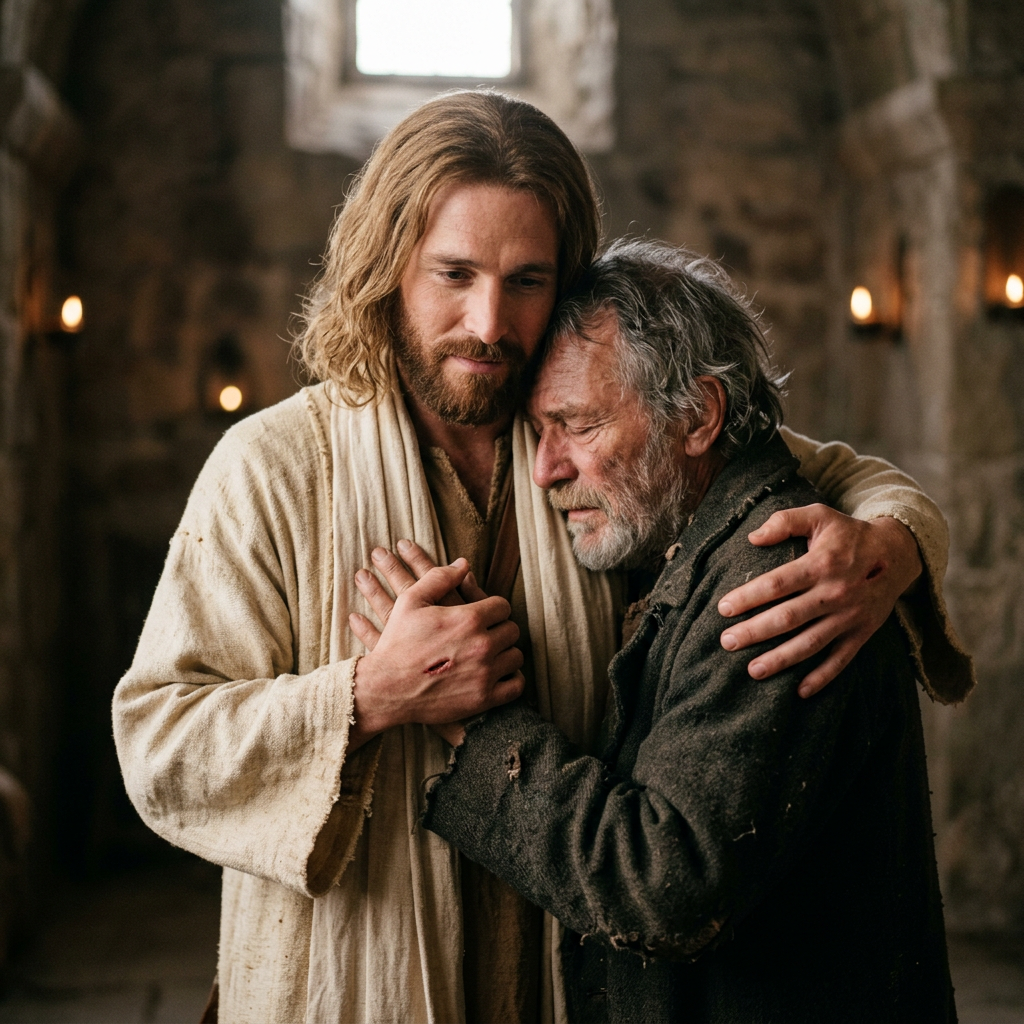
The New Covenant does not frame believers as students trying to follow Jesus from a distance. It presents them as sons and daughters who now share His life.
What “Disciple” Meant in the Bible
In the first-century world, discipleship was a learning model. Formal schools as we know them didn’t exist. If you wanted to learn from a teacher, you physically followed them, listened to them, watched them, and absorbed their teaching.
A disciple simply meant a learner or student.
And this is crucial:
Disciple does not automatically mean Christian.
- Cult leaders have disciples
- Pagan religions have disciples
- John the Baptist had disciples
The word itself is neutral. It describes a method of learning, not a spiritual status.
So when Jesus said, “Follow Me,” He was inviting people into that first-century learning relationship—walking with Him, listening to Him, and being taught by Him directly.
Why Jesus’ Discipleship Demands Were Impossible
Jesus did not soften the cost of discipleship. In fact, He did the opposite.
In Luke 14:26–33, Jesus explains what it would require to be His disciple, and the standard He sets is absolute—so absolute that no one meets it.
Hate your family.
Hate your own life.
Carry your cross.
Give up everything.
These were not exaggerated metaphors meant to inspire effort. They were meant to expose inability.
And that is the key.
Because Jesus was not establishing a permanent system of discipleship. He was leading people to the cross.
After the cross, something fundamentally better would be given—not an improved learning program, but His own Spirit. By Sonship! We are His children! There is nothing greater than that.
From “Follow Me” to “Christ in You”
Jesus Himself explained this shift before it happened.
In John 14–16, He tells His disciples that something radically new is coming:
“The Spirit… dwells with you and will be in you.” (John 14:17)
Notice the movement:
- with you → in you
Then Jesus says:
“In that day you will know that I am in My Father, and you in Me, and I in you.” (John 14:20)
This is not discipleship language. This is union language.
And that is why Jesus could say:
“It is to your advantage that I go away.” (John 16:7)
If following Jesus externally were the permanent model, His departure would be a loss. But because the Spirit would indwell believers, it would be a gain.
The relationship changes from imitation to participation.
Not “What would Jesus do?” but realizing that “Christ is in me“
Sonship Replaces the Discipleship System
Much modern teaching separates sonship from discipleship:
“You’re a child of God by faith, but you become a disciple by commitment.”
“You’re saved, but now you must move on to discipleship.”
But the fact is that it creates a two-tier Christianity:
- ordinary believers
- serious disciples
But the epistles never describe Christianity that way.
Paul explains the shift clearly in Galatians 4:
“As long as the heir is a child, he is under guardians and managers…” (Galatians 4:1–2)
That describes life under external supervision—before maturity.
Then Paul says:
“When the fullness of time had come, God sent forth His Son… so that we might receive adoption as sons.” (Galatians 4:4–5)
And the result?
“Because you are sons, God has sent the Spirit of His Son into our hearts.” (Galatians 4:6)
You have received the greatest position ever, of a Son! There is no greater tier. You live out your identity because of who you are, not because of “discipleship” mandate.
You are a son. A son does not grow by remaining under tutors. A son grows by living from identity.
Led From Within, Not Managed From Without
Romans 8 describes normal New Covenant life:
“You did not receive the spirit of slavery to fall back into fear, but the Spirit of adoption as sons.” (Romans 8:15)
And:
“All who are led by the Spirit of God are sons of God.” (Romans 8:14)
Notice what is missing:
- no discipleship hierarchy
- no spiritual ladder
- no program-based identity
Leading happens from within, not through control from without.
Identity, Not Apprenticeship
John summarizes New Covenant reality simply:
“See what kind of love the Father has given to us, that we should be called children of God—and that is what we are.” (1 John 3:1)
Not potential children. Not children-in-training. Children now.
And John adds:
“You have no need that anyone should teach you… His anointing teaches you.” (1 John 2:27)
Again, not abolishing teaching—but abolishing the idea that growth depends on external systems replacing the Spirit.
So, Is There Discipleship in the New Covenant?
It depends on what you mean.
If by discipleship you mean:
- learning
- growth
- encouragement
- teaching
- maturing in Christ
Yes—New Covenant growth is real and ongoing.
But if by discipleship you mean:
- a category beyond sonship
- a higher spiritual class
- a system that replaces the Spirit’s leadership
- a requirement to “really belong”
Then no.
That is not New Covenant Christianity. The New Covenant does not call believers to become better followers. It calls them to live from union.
Because on this side of the cross, the greatest truth is not that you can follow Jesus— It is that Jesus has joined Himself to you, and He is not leaving.
2 responses to “Is There Discipleship in the New Covenant?”
-
You finish this post with…
So, Is There Discipleship in the New Covenant?
It depends on what you mean.
If by discipleship you mean:learning
growth
encouragement
teaching
maturing in Christ
Yes—New Covenant growth is real and ongoing.But if by discipleship you mean:
a category beyond sonship
a higher spiritual class
a system that replaces the Spirit’s leadership
a requirement to “really belong”
Then no.The second list doesn’t represent any serious “discipleship” writer I know. You’ve built a straw man. They would all agree with the first list. I don’t know anyone who would agree with the second. But your article seems to assume this is what people are thinking – you use this list to push against to make your point – but the list doesn’t represent what the “discipleship” literature or movements are actually saying.
They are, rather, seeking to get people to take seriously the idea of learning, growth, encouragement, teaching and maturing in Christ. They may have models and language to try and do this – and they themselves might sometimes be inexact in their wording – but I think the overall thrust of the movement is healthy – seeking to sons of God reach maturity – something they wont do without concerted dedication and application of focus and effort.-
Thanks for responding. Over the years, I’ve heard many of the second category teachings packaged as palatable. People say, unless you are discipled, you are not close enough. Some even say baptism is the sign of discipleship and so on.
-




Leave a Reply