

(Because God Gives Us Something Far Greater — Sonship)
One of the most common teachings in today’s church sounds like this:
- “Many are believers, but few are disciples.”
- “A Christian is one thing — but a disciple is something more.”
- “You’re saved by grace, but discipleship is costly.”
- “If you want to go deeper, you have to become a disciple.”
But when you open the New Testament, something surprising — almost shocking — becomes clear.
The Bible never separates believers from disciples.
And the further you read into the New Covenant, the more the word disciple simply… fades away.
Not because discipleship doesn’t matter.
But because God introduces something far greater.
Let’s walk through it.
1. Yes, Jesus did say, “Go and make disciples.”
Absolutely.
It’s the Great Commission.
But notice what Jesus actually says:
“Baptizing them…”
“…and teaching them…”
In Jesus’ own words:
- A disciple is someone who has believed.
- A disciple is someone baptized.
- A disciple is someone who will learn after belonging.
Jesus never said:
“Make believers first, then upgrade them into disciples.”
There are no levels in Matthew 28.
There is no two-step Christianity.
There is no distinction between “saved people” and “disciples.”
Believers were disciples.
Immediately.
2. After the Resurrection, the word “disciple” almost disappears
Here is the pattern in the New Testament:
- The Gospels: “disciple” everywhere
- Acts: still used, about 27 times (which we will explain)
- Epistles: the word never appears again
Paul never uses it.
Peter never uses it.
John never uses it.
James never uses it.
Hebrews never uses it.
Once the New Covenant is explained, disciple is no longer the primary identity.
Why?
Because Sonship is.
But before we get there, we must understand what “disciple” actually means in Acts — the only book that continues using the term after the Resurrection.
And this part is crucial.
3. What “disciple” means in Acts
Many modern teachings use “disciple” to mean a deeper, costlier level of Christianity.
But Acts does not use the word that way at all.
In Acts, “disciple” simply means believer or Christian.
Here is the proof.
A. The moment someone believed, Luke calls them a disciple
No second step.
No qualification.
No process.
No upgrade.
Acts 2:41
3,000 believed → immediately part of the community Acts later calls disciples.
Acts 6:1
“The number of disciples was multiplying.”
These were brand-new believers. Not elite ones.
Acts 9:1
Paul persecutes “the disciples of the Lord.”
He wasn’t hunting super-serious Christians — he was attacking all believers.
Acts 9:26
Saul tries to join “the disciples.”
This simply means he tried to join the church.
Acts 11:26
“The disciples were first called Christians at Antioch.”
Luke explicitly equates:
- disciple
- Christian
- believer
as the same group.
Acts 14:21
“He made many disciples…”
These are the people who had just believed a few moments prior.
No intense training.
No discipleship classes.
No deeper commitment.
No “costly path.”
They believed → Luke calls them disciples on the spot.
B. Acts NEVER uses “disciple” as a spiritual level or requirement
Not once does Acts say:
- “Become a disciple.”
- “Grow into discipleship.”
- “Some were disciples, others were only believers.”
- “You need to take the next step into discipleship.”
Such language is completely foreign to the New Testament.
In Acts, there is only:
one category of Christian: the disciple-believer.
C. Acts destroys the idea of a two-tier Christianity
Many sermons today imply:
- saved vs true disciple
- believer vs follower
- Christian vs committed Christian
- entry-level believer vs deeper disciple
But Acts — the Spirit-inspired record of the early church — collapses this entire framework.
Every believer was called a disciple.
Every disciple was a believer.
There was no hierarchy.
No levels.
No elite group of super-followers.
4. So why does the word “disciple” disappear after Acts?
Because discipleship is the first step, and God gives us a higher identity: sons and daughters.
This is the heart of the matter.
“Disciple” simply cannot carry the weight of the new identity Jesus gives us through the Resurrection.
A disciple follows a master.
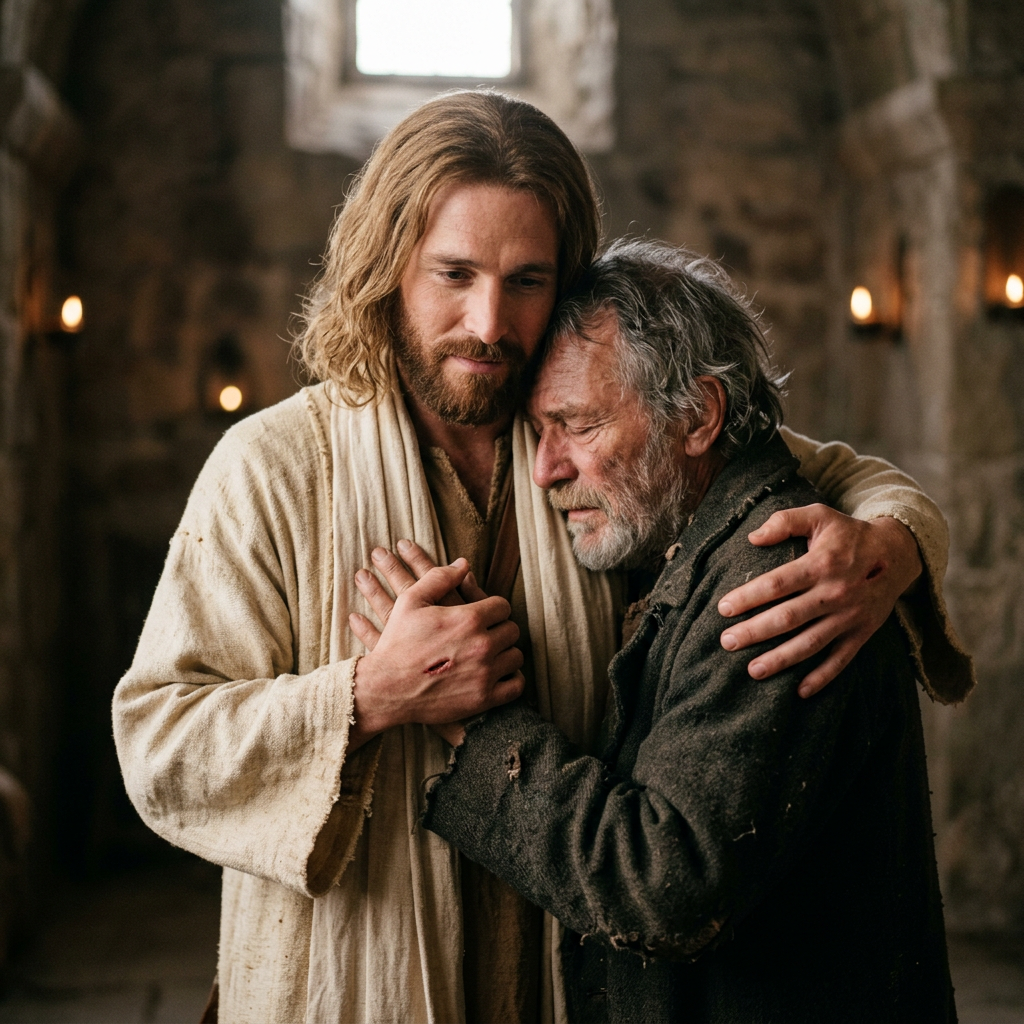
A son belongs to a Father.
A disciple learns from outside.
A son carries the Father’s nature inside.
A disciple listens to teachings.
A son inherits everything the Father owns.
The Epistles overwhelmingly use words like:
- sons of God (Romans 8:14)
- children of God (1 John 3:1)
- co-heirs with Christ (Romans 8:17)
- new creations (2 Cor. 5:17)
- saints (Eph. 1:1)
- beloved (Col. 3:12)
- the righteousness of God (2 Cor. 5:21)
- one spirit with Christ (1 Cor. 6:17)
“Disciple” isn’t wrong — but it is a lower identity compared to what God gives us now. Think of it this way: the Prince of Wales is technically a royal, but inside the palace he relates to the Queen not as a monarch, but as his grandmother. One identity is formal; the other is personal and intimate. In the same way, a disciple describes someone who follows, but sonship describes someone who belongs. Being God’s child is the highest identity of all.
Jesus didn’t die and rise again so we could merely be students.
He died and rose so we could be sons and daughters.
That’s why the word fades —
because a greater, fuller identity has taken its place.
5. So does discipleship exist in the New Covenant?
Yes — but not as a second stage or elite class.
New Covenant discipleship is simply:
learning to live as the sons and daughters we already are.
It’s not:
- striving to earn closeness
- paying a cost to reach a higher level
- a deeper tier of Christianity
It is:
- walking in the identity given
- renewing your mind
- growing in grace
- being transformed by the Spirit
- discovering what Christ has already done
The New Testament does not teach:
“Be saved, then become a disciple.”
It teaches:
Believe → you are His → you are called a disciple → you are adopted as a son → you grow from that identity.
Immediately.
Completely.
Irrevocably.
There is no higher level than being God’s child.
6. The Good News
You’re not striving to reach discipleship.
You’re not climbing to a higher spiritual rank.
You’re not moving from believer to disciple to son.
The moment you believed:
- you belonged,
- you were made new,
- you were adopted,
- you became His forever,
- and you received the highest title in the universe:
child of God.
“Disciple” isn’t wrong.
It’s just not the final word.
Son is.
And that’s why the Bible uses it.
Continue reading
Related reading:


Leave a Reply