

One of the most common responses Christians hear when they are going through a difficult season is a quotation from Jeremiah 12:5:
“If you have run with the footmen, and they have wearied you, then how can you contend with horses?” (Jeremiah 12:5)
The verse is often used to communicate a simple message:
“Stop focusing on your problems. Toughen up. Bigger battles are coming.”
While there is certainly truth in the idea that believers need endurance, I believe we must be careful how we apply passages like this, especially when speaking to someone who is hurting.
A balance needs to be struck.
The Context of Jeremiah 12:5
Jeremiah was not speaking from the position of a believer living under the finished work of Christ.
He was a prophet under the Old Covenant.
Jeremiah was lamenting the injustice around him. He was weary, discouraged, and questioning why the wicked seemed to prosper. God’s response challenged him to continue his calling despite increasing opposition.
The point of the passage was not:
“Your pain doesn’t matter.”
Nor was it:
“Pretend you’re not struggling.”
Rather, God was preparing Jeremiah for the reality that greater opposition was ahead.
Many Christians take this verse and turn it into a general command to suppress emotions or ignore difficulties. But that is not what the passage teaches.
We Live on the Other Side of the Cross
As believers, we stand in a different covenant.
We are not trying to obtain victory.
We are living from Christ’s victory.
The New Testament consistently points believers back to what Christ has already accomplished and what He has already provided.
Peter writes:
“His divine power hath given unto us all things that pertain unto life and godliness…” (2 Peter 1:3)
Notice the wording.
Not “will give.”
Not “might give.”
He has given.
When Paul faced his own difficulty and pleaded with the Lord regarding his thorn, notice what God said
Instead, He said:
“My grace is sufficient for thee: for my strength is made perfect in weakness.” (2 Corinthians 12:9)
God’s answer was essentially:
“What you need to solve every problem has already been supplied.”
The provision was already there.
The strength was already available.
The grace was already sufficient.
The solution was not found in Paul’s ability to depend upon Christ.
I strongly encourage you to read this if you want to understand what I meant. What God Meant by “My Grace Is Sufficient for You”: 2 Cor 12:9
Acknowledging Problems Is Not a Lack of Faith
This is where many believers become confused.
Some Christians have unknowingly created an atmosphere where acknowledging pain is viewed as weakness.
If someone says:
- “I’m exhausted.”
- “I’m struggling.”
- “I’m discouraged.”
- “I’m overwhelmed.”
The immediate response is sometimes:
“Don’t say that.”
“Don’t speak negatively.”
But Scripture never teaches us to deny reality.
The Bible is filled with godly men and women who openly expressed their struggles.
David poured out his heart in the Psalms.
Jeremiah lamented.
Job spoke honestly about his suffering.
Paul wrote about being pressed beyond measure.
Even Jesus in Gethsemane said:
“My soul is exceeding sorrowful, even unto death.” (Matthew 26:38)
Acknowledging pain is not unbelief. Living in pain without bringing it to God is the problem.
Casting Your Burdens Requires Admitting You Have Them
Peter writes:
“Casting all your care upon him; for he careth for you.” (1 Peter 5:7)
How can you cast a burden that you refuse to acknowledge?
The command assumes that burdens exist.
The Christian life is not pretending everything is fine. The Christian life is bringing everything to Christ.
We can honestly say:
- “Lord, I’m tired.”
- “Lord, this hurts.”
- “Lord, I don’t understand.”
- “Lord, I’m struggling.”
Faith is not the absence of emotion.
Faith is bringing those emotions to the One who is greater than them.
Don’t Minimize People’s Pain
One of the easiest mistakes Christians make is trying to fix people too quickly.
Someone opens up about a genuine struggle.
Before they finish speaking, we immediately respond with a verse.
The verse may be true.
But timing matters.
Compassion matters.
People often need to know that they have been heard before they can hear what we are saying.
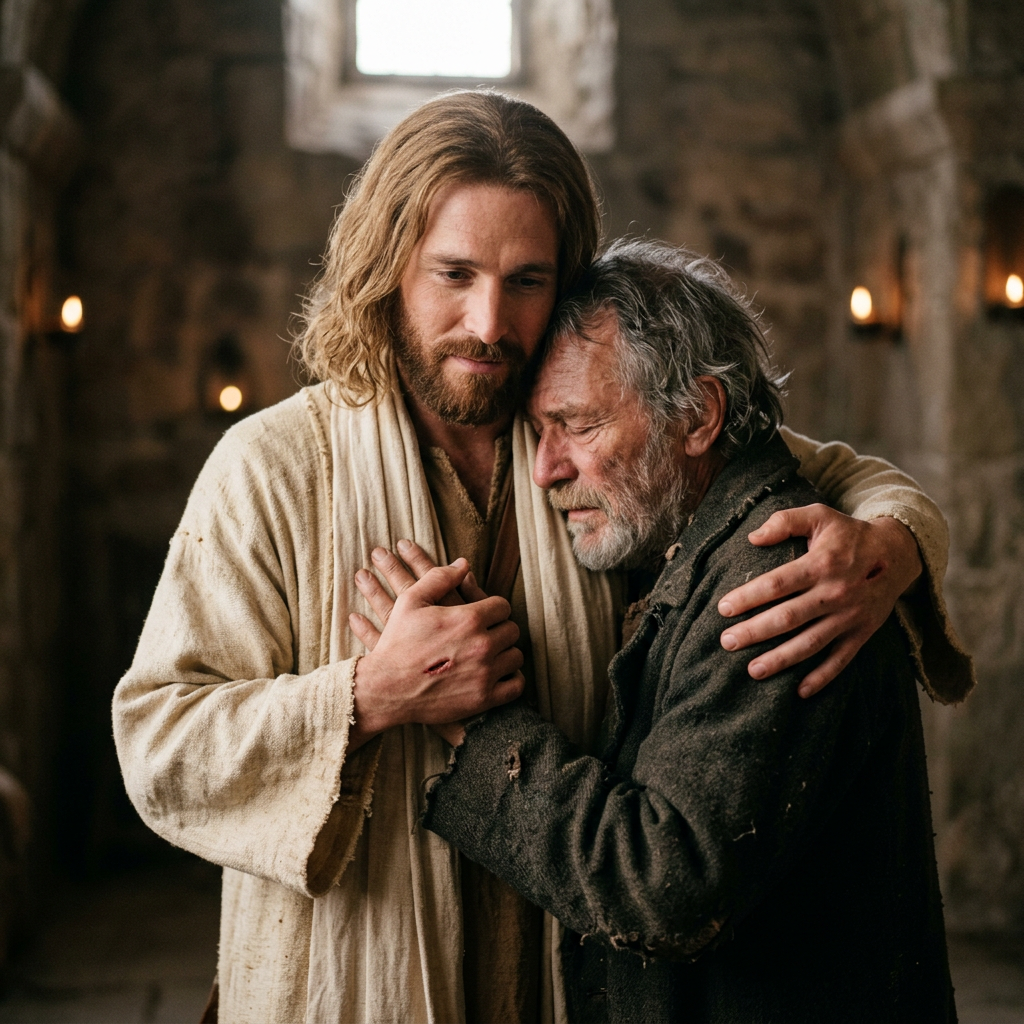
Jesus did not rush past people’s pain.
He wept with those who wept.
He touched lepers.
He comforted the brokenhearted.
He met people where they were before leading them where they needed to go.
When someone is hurting, our first response should not be to minimize their struggle. It should be to walk beside them.
The New Testament Pattern
The New Testament does not teach:
“Ignore your struggles.”
Neither does it teach:
“Live in your struggles.”
Instead, it teaches:
- Acknowledge the burden.
- Bring it to Christ.
- Receive His grace.
- Continue walking by faith.
This is why believers can simultaneously say:
“I am struggling.”
and
“God is faithful.”
Those statements are not contradictory.
The first acknowledges reality.
The second acknowledges a greater reality.
The Right Kind of Encouragement
When someone shares a burden, perhaps our response should look more like this:
“I’m sorry you’re going through that.”
“That sounds difficult.”
“I can understand why you’re hurting.”
“But hang in there.”
“God is with you.”
“He will never leave you nor forsake you.”
“His grace is sufficient.”
“You are not carrying this alone.”
Notice the difference.
We are not denying the pain.
We are pointing them to the One who walks with them through it.
Final Thoughts
The Christian life is not about pretending that difficulties do not exist.
Nor is it about becoming consumed by them.
We are free to acknowledge our struggles because our confidence is not in ourselves.
The believer does not need a plastic smile.
The believer needs Christ.
We can honestly admit our weakness because God’s strength is made perfect there.
We can acknowledge our burdens because we have Someone to cast them upon.
And we can encourage one another—not by minimizing suffering—but by reminding each other that the One who lives within us is greater than anything we face.
The answer is not denial.
The answer is not self-reliance.
The answer is Christ in us, the hope of glory.
Continue reading
Related reading:


Leave a Reply