

In a small room, two friends sat across from each other, locked in a heated yet honest exchange of faith and doubt. One sought answers; the other hoped to guide. The air was thick with tension and contemplation, the kind that often arises when spiritual convictions are put to the test.
Person 1: “I’m not interested in miracles.”
Person 2: “Do you get sick?”
Person 1: “Yes.”
Person 2: “So when you say, ‘I’m not interested in miracles,’ do you mean you don’t want to be healed?”
Person 1: “No, I want to be healed, but I want it if it’s His will.”
Person 2: “Well, do you go to the hospital?”
Person 1: “Yes, of course.”
Person 2: “So do you ask God if it’s His will to go to the hospital?”
Person 1: “No, I don’t. Don’t be silly.”
Person 2: “But why? You don’t ask God for a miracle because you want His will to be done, but you go to the hospital without asking if it’s His will. Do you think that if God wanted someone to be sick, they’d still be healed by the hospital?”
Person 1: “No, absolutely not. God is sovereign.”
Person 2: “So you go to the hospital despite not knowing whether it’s God’s will to heal. Why?”
Person 1: “Because if it’s God’s will, it will happen.”
Person 2: “So how do you know if it’s God’s will?”
Person 1: “If it happens.”
Person 2: “And if it doesn’t happen?”
Person 1: “Then it’s not God’s will.”
Person 2: “But the Bible doesn’t say that.”
Person 1: “What does it say?”
Person 2: “It says that if we have faith, then it will happen, because of Isaiah 53.”

The back-and-forth grew more intense, diving into the heart of sovereignty, free will, and divine intervention.
Person 2: “If God is sovereign and plans everything, why go to the hospital? If God doesn’t want healing, it won’t happen anyway, right?”
Person 1: “I… I don’t know. I just go.”
Person 2: “The fact that you go to the hospital means you want to be healed.”
Person 1: “Well, of course.”
Person 2: “So, you’re reluctant about miracles, yet go to the hospital for healing. Doesn’t that mean you either don’t believe in sovereignty or don’t believe that God will heal you?”
Person 1: “I firmly believe God is sovereign and plans everything.”
Person 2: “Then do you think God doesn’t care and just uses doctors? If they heal, it’s His will; if they don’t, it isn’t?”
Person 1: “Yes, yes, that’s it.”
Person 2: “What if the doctors make a mistake—malpractice, say?”
Person 1: “Well, they can’t because if it’s God’s will…”
Person 2: “Nope, you can’t say that anymore. You already said God doesn’t have a say in our physical condition.”
The dialogue circled back to the same questions: Was God involved in suffering? Did He care? And if so, why did suffering exist at all?
Person 2: “So if suffering is supposed to make us mature spiritually, why go to the doctor? Doesn’t that stand against your spiritual growth?”
Person 1: “I don’t know. Maybe it does.”
Person 2: “Then does going to the doctor mean you’re walking according to the flesh ?”
Person 1: “Ohhh… I don’t know.”
Person 2: “And doesn’t it mean that, for true spiritual growth, you should ask for more suffering rather than seek healing?”
Person 1: “When you say it that way… yes.”
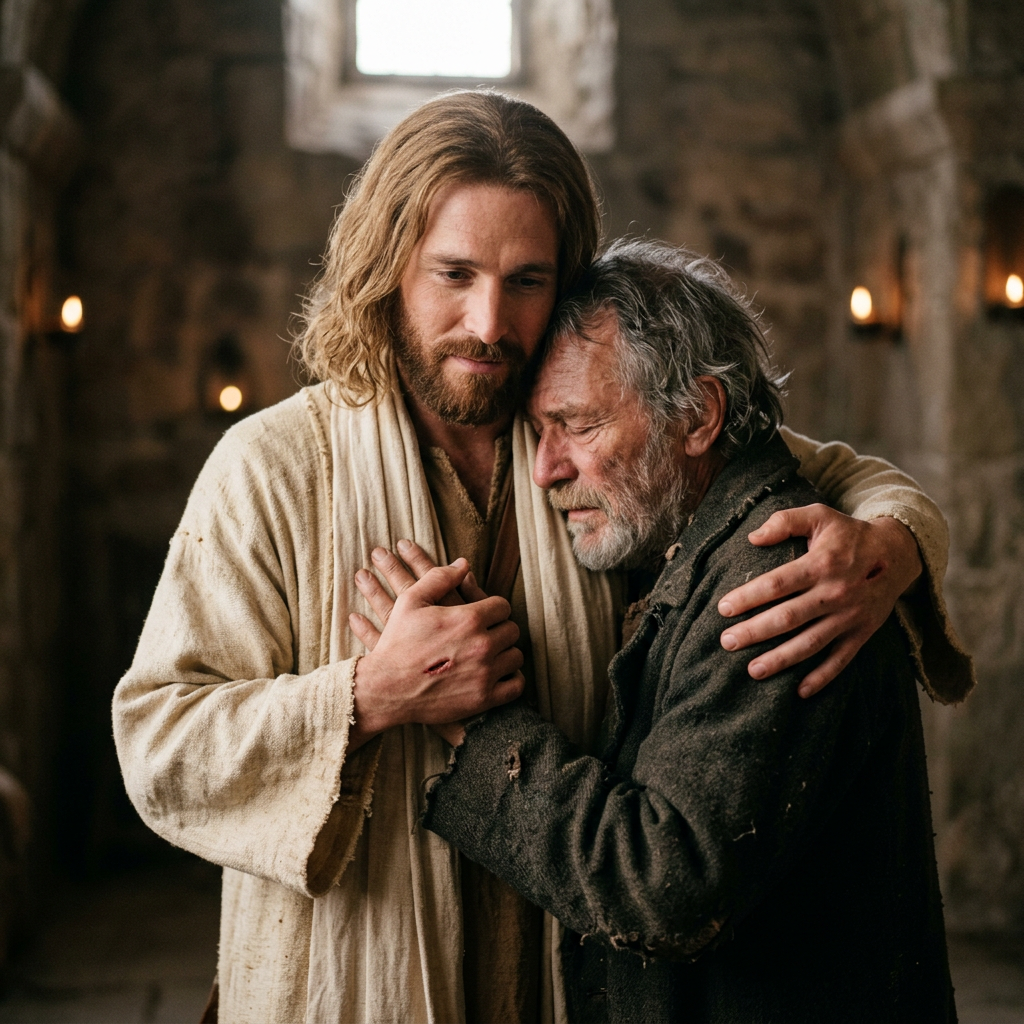
At last, Person 2 leaned forward, their tone softer now, like a physician about to deliver a diagnosis with care.

Person 2: “Can I tell you why this doesn’t make sense? It’s because of the religious ideology fed into you since childhood. God loves you and cares for you. Let me show you the truth about God—the one Father, full of love—and Jesus Christ, who is Love itself.”
Person 1: weeping “Where?”
Person 2: “To His love letter: the Bible.”
And with that, they opened the Word together, stepping into a journey where doubt met divine love, and faith was not just a struggle but an invitation to experience the heart of God.
Disclaimer: Person 2 was not against going to the doctor. Person 2’s intention was to show that it was always God’s will to heal, whether through doctors or through miracles. When someone says that they don’t want miracles and defers to the sovereignty of God, often they are hiding a deep lack of faith in the promises of God. Person 2 wanted Person 1 to see that.
Continue reading
Related reading:


Leave a Reply