
One of the most common observations Christians make—quietly or openly—is this:
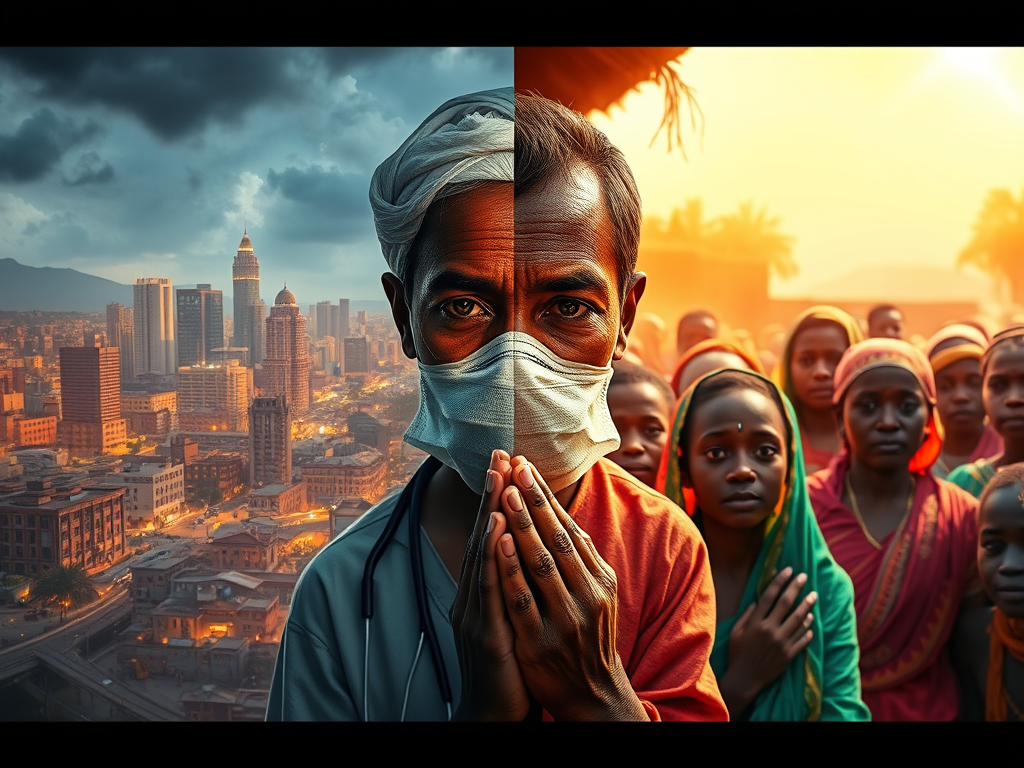
Why do we seem to hear about dramatic miracles more often in places of poverty than in places of prosperity?
People often point to regions like parts of Africa or rural India and compare them with the West. The contrast appears stark. In developed nations—with education, healthcare systems, insurance, infrastructure, and social safety nets—miracles seem less visible. But in places where options are few, testimonies abound.
Is this coincidence?
Or is something deeper at work?
It’s Not About Geography
This is not about God favoring one continent over another. God does not distribute grace geographically. Grace has already been fully given in Christ.
The difference lies elsewhere.
It lies in self-sufficiency versus dependence.
In much of the West:
- If you’re sick, you have doctors and insurance
- If there’s an accident, coverage steps in
- If finances fail, systems exist to cushion the fall
None of these are bad. In fact, they are good. But they create something subtle and dangerous: Plan B. We become dependent on those things subconsciously or consciously.
“If We Don’t Get Healed, We Die”
A story shared by Curry Blake captures this tension well. While training pastors in Africa, he noticed that many saw remarkable healings. When he asked one pastor why, the answer was simple and sobering:
“In America, there are many options. Here, if we don’t get healed, we die.”
That statement isn’t mystical—it’s practical.
When there is no fallback, trust becomes undivided.
Trusting in Riches Is Trusting in Yourself
Scripture puts it plainly:
“Whoever trusts in riches will fall.” (Proverbs 11:28)
Riches don’t only mean money. They include:
- Systems
- Security nets
- Influence
- Control
- Predictability
When these become our confidence, we subtly become our own source.
That’s not wisdom—that’s pride.
And pride doesn’t block grace because God withholds it. It blocks access of grace because we no longer depend on it.
Grace Is Perfected in Weakness
When God said to Paul:
“My grace is sufficient for you, for My power is perfected in weakness”
He wasn’t saying, “I’ll give you more grace when life gets harder.”
Grace is already complete.
What changes is access.
Weakness is the posture of saying:
“I have nowhere else to go.”
That posture opens our eyes to what has always been available.
Healing, Grace, and the Renewal of the Mind
Healing is already included in the atonement.
Grace has already been given in full.
But manifestation flows through renewed thinking.
“Be transformed by the renewal of your mind.” (Romans 12:2)
Renewal does not mean convincing yourself harder. It means letting go of competing confidences.
True Sufficiency: Less in Ourselves, Everything in Christ
This is the paradox of the gospel:
- In ourselves, we are insufficient
- In Christ, we lack nothing
True renewal says:
“Without Him, I can do nothing.
In Him, I have everything, and I am never without Him”
That posture doesn’t reject systems—it refuses to trust in them.
It doesn’t despise prosperity—it refuses to depend on it.
It doesn’t chase miracles—it rests in grace.
And where dependence is undivided, transformation follows.
Final Thought
Miracles don’t happen because people are poor.
They happen because self-reliance runs out.
The invitation for those of us surrounded by comfort is not to abandon provision—but to abandon confidence in it.
Grace thrives when we reach the end of ourselves.
And that end is often the beginning of seeing what has been ours all along.
Continue reading
Related reading:

Leave a Reply