
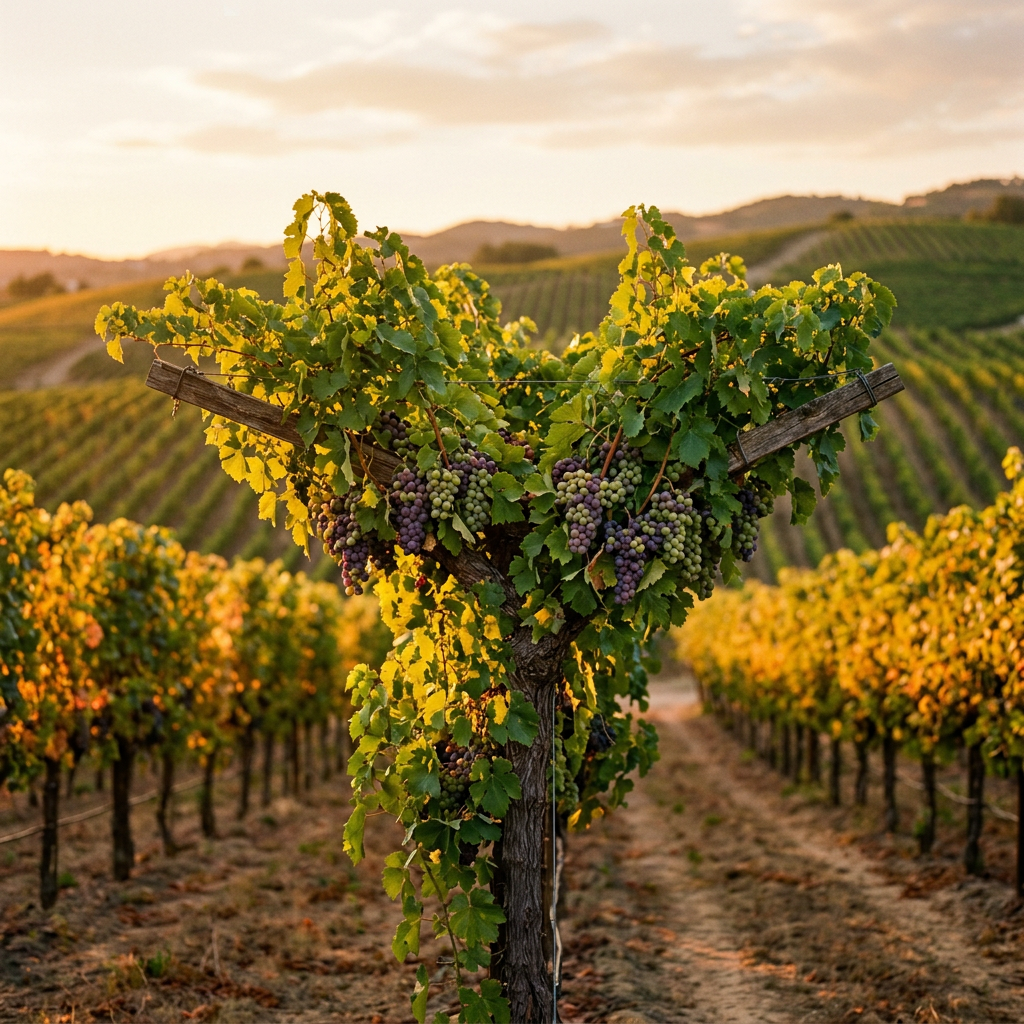
“I am the true vine, and My Father is the vinedresser. Every branch in Me that does not bear fruit, He takes away; and every branch that bears fruit, He prunes it so that it may bear more fruit. You are already clean because of the word which I have spoken to you. Abide in Me, and I in you. As the branch cannot bear fruit of itself unless it abides in the vine, so neither can you unless you abide in Me. I am the vine, you are the branches; he who abides in Me and I in him, he bears much fruit, for apart from Me you can do nothing. If anyone does not abide in Me, he is thrown away as a branch and dries up; and they gather them, and cast them into the fire and they are burned. If you abide in Me, and My words abide in you, ask whatever you wish, and it will be done for you. My Father is glorified by this, that you bear much fruit, and so prove to be My disciples. Just as the Father has loved Me, I have also loved you; abide in My love. If you keep My commandments, you will abide in My love; just as I have kept My Father’s commandments and abide in His love. These things I have spoken to you so that My joy may be in you, and that your joy may be made full. – John 15:1-11
John 15 has always been one of those passages that sounds beautiful at first and then, for many people, becomes unsettling very quickly.
Jesus says that He is the vine and that we are the branches. That sounds like a wonderful picture of connection with Him. But then He speaks about branches that do not bear fruit, branches being taken away, branches being pruned, and later branches being thrown into the fire.
So the questions come naturally.
Could God cut me off if I do not bear enough fruit? Could I somehow become separated from Christ? Am I supposed to examine my life constantly to make sure I am fruitful enough?
These are not small questions, and they are exactly why the context of John 15 matters so much.
The Branch That Is “In Me”
Jesus begins:
“I am the true vine, and My Father is the vinedresser.”
Then He says:
“Every branch in Me that does not bear fruit…”
That little phrase, “in Me,” is important.
Jesus is describing a branch that is in Him and yet is not presently bearing fruit. That should make us cautious about saying that a lack of fruit automatically proves someone was never really connected to Christ.
Whatever else we conclude from the passage, Jesus Himself seems to allow for a distinction between being in Him and presently bearing fruit.
That distinction matters.
What Does “Takes Away” Mean?
The next question is what the Father does with the fruitless branch.
Most English translations say that He “takes it away.” The Greek verb is airō. It can mean to remove or take away, but it can also mean to lift, raise, or take up.
That is why some understand the picture as a vinedresser lifting up a struggling branch and tending to it so that it can become fruitful.
It is important not to overstate the Greek. Airō really can mean “remove,” so we should not say that “lift up” is the only possible translation.
But “lift up” is certainly within the range of the word, and it fits naturally with the picture of a gardener caring for his vine.
The larger point is that the Father is the one tending the branches.
The focus is not on the branch trying to rescue itself.
Pruning and Cleansing
Jesus then says:
“Every branch that bears fruit He prunes, that it may bear more fruit.”
The word translated “prunes” is kathairei, which carries the idea of cleansing.
Then, immediately afterward, Jesus says:
“You are already clean because of the word which I have spoken to you.”
The word translated “clean” is katharoi, from the same word family.
There is an obvious connection between the two ideas.
But “you are already clean” does not mean “you are already perfectly fruitful.” Those are not the same thing.
A person can be clean, belong to Christ, and still need growth. In fact, verse 2 seems to allow for exactly that: a branch can be “in Me” and yet not be bearing fruit at that moment.
Being clean speaks to their standing and relationship with Christ. Fruitfulness speaks to what is being expressed through that relationship.
Fruit Does Not Create the Connection
This is where the vine-and-branches picture becomes especially important.
A branch does not produce fruit in order to become part of the vine.
It bears fruit because it is drawing life from the vine.
Jesus says:
“As the branch cannot bear fruit of itself, unless it abides in the vine, neither can you, unless you abide in Me.”
The branch cannot bear fruit of itself.
That is the point.
Jesus is not giving us a self-improvement program. He is showing us that spiritual life does not originate in us.
The branch receives.
The vine supplies.
Fruit comes from the life flowing through the connection.
What Does It Mean to Abide?
The word “abide” has often been turned into another religious burden.
People hear, “You need to abide more,” and it begins to sound like a higher level of Christianity that must be reached and maintained.
But the word simply means to remain, stay, dwell, or live.
To abide somewhere is to live there.
And the historical context matters here. Jesus spoke these words before the cross, resurrection, and Pentecost. He was describing a relationship that was about to become a new reality for His disciples: “you in Me, and I in you.”
At that moment, they were physically beside Him. But He was speaking about something deeper — a union in which His life would dwell in them.
For the believer today, that relationship has already begun.
We are not waking up each morning outside of Christ and then trying to get back into Him through prayer, obedience, or spiritual effort.
We are in Christ.
Christ lives in us.
“Apart From Me You Can Do Nothing”
Jesus then says:
“Apart from Me you can do nothing.”
This statement is often read as though believers repeatedly move in and out of Christ depending on how well they are doing spiritually.
But that is not the point of the vine analogy.
Jesus is saying that He is the source of life.
A branch cannot produce life independently of the vine.
The good news for the believer is not that we must somehow reconnect ourselves every day.
The good news is that we have been joined to Him.
The issue is dependence, not insecurity.
What About the Branches That Are Burned?
Later Jesus says:
“If anyone does not abide in Me, he is thrown away as a branch and dries up; and they gather them and cast them into the fire.”
This is usually where fear returns.
Could that be a believer who failed to abide well enough?
But we need to interpret that statement alongside everything else Jesus has said about those who belong to Him.
He says that His sheep will never perish. He says that no one can snatch them from His hand. The New Testament repeatedly describes believers as being in Christ, joined to Him, and indwelt by His Spirit.
So it makes more sense to see the contrast here as one between life in Christ and life apart from Him, rather than between a believer who abides successfully one day and fails the next.
There is also the broader context of John’s Gospel. Judas had already gone out to betray Jesus. He had been outwardly associated with Jesus and the disciples, yet something very different was true inwardly.
John repeatedly draws a distinction between outward association with Jesus and actually possessing His life.
That context matters when we come to the warning passages.
“You Are Already Clean”
This statement deserves to be heard clearly:
“You are already clean.”
Jesus does not say, “Produce enough fruit and then you will become clean.”
He does not say, “Try harder to stay clean.”
He tells His disciples that they are already clean because of the word He has spoken to them.
That means their identity is not something they are trying to earn through fruitfulness.
Fruit matters. Growth matters. Love matters.
But those things flow out of life in Christ; they are not the price of admission.
Abiding in His Love
Later in the chapter Jesus says:
“As the Father loved Me, I also have loved you; abide in My love.”
This gives us the atmosphere of the whole passage.
Jesus is not saying, “Behave well enough so that I will love you.”
He says, in effect, “I have loved you. Live there.”
That is what abiding looks like.
It is living from the reality of His love instead of constantly wondering whether we have fallen out of it.
What About His Commandments?
Jesus also says:
“If you keep My commandments, you will abide in My love.”
For some people, the word “commandments” immediately brings the whole Mosaic law back into the picture.
But Jesus explains what He means:
“This is My commandment, that you love one another as I have loved you.”
And John later summarizes His commandment in terms of believing in Christ and loving one another.
Again, notice the order.
Jesus does not say, “Love one another so that I will love you.”
He says, “Love one another as I have loved you.”
His love is the source.
Our love is the response.
Why Fruit Matters
If we are already clean, already accepted, and already in Christ, then why does fruit matter at all?
Because fruit is what the life of Christ looks like when it is expressed through us.
Love fits the believer.
Kindness fits the believer.
Generosity fits the believer.
Truth fits the believer.
Good works are not a way to become God’s people. They are the natural outworking of the life we have already received.
Fruit is not payment for life.
Fruit is the expression of life.
The Purpose Is Joy, Not Fear
Near the end of this section Jesus says:
“These things I have spoken to you so that My joy may be in you, and that your joy may be made full.”
That verse should shape how we hear the rest of the passage.
Jesus did not give the vine-and-branches teaching so that believers would spend their lives anxiously inspecting themselves.
The purpose includes joy.
The joy comes from knowing where life comes from.
Christ is the Vine.
We are the branches.
We do not create the life.
We receive it.
The Heart of John 15
The vine-and-branches picture is ultimately about union with Christ.
It is about His life becoming our source.
It is about His love becoming the place where we live.
It is about the Father tending the branches.
And it is about fruit flowing from connection rather than from fear.
The branch does not become part of the vine by producing fruit.
It produces fruit because it receives life from the vine.
That is the heart of John 15.
The believer is not trying to become connected to Christ.
The believer lives in Christ.
And Christ lives in the believer.
Continue reading
Related reading:
2 responses to “Will God Cut Off a Fruitless Christian? : John 15:1-11”
-
Once again some amazing insights into what the true meaning of scripture is.
-
Thank you for your encouragement.
-




Leave a Reply