

This is one of the most frequently quoted verses about church attendance, but in context, Hebrews 10:25 is saying something both more specific and more profound than simply “go to church every Sunday.”
First let’s read the verse
and let us consider how to stimulate one another to love and good deeds, not forsaking our own assembling together, as is the habit of some, but encouraging one another; and all the more as you see the day drawing near.
Heb 10:24-25
Let’s look at the passage in context.
The Context: Three “Let Us” Statements
Hebrews 10:22–25 contains three exhortations:
- Let us draw near (v.22)
- Let us hold fast (v.23)
- Let us consider one another… not neglecting to meet together (vv.24–25)
Notice the flow:
- Relationship with God
- Confidence in Christ
- Care for fellow believers
The gathering is connected to encouraging one another, not to fulfilling a religious obligation.
Why Was Hebrews Written?
The recipients of Hebrews were Jewish Christians facing persecution.
Many were tempted to:
- abandon Christian fellowship,
- return to the synagogue,
- and ultimately drift back toward the Old Covenant.
Throughout Hebrews the author repeatedly warns against “drifting away” (Hebrews 2:1), developing an unbelieving heart (Hebrews 3:12), and shrinking back (Hebrews 10:39).
In that context, verse 25 says:
“…not neglecting to meet together, as is the habit of some, but encouraging one another…”
The concern is not missing an occasional meeting.
The concern is abandoning the Christian community during a time of pressure.
What Does “Meet Together” Mean?
The Greek word is:
ἐπισυναγωγή (episynagōgē)
It means:
- gathering together
- assembly
- coming together
It is used only twice in the New Testament:
- Hebrews 10:25
- 2 Thessalonians 2:1 (“our gathering together to Him”)
The word itself does not specify:
- a church building,
- a Sunday service,
- a denomination,
- or a formal liturgy.
In the first century, Christians usually met in homes, since dedicated church buildings did not yet exist.
The emphasis is on believers assembling together.
Is the Verse Commanding Weekly Church Attendance?
Not directly.
The verse does not say:
“Every Christian must attend a Sunday morning service every week.”
Those categories simply are not addressed here.
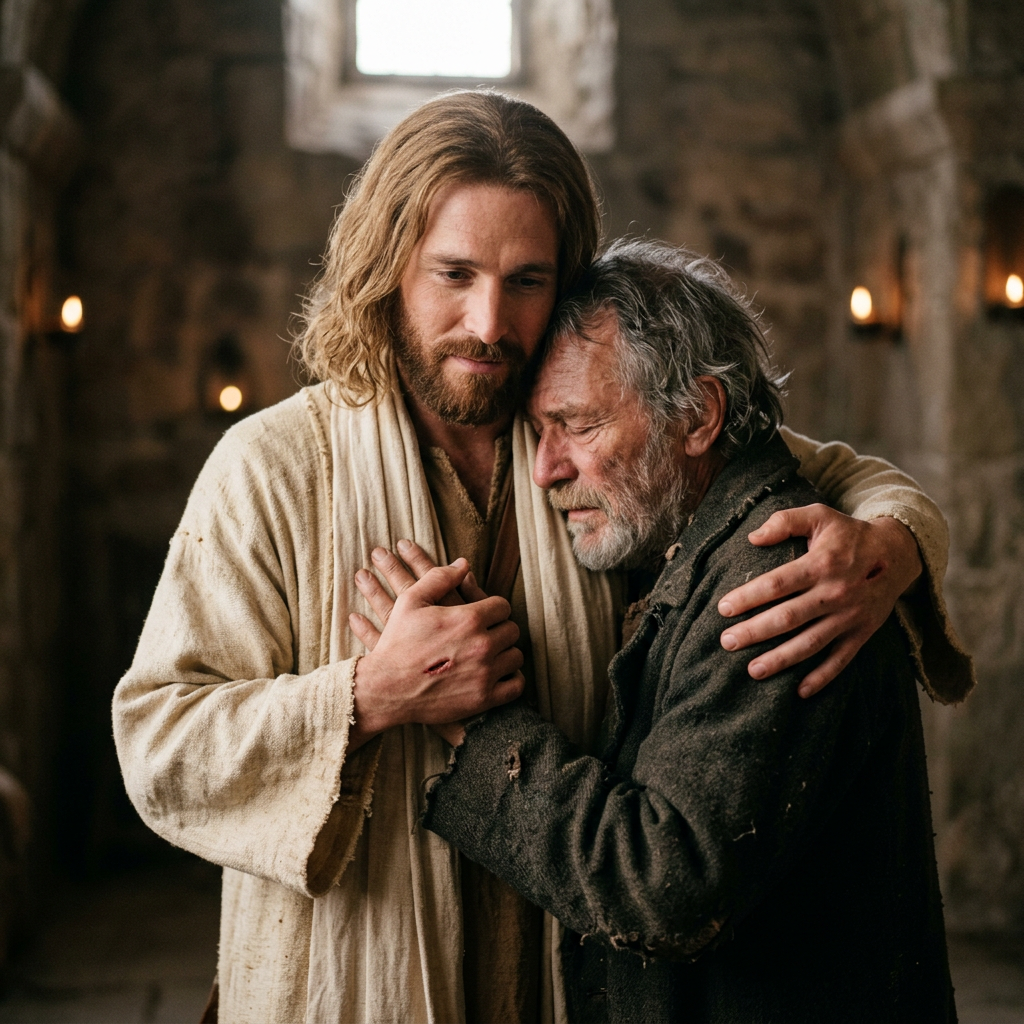
What it does teach is that believers should not isolate themselves from the body of Christ.
Why?
Because Christians need one another.
The purpose given in the text is:
- encouraging one another,
- stirring one another to love and good works,
- strengthening one another as “the Day” approaches.
A Finished-Work Perspective
From a finished-work perspective, this passage is not introducing another requirement for maintaining God’s acceptance.
Notice the order:
Christ has already:
- opened the way,
- cleansed our consciences,
- given us confidence,
- become our High Priest.
Therefore…
- draw near,
- hold fast,
- encourage one another.
The gathering is a response to grace, not a condition for grace.
We do not assemble to earn God’s favor.
We assemble because we already share God’s favor in Christ.
Does This Mean Church Doesn’t Matter?
No.
The New Testament consistently presents believers as part of a community.
Healthy fellowship includes:
- worship,
- teaching,
- prayer,
- encouragement,
- serving,
- bearing one another’s burdens,
- and using spiritual gifts for the good of others.
If someone says,
“I love Jesus, but I don’t need any other Christians,”
Hebrews 10:24–25 challenges that attitude.
The Christian life was never intended to be lived in isolation.
Does It Have to Be a Traditional Church Service?
The text itself does not specify the format.
In the New Testament, believers met:
- in homes,
- for meals,
- for prayer,
- for teaching,
- and for mutual encouragement.
The principle is meaningful Christian fellowship, not a particular building, schedule, or style of gathering.
The Heart of Hebrews 10:25
Hebrews 10:25 is less about checking off attendance and more about remaining connected to the body of Christ.
The author’s concern is that believers, especially under pressure, would withdraw from Christian fellowship and lose the encouragement that comes from reminding one another of the gospel.
From a finished-work perspective, the verse is not saying:
“Attend church so God will be pleased with you.”
It is saying:
“Because Christ has already made you His own, don’t live the Christian life alone. Stay connected to fellow believers so you can encourage one another to keep trusting in His finished work.”
Continue reading
Previous in the Hebrews series: Are You Stirring Others to Love OR Fear?
Next in the Hebrews series: Does Hebrews 10:25 Mean Missing Church Is Disrespectful to God?
Related reading:


Leave a Reply