

Few questions cut as deep into Christian theology as this: Could Jesus have sinned while He was on earth? And an even darker thought follows: What if He had?
The Bible is clear that Jesus was sinless (1 Peter 2:22; Hebrews 4:15). But was His obedience inevitable — or did He walk the edge of possible failure? Let’s look at the two main views and then consider what the unthinkable would mean.
1. The Two Views: Peccable vs. Impeccable
- Peccable view (could sin, but didn’t): Jesus, being fully human like Adam, could have sinned but perfectly resisted every temptation. His obedience was genuine because disobedience was a real possibility.
- Impeccable view (could not sin): Jesus, being fully God as well as man, could never sin. God cannot sin (James 1:13), and since Jesus is God, His temptations were real pressures but never had the possibility of success.
Both sides affirm His sinlessness. The debate is whether temptation meant danger or only testing.
2. The Example of Adam
Some object to the impeccable view: “If Jesus couldn’t sin, how could His temptations be real?”
The answer lies in Adam. He was created sinless, without a fallen nature, yet he was tempted in Eden. The serpent twisted good desires — food, wisdom, beauty — into rebellion. Adam fell, not because he had inner corruption, but because he chose unbelief.
In the same way, Jesus had good human desires: hunger, glory, relief from suffering. Satan pressed on them, urging Him to take shortcuts outside God’s will. The temptation was real even without a sinful nature. Unlike Adam, Jesus trusted His Father perfectly and triumphed. That is why Paul calls Him the last Adam (1 Corinthians 15:45).
3. What If Jesus Had Sinned?
If Jesus had sinned, the consequences would be catastrophic:
- No redemption: He would need to die for His own sin, leaving humanity unredeemed.
- Spiritual death: Like Adam, He would be cut off from God’s life. But unlike us, He is also fully God. For Him to sin would mean God contradicting Himself — an impossibility (2 Timothy 2:13).
- Eternal ruin: Without a sinless sacrifice, salvation collapses. We would be eternally lost.
This thought experiment shows how utterly dependent salvation is on His sinlessness.
4. The Cross Was Always God’s Plan
Acts 2:23 tells us Jesus was “delivered up according to the definite plan and foreknowledge of God.”
Revelation 13:8 calls Him “the Lamb slain from the foundation of the world.”
The cross wasn’t a gamble. God wasn’t uncertain of the outcome. Rather, it displayed the Father’s absolute confidence in His Son’s perfect obedience. He delighted in Him (Isaiah 42:1) and knew He would trust Him all the way through suffering and death.
5. Why the Peccable View Has Force
I lean toward the peccable view for one reason: it highlights the daring reality of Jesus’ obedience.
- He faced temptation fully, without shortcuts.
- He endured the full weight of pressure — hunger, rejection, loneliness, Gethsemane agony — without ever yielding.
- His victory wasn’t automatic; it was the greatest act of trust in the Father the world has ever seen.
Theologians like Millard Erickson and Donald Macleod argue in this direction, stressing that His obedience means more if disobedience was genuinely possible. Some Wesleyan/Arminian voices say the same.
✅ Conclusion: What This Means for Us
Could Jesus have sinned? If we mean in His humanity, then yes — He faced the same possibilities Adam did. If we mean in His divine identity, then no — God cannot sin. Both truths converge in the mystery of the incarnation.
What if He had sinned? Then redemption would be impossible, humanity eternally lost, and even Jesus Himself spiritually cut off. But that was never a real possibility. The cross was not a gamble — it was the Father’s eternal plan, carried out in complete confidence in the Son’s perfect obedience.
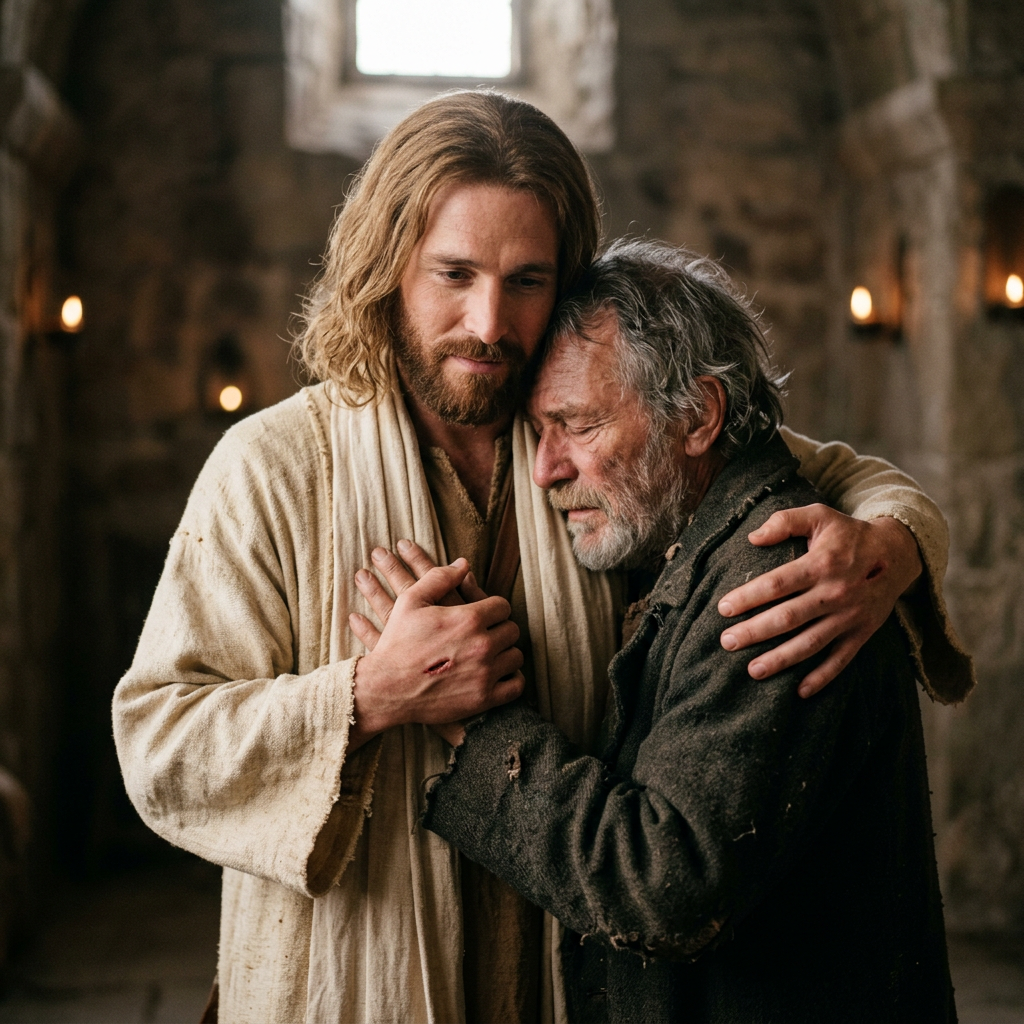
And here’s the comfort: because He obeyed perfectly, He is able to help us perfectly. Hebrews 4:15–16 tells us that He sympathizes with our weakness, and we can draw near to the throne of grace with confidence. When we fall, He does not turn away in disgust. He says, “I know what it is to feel the weight of temptation — and I overcame it for you. Come to Me for mercy and strength.”
Continue reading
Related reading:


Leave a Reply