

Have you ever noticed how much effort we put into hiding our flaws? We use filters, masks, and carefully chosen words to keep ourselves looking good in front of others. John Ortberg, in his book Everybody’s Normal Until You Get to Know Them, calls this out as one of the greatest obstacles to true community: the lack of authenticity.
We long to be known, but at the same time we fear being truly seen. So we cover ourselves—sometimes subtly, sometimes obviously. But God invites us to something far better: to live with unveiled faces.
Why We Hide
From the beginning of time, humans have hidden. We cover our blemishes, pretend to like things we don’t, laugh to avoid going deep, and build walls of busyness or spirituality to keep people at arm’s length.
Some people hide behind humor (think Chandler from Friends). Others hide behind silence, intellect, or even religiosity. Ortberg points out that we may impress people with our masks, but we will never build real friendships with them.
Ironically, the very thing we think will protect us—our veil—is the very thing that keeps us from connection.
Moses and the Veil
Paul, writing to the Corinthians, retells the story of Moses coming down from Mount Sinai. His face shone with God’s glory, but when that radiance began to fade, Moses put a veil over his face. Perhaps he didn’t want the people to see that the glow was gone.
Paul uses this as an illustration: when we try to look more “spiritual” than we really are, we’re just wearing a veil. But in Christ, we no longer have to pretend. We can live unveiled, confident in God’s love for us no matter what.
What’s Your Veil?
So let me ask: what’s your veil?
- Do you hide behind small talk?
- Do you mask yourself with humor?
- Do you bury yourself in busyness or success?
- Do you cover yourself with spiritual language while avoiding deeper honesty?
Each of us has something. And yet, as Ortberg reminds us, people are not drawn to perfection—they are drawn to authenticity.
people are not drawn to perfection—they are drawn to authenticity.
The Power of Disclosure
Psychologists have shown that hiding is harmful, while disclosure is healing. James Pennebaker’s research notes that confession and sharing reduce stress, improve health, and bring inner freedom.
The Bible said it long ago: “Confess your sins to one another and pray for one another so that you may be healed.”(James 5:16)
Real intimacy is built on disclosure. As Sidney Jourard once wrote, “Disclosure begets disclosure.”
“Disclosure begets disclosure.”
Jesus: The Perfect Model of Transparency
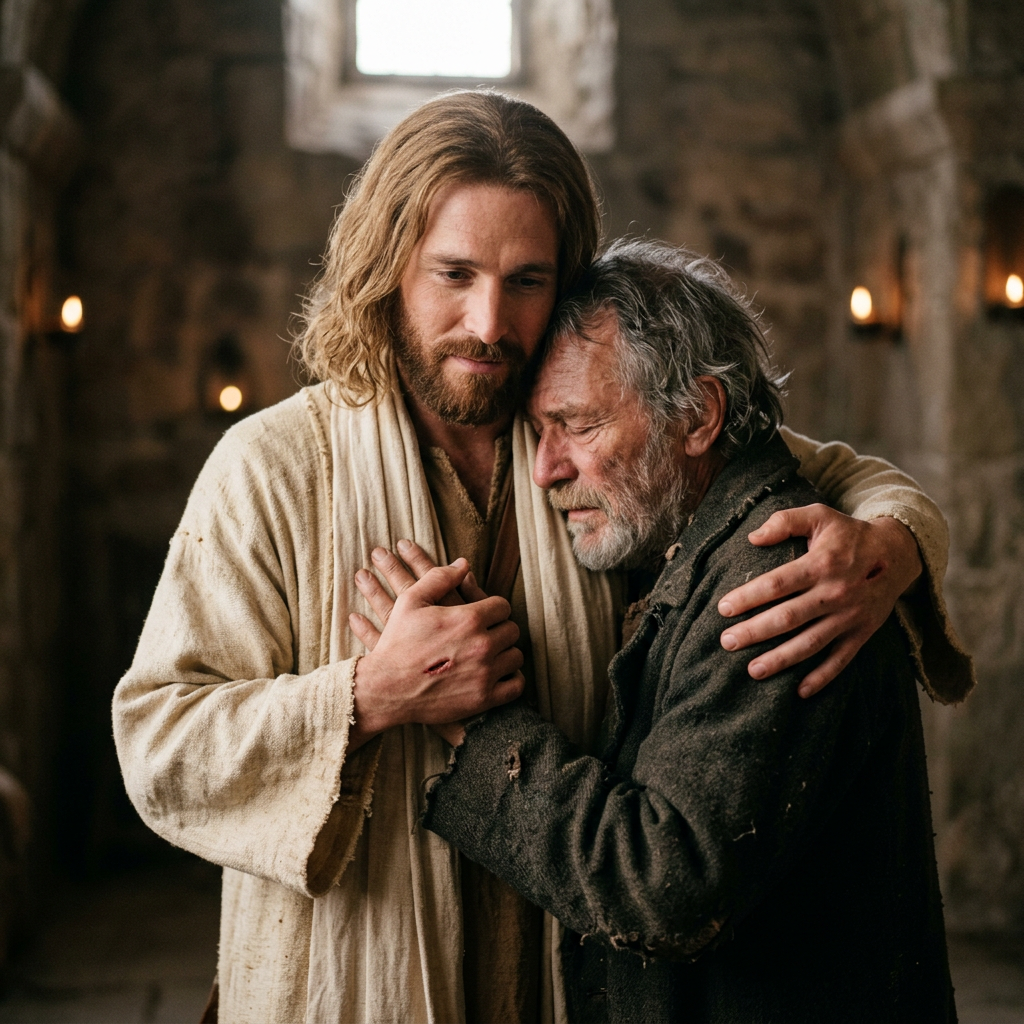
Jesus lived an unveiled life. Unlike leaders who keep a safe distance, He let His friends see Him laugh, weep, grow weary, and even wrestle with sorrow to the point of death. Before His crucifixion, He told His disciples:
“I no longer call you servants… I have called you friends, for everything I learned from my Father I have made known to you.” (John 15:15)
Jesus disclosed His heart. And in doing so, He modeled what authentic friendship looks like.
How to Live Unveiled
Ortberg suggests a few commitments that can help us live with unveiled faces:
- Give up people-pleasing. Stop trying to impress everyone.
- Have the courage to be honest. Share what you truly value and believe, even when others may not agree.
- Admit when you’re wrong. Resist the temptation to spin or hide your failures.
Living this way takes courage. But it also brings freedom.
No Healing in Hiding
Every one of us carries secrets, scars, or shame. Our instinct is to hide. But life and healing come not from concealing but from being found.
Authenticity is risky, yes. But it is also the only way to experience true community and deep friendships. The irony is that we wear masks to make people like us—yet people are only drawn to us when we take the masks off.
So here’s the question to leave you with: Will you choose to live with an unveiled face?
Continue reading
Related reading:


Leave a Reply