

“And let us consider how to stimulate one another to love and good deeds.”— Hebrews 10:24
One of the first things many new Christians hear after coming to faith is a long list of things they must now do in order to “remain” saved.
Sometimes the emphasis is negative:
- Don’t sin.
- Don’t do this.
- Don’t go there.
- Don’t associate with those people.
Other times the emphasis is positive:
- Pray more.
- Fast regularly.
- Attend every church service.
- Read your Bible every day.
- Serve in ministry.
Now, let me be clear.
Prayer is good.
Fasting has its place.
Reading Scripture is essential.
Gathering with other believers is a wonderful blessing.
These practices help us grow in our relationship with Christ.
But none of them are presented in Hebrews as conditions for maintaining God’s acceptance.
That acceptance has already been secured through the finished work of Jesus Christ.
After spending ten chapters explaining Christ’s perfect sacrifice, complete forgiveness, and our confidence before God, the author of Hebrews does something interesting.
He does not say,
“Now work hard to stay saved.”
Instead, he says,
“Let us consider how to stimulate one another to love and good deeds.”
Think about that.
From Receiving Grace to Expressing Grace
The New Testament never presents the Christian life as an endless attempt to earn what Christ has already given.
Instead, it teaches us to live outwardly from the new identity we have already received.
We have been sanctified.
We have been perfected forever.
We have been given a clean conscience.
We have confidence to enter God’s presence.
Now what?
Now we live out that new life.
Grace received becomes grace expressed.
Love received becomes love shared.
Forgiveness received becomes forgiveness extended.
The Christian life is not simply about avoiding sin.
It is about becoming a source of life to others.
“Consider” How to Encourage Others
Notice the first word of the verse.
“Let us consider…”
The Greek word means to think carefully, to pay close attention, or to thoughtfully observe.
In other words, encouragement does not happen by accident.
The author is telling believers to intentionally think about how they can bring out the best in other people.
Imagine if we spent as much time asking,
“How can I encourage someone today?”
as we spend worrying about ourselves.
How different would our families be?
Our churches?
Our workplaces?
Our communities?
Stimulate One Another
The word translated “stimulate” is strong.
It means to provoke, stir up, encourage, or motivate.
Usually, when we hear the word “provoke,” we think of provoking someone to anger.
Hebrews turns that idea upside down.
Instead of provoking anger…
Provoke love.
Instead of stirring division…
Stir generosity.
Instead of encouraging fear…
Encourage kindness.
Believers are called to become catalysts for goodness in the lives of others.
A Story About Seeing the Best in Others
I once heard a story about a woman who had recently moved to a small town.
She was the local pharmacist.
Unfortunately, she had gained a reputation for being rude.
People complained about her attitude and how difficult she was to deal with.
One day, an elderly woman entered the pharmacy.
She smiled warmly and said,
“You must be Sarah.”
Sarah nodded.
The elderly woman continued,
“Bill, my next-door neighbour, was telling me how impressed he was with your professionalism and how much care you show to everyone who comes in here. He said he’s never met anyone who serves people the way you do.”
Something changed in Sarah.
She began behaving differently.
She became more patient.
More caring.
More approachable.
Now, in this particular story, the elderly woman had not actually heard Bill say those things.
I am not suggesting that we should lie or flatter people dishonestly.
Scripture calls us to speak the truth.
But the story illustrates an important principle.
People often begin living up to the encouragement they receive.
Imagine how much greater the impact would be if we intentionally spoke truthful words that recognized genuine qualities, encouraged growth, and called out the best in others.
That is exactly the spirit of Hebrews 10:24.
What Are You Contributing to the World Around You?
This verse challenges us to ask an uncomfortable question:
What effect do my words have on other people?
Think about your conversations.
Think about your social media posts.
Think about your comments.
Think about the atmosphere you create wherever you go.
Are you constantly spreading fear?
Are you consumed with every political controversy?
Do your conversations always revolve around how society is collapsing?
Do you constantly speak about people who believe differently with contempt or hostility?
Do you add to the anger that already fills our world?
Or…
Do you leave people with greater hope than when you found them?
Do your words build others up?
Do you encourage people toward kindness?
Do you inspire generosity?
Do you remind people of God’s grace?
Do you help others see their value as those made in the image of God?
Our world does not need more voices amplifying outrage.
It has no shortage of fear.
News headlines compete for attention by fueling anxiety.
Social media algorithms reward outrage.
Arguments spread faster than compassion.
Hebrews invites believers to choose a different way.
Not because we ignore evil.
Not because we pretend problems do not exist.
But because we belong to the One who has already overcome the world.
People should encounter hope when they encounter followers of Christ.
Not because life is always easy.
But because Christ has already secured the ultimate victory.
Love Is the Fruit of the Finished Work
There is something beautiful about the order of Hebrews.
First, the author explains the finished work of Christ.
Only afterward does he talk about love and good deeds.
Religion often reverses that order.
Religion says:
Love more so God will love you.
The gospel says:
God has already loved you in Christ.
Therefore…
Love others.
Religion says:
Do good so you will be accepted.
The gospel says:
You have already been accepted.
Now go and do good.
Good works are not the root of our salvation.
They are the fruit of it.
The Heart of Hebrews 10:24
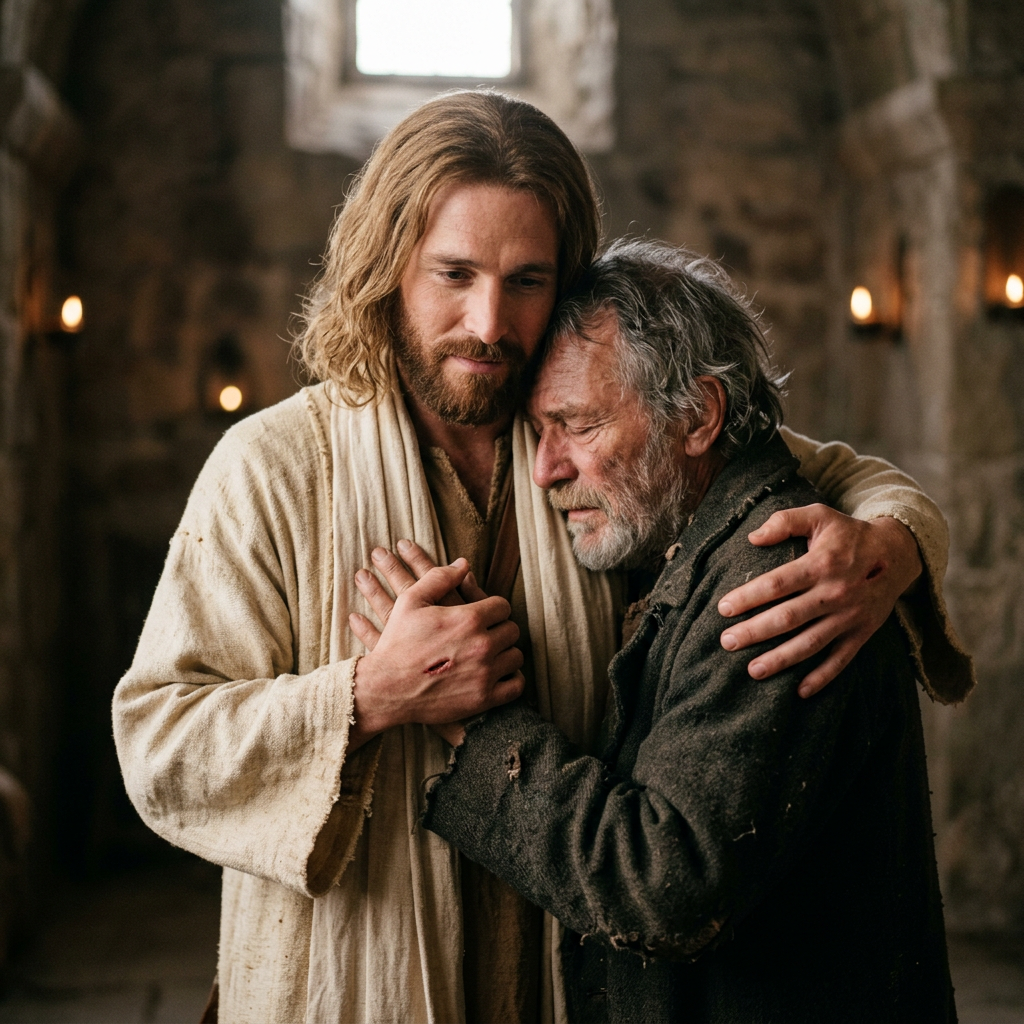
Hebrews 10:24 reminds us that the Christian life is far bigger than simply trying to avoid sin or maintain our standing with God. Because Christ has already secured our salvation through His finished work, we are now free to turn our attention outward. Instead of asking, “What must I do to stay accepted?” we begin asking, “How can I encourage someone today? How can I stir someone toward love? How can I leave this world better than I found it?”
That is what grace does.
Grace changes us.
Then grace flows through us.
The finished work of Christ frees us to become people who intentionally stir others toward love, goodness, hope, and life.
Continue reading
Previous in the Hebrews series: What Does Our Bodies Washed with Pure Water Mean?
Next in the Hebrews series: Is Hebrews 10:25 About Church Attendance?
Related reading:


Leave a Reply