
When God made His covenant with Abraham in Genesis 15, something extraordinary happened. Animals were divided and placed opposite each other, forming a pathway between the pieces. Then, in a vision, Abraham saw a smoking firepot and a flaming torch pass between the sacrifices (Genesis 15:17).
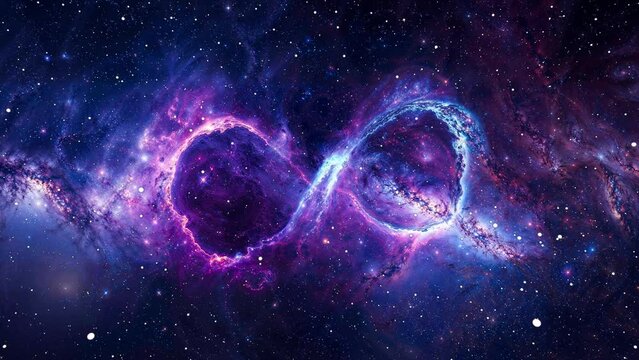
This moment established one of the most important covenants in the entire Bible. But when we pause and consider the arrangement of the sacrifices and the movement between them, we see something deeply symbolic: the pattern resembles an infinite loop, a sign that reflects the eternal nature of God’s covenant.
The Covenant Ceremony
In Genesis 15:9–10, God tells Abraham to bring several animals: a heifer, a goat, and a ram, along with birds. Abraham cuts the larger animals in half and places the pieces opposite each other.
This was a known covenant ritual in the ancient world. The two parties entering the covenant would walk between the pieces.
The message was clear: if either party broke the covenant, they would bear the fate of the sacrificed animals.
But in this covenant something remarkable happens. Abraham does not walk between the pieces. Instead, God alone passes through them.
Genesis 15:17 says:
“A smoking firepot with a blazing torch appeared and passed between the pieces.”
This represents the presence of God Himself.
A Covenant God Took Upon Himself
Normally both parties in a covenant ceremony walked through the sacrifices. But here, God alone passes through.
This means the covenant rests entirely on God’s faithfulness, not Abraham’s.
God was essentially declaring:
“I will guarantee this covenant. If it fails, the responsibility falls on me.”
This makes the covenant unilateral. It depends entirely on God’s unchanging nature.
The Symbolism of the Infinity Pattern
When we visualize the divided sacrifices and the path between them, the movement of passing between both sides can resemble a figure-eight pattern, which today is commonly recognized as the symbol of infinity (∞).
While the Bible does not explicitly describe the path as an infinity sign, the symbolism is powerful.
The covenant God makes is not temporary. It is everlasting.
This imagery beautifully reflects what Scripture repeatedly says about God’s promises:
- God’s covenant is eternal
- God’s word is unchanging
- God’s purposes cannot fail
The infinity symbol helps us visualize the endless nature of God’s covenant commitment.
Why Hebrews Talks About God’s Oath
The writer of Hebrews refers back to this covenant when explaining the certainty of God’s promises.
Hebrews 6:17–18 says God confirmed His promise with an oath so that the heirs of the promise would know that His purpose is unchangeable.
God did two things:
- He made a promise.
- He confirmed it with an oath.
These two things cannot fail because it is impossible for God to lie.
The heirs of that promise are those who belong to Christ.
Galatians 3:29 says:
“If you belong to Christ, then you are Abraham’s seed, and heirs according to the promise.”
The Covenant That Points to Christ
The covenant ceremony in Genesis 15 also points forward to the gospel.
In ancient covenants, breaking the agreement required the shedding of blood. Humanity repeatedly breaks covenant with God, yet God had already declared that He Himself would bear the cost.
The cross is where that covenant promise reaches its fulfillment.
Christ bears the penalty that covenant breaking deserves, securing forever the promises God made.
What began as a covenant ceremony in Genesis becomes the foundation of redemption.
The Endless Faithfulness of God
The image of an infinity pattern helps capture the beauty of this covenant.
God’s promise does not expire.
God’s covenant does not weaken with time.
God’s faithfulness never ends.
The covenant with Abraham continues through Christ to all who believe.
What God promised, He will surely fulfill.

Leave a Reply