

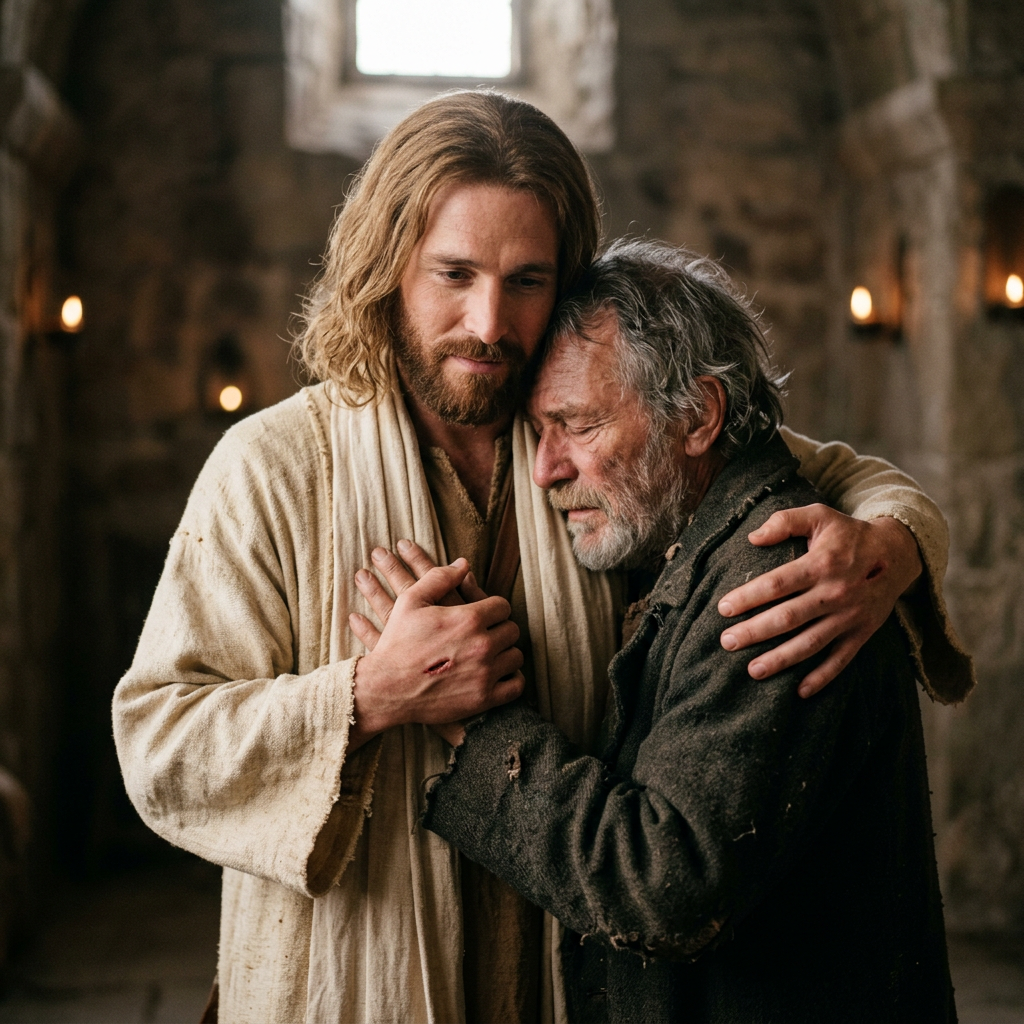
When Christians talk about Jesus, much emphasis is often placed—rightly—on His divinity. Jesus is God. He is eternal, sovereign, and worthy of worship. But the humanity of Jesus is just as essential to the gospel as His deity.
The Bible presents Jesus as fully God and fully human—not half of one and half of the other, and not switching between the two. This union of two complete natures in one Person is difficult for finite human minds to fully grasp, but it is clearly taught in Scripture and absolutely necessary for salvation.
Throughout church history, people have rejected one side or the other. Some claimed Jesus was merely human and not God (a view known as Ebionism). Others claimed He was divine but only appeared human (Docetism).
Both views are unbiblical. Remove either His humanity or His deity, and the gospel collapses. Let’s first read Heb 2:17-18
Therefore, He had to be made like His brethren in all things, so that He might become a merciful and faithful high priest in things pertaining to God, to make propitiation for the sins of the people. For since He Himself was tempted in that which He has suffered, He is able to come to the aid of those who are tempted.
Why the Humanity of Jesus Was Necessary
Jesus did not become human by accident. Scripture gives several clear reasons why the eternal Son had to come in the flesh.
Only a Human Could Redeem Humans Under the Law
“But when the fullness of time had come, God sent forth his Son, born of woman, born under the law, to redeem those who were under the law, so that we might receive adoption as sons.”
— Galatians 4:4–5
Only human beings are born under the law of God. Angels are not under the law. Animals are not under the law. Humanity alone bears legal responsibility before God.
Because all humans have broken the law, only a perfect human—one who fully obeyed it—could redeem other humans. Jesus, born under the same law, lived in complete obedience to it.
On the cross, He accomplished redemption by:
- bearing our sin
- fulfilling the law perfectly
- exchanging our guilt for His righteousness
“For our sake he made him to be sin who knew no sin, so that in him we might become the righteousness of God.” — 2 Corinthians 5:21
If Jesus were not fully human, this exchange would not be possible.
Only a Human Could Shed Blood for the Remission of Sins
From the beginning, God established that forgiveness of sin requires the shedding of blood.
“For the life of the flesh is in the blood… it is the blood that makes atonement for the soul.”— Leviticus 17:11
Animal sacrifices were allowed temporarily, but they were never sufficient to permanently remove sin.
“It is impossible for the blood of bulls and goats to take away sins.”— Hebrews 10:4
Jesus came as the perfect Lamb of God. He did not offer animal blood—He offered His own human life.
“Without the shedding of blood there is no forgiveness of sins.”
— Hebrews 9:22
If Jesus were not truly human, He could not shed blood, and without blood, there is no atonement.
Only a Human Savior Can Truly Sympathize With Us
The humanity of Jesus is not only about atonement—it is also about relationship and compassion.
“For we do not have a high priest who is unable to sympathize with our weaknesses, but one who in every respect has been tempted as we are, yet without sin.”— Hebrews 4:15
and
Therefore, He had to be made like His brethren in all things, so that He might become a merciful and faithful high priest in things pertaining to God, to make propitiation for the sins of the people. For since He Himself was tempted in that which He has suffered, He is able to come to the aid of those who are tempted.-
Hebrews 2:17-18
Jesus:
- experienced hunger and thirst
- faced temptation
- endured rejection and persecution
- lived in poverty
- suffered physical pain
- died a cruel and lingering death
Angels cannot experience these things. Animals cannot understand them. Only a human being can.
Because Jesus lived as a real human:
- His sympathy is experiential, not theoretical
- His help is compassionate, not detached
- His priesthood is personal, not distant
He knows human weakness from the inside.
Confessing Jesus Came in the Flesh Is Essential to the Faith
Scripture is explicit that believing in the true humanity of Jesus is not optional.
“Every spirit that confesses that Jesus Christ has come in the flesh is from God, and every spirit that does not confess Jesus is not from God.”— 1 John 4:2–3
Denying the humanity of Jesus:
- undermines the cross
- denies the shedding of blood
- removes His sympathy
- empties the gospel of its saving power
Jesus came in the flesh.
He lived as a man.
He died as a man.
He rose bodily.
And He remains fully human and fully God forever.
Final Thoughts
The humanity of Jesus is not a secondary doctrine—it is foundational.
Without His humanity:
- there is no redemption under the law
- there is no shedding of blood
- there is no true high priest
- there is no salvation
Jesus is not either God or man.
He is fully God and fully human—and because of that, salvation is complete, secure, and personal.
To deny either nature is to lose the gospel itself.
Continue reading
Previous in the Hebrews series: He Rendered Him Powerless
Next in the Hebrews series: A Merciful and Faithful High Priest
Related reading:


Leave a Reply