
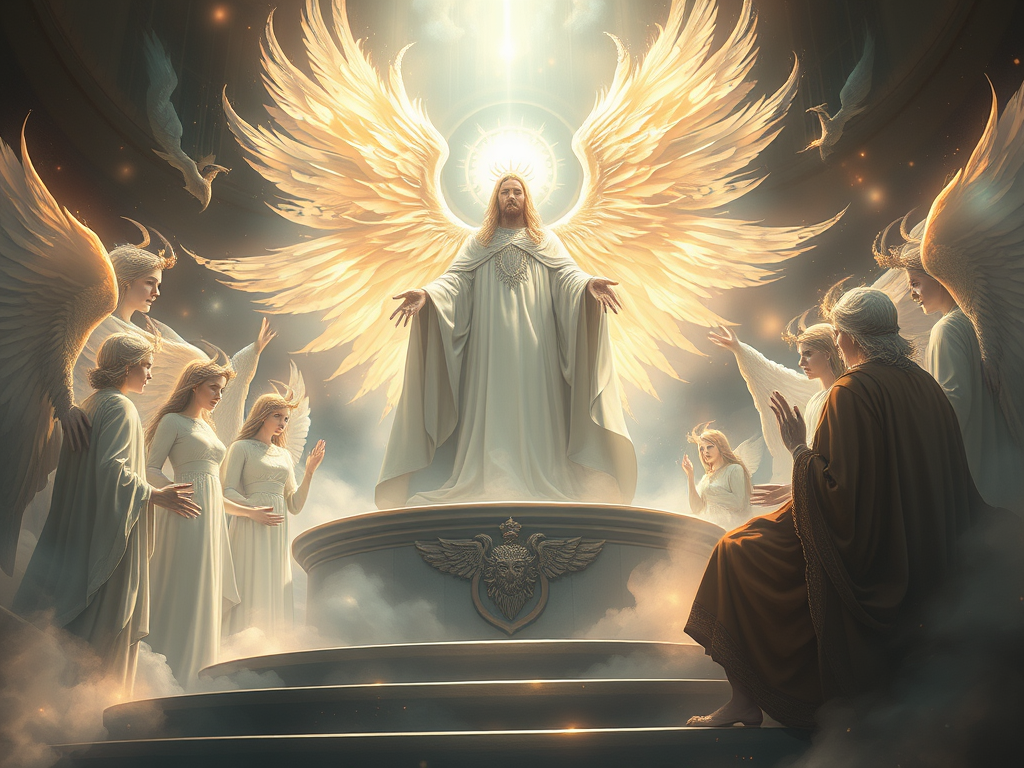
Discussions about the divine council and the “sons of God” often generate confusion, fear, or unnecessary speculation. Yet these ideas are not modern inventions, nor are they fringe theology. They arise directly from the biblical text itself.
Especially when we read certain texts in the Bible, it clearly refers to the divine council and sons of God, but Biblical commentators have been a bit wary of including them. However, the most prominent Biblical scholar who studied about this is Michael Heiser.
Michael S. Heiser argued that the Old Testament presents a divine council worldview that is fully compatible with strict biblical monotheism. His aim was not to introduce new doctrine, but to read Scripture as its original audience would have understood it.
1. What Is the Divine Council?
In Heiser’s framework, the Divine Council refers to:
YHWH presiding as the supreme, uncreated God among other real but created spiritual beings who serve Him.
Key characteristics of this council include:
- YHWH alone is eternal, uncreated, and sovereign
- Council members are created heavenly beings
- They are not rivals, equals, or independent gods
- They operate only with delegated authority under God’s rule
A foundational passage is:
“God (Elohim) stands in the divine council; in the midst of the gods (elohim) He holds judgment.”— Psalm 82 1
This passage clearly distinguishes between YHWH, who judges, and other beings also called elohim, who are subject to judgment.
2. Elohim: Category, Not Equality
A key contribution of Heiser’s work is his explanation of the Hebrew term elohim.
Heiser emphasized that elohim is a “place-of-residence” term, not a “quality-of-being” term. In other words, it describes which realm a being belongs to, not what kind of being it is in terms of power or authority.
This leads to three important clarifications:
- Elohim ≠ YHWH
- YHWH is an elohim, but utterly unique
- Other spiritual beings can be called elohim without being God
YHWH alone is:
- Uncreated
- Eternal
- Sovereign
- Worthy of worship
Other elohim exist in the spiritual realm but do not share His nature or status.
This distinction preserves biblical monotheism while allowing Scripture to speak honestly about the supernatural world.
3. Who Are the “Sons of God”?
Heiser argued that the phrase “sons of God” (bene elohim) in the Old Testament refers to divine/heavenly beings, not humans.
Key passages include:
- Job 1:6; 2:1; 38:4–7
- The sons of God present themselves before YHWH
- They existed before humanity
- Genesis 6:1–4
- Heiser understood this as referring to divine beings, not the “Sethite” view
- Deuteronomy 32:8–9 (Dead Sea Scrolls / Septuagint)
- The nations are allotted according to the “sons of God”
- Israel becomes YHWH’s own portion
Heiser stressed that these beings are:
- Created
- Finite
- Not omnipotent or omniscient
- Capable of rebellion
- Subject to judgment
4. Does This Mean the Bible Teaches Many Gods?
No. And Heiser was unequivocal about this.
He distinguished between:
- Ontology — what a being is by nature
- Status or authority — what role a being holds
YHWH alone is:
- The Most High
- The only uncreated being
- The God of gods
“For YHWH your God is God of gods and Lord of lords.”— Deuteronomy 10:17
Other elohim:
- Exist in the spiritual realm
- Possess limited authority
- Are accountable to God
- Are never legitimately worshiped
For Heiser, biblical monotheism means:
There is only one ultimate, eternal God worthy of worship, even though other real spiritual beings exist.
5. Psalm 82: Judgment of the Divine Council
Psalm 82 is central to Heiser’s theology.
“I said, ‘You are gods, sons of the Most High, all of you; nevertheless, you shall die like men.’”— Psalm 82:6–7
Heiser understood this as:
- Real divine beings
- Given authority over the nations
- Who ruled unjustly
- And are sentenced to judgment
This passage sets the stage for the broader biblical storyline:
- God reclaiming the nations
- The Messiah receiving all authority
- The defeat of rebellious spiritual powers
6. How the New Testament Completes the Picture
Heiser did not believe the New Testament abandons the divine council worldview. Instead, he argued that it brings it to its climax.
The New Testament reveals that:
- Christ disarms the rulers and authorities — Colossians 2:15
- The nations are reclaimed through the gospel — Acts 2
- Jesus is exalted above every power — Ephesians 1:20–22
For Heiser, Jesus is YHWH incarnate, not a member of the council.
The divine council does not rival Christ—it bows before Him.
7. What Heiser Was Not Saying
Heiser explicitly rejected:
- Polytheism
- Humans becoming gods in essence
- Mormon-style exaltation
- Worship of angels or spirits
- Any denial of classical Christian monotheism
His work represents biblical supernaturalism, not speculative mysticism.
A Clear Summary
Michael Heiser taught that the Bible presents a divine council in which YHWH, the one uncreated and supreme God, rules over created spiritual beings called “sons of God.” These beings are real and personal but finite and subordinate. Some rebel and are judged. The New Testament reveals Jesus as YHWH incarnate, who triumphs over these powers and reclaims the nations.
Why This Matters
Heiser’s work helps readers:
- Take Old Testament texts seriously
- Avoid flattening spiritual language
- Preserve monotheism without denying the supernatural
- Read Scripture on its own ancient terms
At the same time, it requires careful framing to ensure that Christ’s supremacy remains central and unquestioned.
Used wisely, this framework deepens biblical understanding without drifting into speculation—keeping YHWH alone as Most High, and Christ alone as Lord over all.
Continue reading
Related reading:


Leave a Reply