
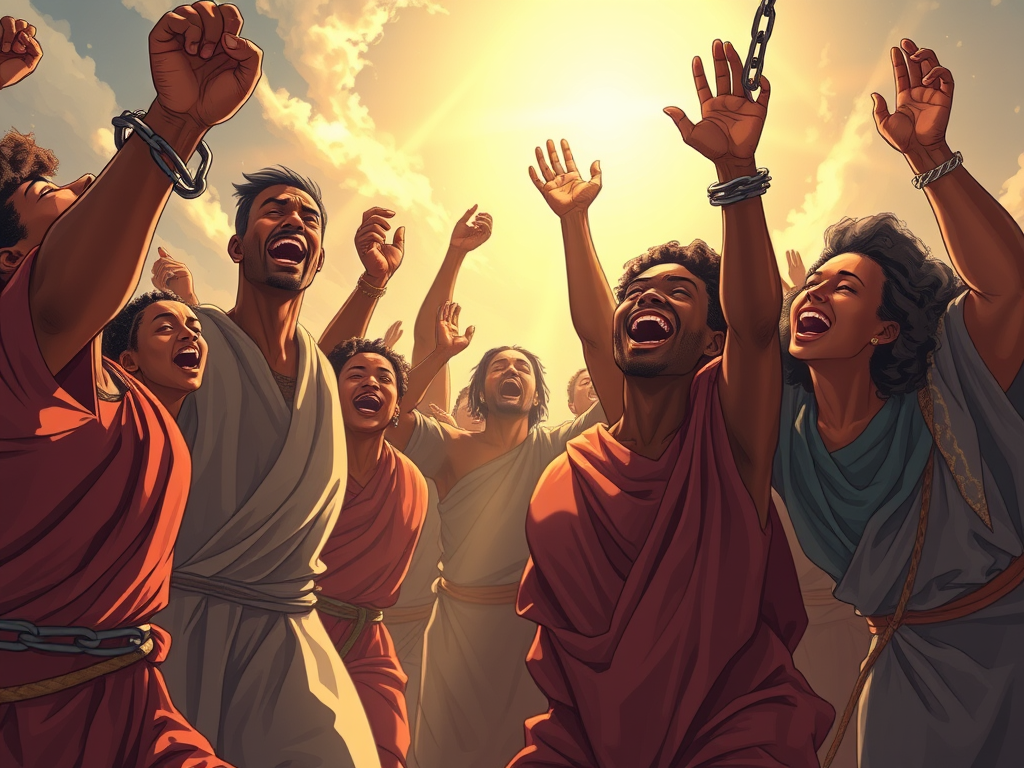
The Big Question: Shall We Continue in Sin?
Paul anticipates a common objection in Romans 6:15: “What then? Shall we sin because we are not under law but under grace? May it never be!” Grace is not a license to sin. Instead, Paul points to a deeper reality: whoever you present yourself to as obedient, you become their slave — either sin leading to death or obedience leading to righteousness (Rom 6:16).
Some interpret this as Paul warning believers that if they fall into sin after salvation, they are willfully enslaving themselves again. But is that what Paul is saying?
A Once-for-All Break
In verse 17, Paul gives thanks that the Roman believers “were slaves of sin, but became obedient from the heart to that form of teaching.”
The key verb is ὑπηκούσατε (hypēkousate) = “you became obedient.”
- It’s in the aorist indicative active, which usually refers to a decisive, completed act in the past.
- This means Paul is describing a once-for-all turning point: their response of faith to the gospel at conversion.
Paul contrasts their former state (“you were slaves of sin” — continuous past condition) with their decisive break (“you became obedient” — single decisive act of believing).
Then he adds, “having been freed from sin, you became slaves of righteousness” (Rom 6:18). Again, the aorist indicates a completed event. Salvation is the decisive moment when ownership changes.
What It Means to Be Slaves of Righteousness
To be a slave of righteousness does not mean returning to bondage. It means a new allegiance, a new identity, and a new fruit.
- Former Master: Sin, which paid death as its wages (Rom 6:23).
- New Master: Righteousness, which produces holiness and eternal life.
Paul isn’t telling us to obsess over the danger of “going back.” Instead, he’s reminding us of the incongruence of sin in the life of someone who already belongs to Christ.
Breaking the “Open Door to the Devil” Myth
Many Christians worry about “opening doors to the devil” through sin, fear, or even objects in their home. But Paul’s teaching reminds us: sin has no jurisdiction over those in Christ.
- Colossians 1:13 — We’ve been delivered from the domain of darkness and transferred into Christ’s kingdom.
- Ephesians 2:6 — We are seated with Christ in heavenly places.
These are statements of fact. They don’t depend on us keeping the devil at bay — they declare where we stand because of Christ.
The devil has no legal jurisdiction over believers. His only weapon is deception:
- Accusation (Rev 12:10) — making us doubt our forgiveness.
- Intimidation — tricking us into thinking he has rights he doesn’t.
- Distraction — keeping us devil-focused instead of Christ-focused.
Christ-Focused, Not Devil-Focused
Too often believers:
- Rebuke the devil more than they worship Christ,
- Obsess over supposed “open doors,”
- Conduct spiritual “witch hunts” in their homes.
This keeps them devil-conscious instead of Christ-conscious. Paul’s emphasis is very different:
- “Set your minds on things above, where Christ is” (Col 3:1–2).
- “Fix your eyes on Jesus” (Heb 12:2).
- “Rejoice in the Lord always” (Phil 4:4).
The New Testament consistently directs believers to focus on Christ and what He has already done, not on what Satan might be scheming.
Conclusion
Paul’s message in Romans 6 is not about living in fear of falling back into slavery. It’s about celebrating a decisive transfer of ownership. You were once slaves of sin, but at conversion you became obedient from the heart — freed from sin and made slaves of righteousness.
The devil has no legal ground in your life. His power is deception, not dominion. So don’t live demon-focused. Live Christ-focused. Fix your eyes on Jesus, rejoice in the Lord, and walk in the freedom that is already yours.
Continue reading
Previous in the Romans series: Sin Has No Jurisdiction Over You
Next in the Romans series: What Does It Mean to Be Enslaved to Sin Before Salvation?
Related reading:


Leave a Reply