

Jesus once said something that really makes you stop and think:
“If you forgive others their trespasses, your heavenly Father will also forgive you. But if you don’t forgive others, neither will your Father forgive your trespasses.” (Matthew 6:14–15)
Wait—what?
Are you telling me that my ability to forgive others determines whether or not God forgives me?
Let’s take a moment and think about what that would mean.
God, who is love…
God, who is rich in mercy…
God, whose mercy endures forever, and who is kind even to the unthankful and evil—
Are we saying my capacity to forgive has to exceed His in order to be forgiven?
That’s a pretty heavy burden.
But here’s the key: Jesus was speaking to people under the law—before the Cross, before the Resurrection, before justification by grace through faith.
At that time, Jesus wasn’t offering forgiveness as a free gift—He was exposing the impossibility of earning it through works. He was showing them that if forgiveness depended on their performance, they had to be perfect—even in how they forgave others.
That’s what the law demanded: perfection.
But then came the Cross.
And the Resurrection.
And everything changed.
Through Jesus’ death and resurrection, we are now freely forgiven—not because we forgave others, and not because we earned it—but simply by grace, through faith. (Ephesians 2:8–9)
So… Should We Still Forgive Others?
Of course!
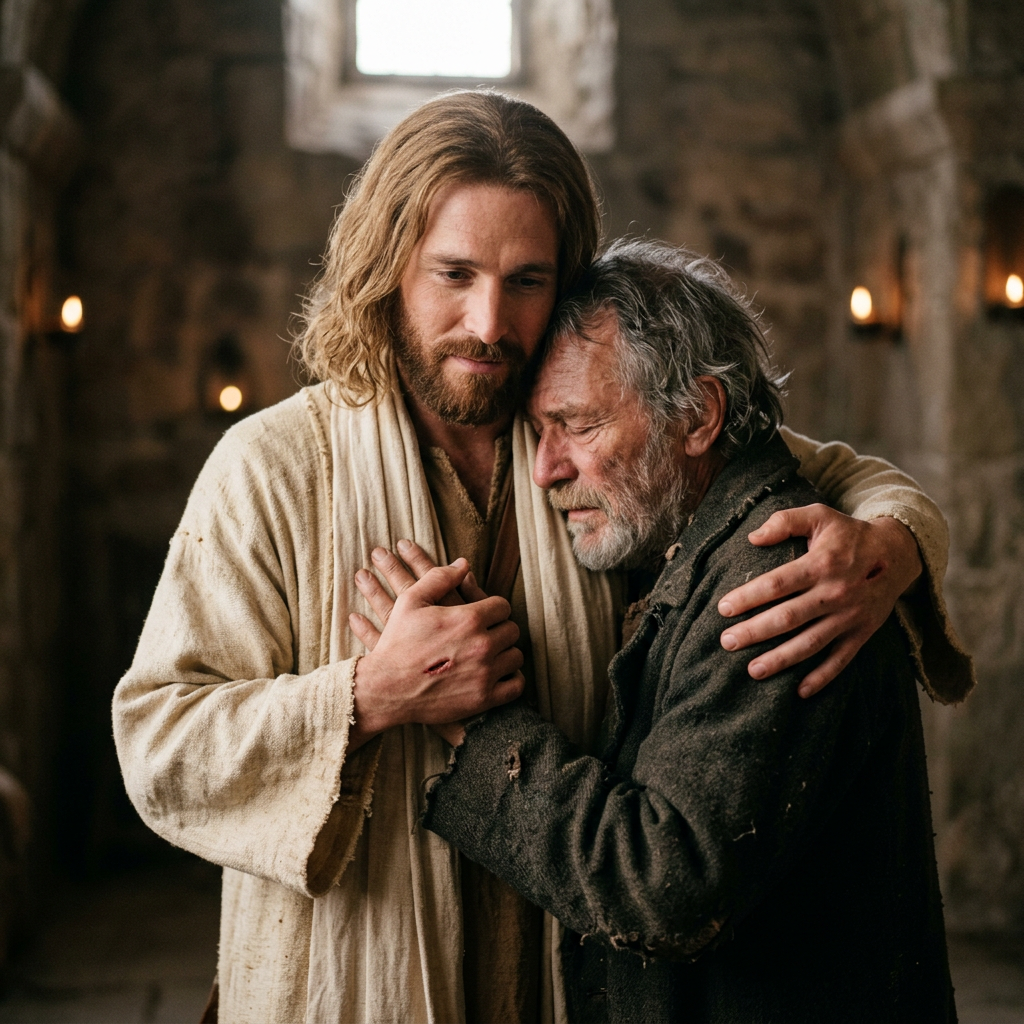
Not to earn forgiveness, but because we’ve already been forgiven.
When you’ve been shown such extravagant mercy and grace, it only makes sense to let that same forgiveness flow to others.
You can walk in bitterness and unforgiveness—but why would you, when you’ve been so freely loved and forgiven?
Let’s stop seeing forgiveness as a rule or condition we have to meet.
Instead, let it be a response to the overwhelming love God has poured out on us.
Forgive, not out of obligation, but because you’ve been set free—and now you get to live like it.
Forgiveness isn’t a condition anymore—it’s a calling.
And it’s one we get to walk in because of Jesus.
Continue reading
Related reading:
3 responses to “What Did Jesus Mean When He Said “Forgive or You Won’t Be Forgiven”?”
-
A friend of mine stubbornly refuses to forgive me 😭 over a foolish mistake I made. And he said he will never forgive for as long 😭 as I live. And he won’t forgive me, not even after the day I die. Even though I said I am sorry many numerous times and I meant it. Does this mean that my faith in Jesus Christ and in God is worthless and that my soul is doomed to eternal torment in hell and that my soul is also doomed to be destroyed in the lake of fire. And that my faith in Jesus Christ and in God won’t save me because I continuously make too many mistakes and I am not perfect?
-
Your salvation does not depend on whether another person chooses to forgive you. The Bible teaches that forgiveness and salvation come through faith in Jesus Christ, not through your perfection. Scripture says that when we confess our sins, God is faithful to forgive (see 1 John 1:9), and that nothing can separate us from the love of God in Christ (see Romans 8:38–39). You have already done what is right by sincerely apologizing; whether your friend forgives you is their responsibility before God. Your faith is not worthless, and your soul is not doomed—Christ’s grace is greater than our mistakes, and those who trust in Him are saved by His mercy, not by their ability to be perfect
-
So Mark, let go of that guilt and be rest assured that you are righteous in Christ, perfect. As He is, so are you now. Blessings brother!
-




Leave a Reply