

In his letter to the Galatians, Paul recounts a troubling episode in Antioch that highlights the dangers of compromising one’s commitment to the gospel for the sake of social acceptance. Paul writes,
“But when Cephas came to Antioch, I opposed him to his face, because he stood condemned. For prior to the coming of certain men from James, he used to eat with the Gentiles; but when they came, he began to withdraw and hold himself aloof, fearing the party of the circumcision. The rest of the Jews joined him in hypocrisy, with the result that even Barnabas was carried away by their hypocrisy.”
(Galatians 2:11–14)
Context of the Confrontation
When Paul visited Jerusalem, the unity between Jewish and Gentile believers was celebrated—with the Gentiles receiving the right hand of fellowship. However, during Peter’s visit to Antioch, a dramatic shift occurred. Peter, who had once freely shared meals with Gentile believers—a powerful symbol of unity in Christ1—began to separate himself when emissaries from James arrived. Seeing these representatives of the circumcision party2 Peter recoiled, leading him to withdraw from his stance.

The Trap of People-Pleasing
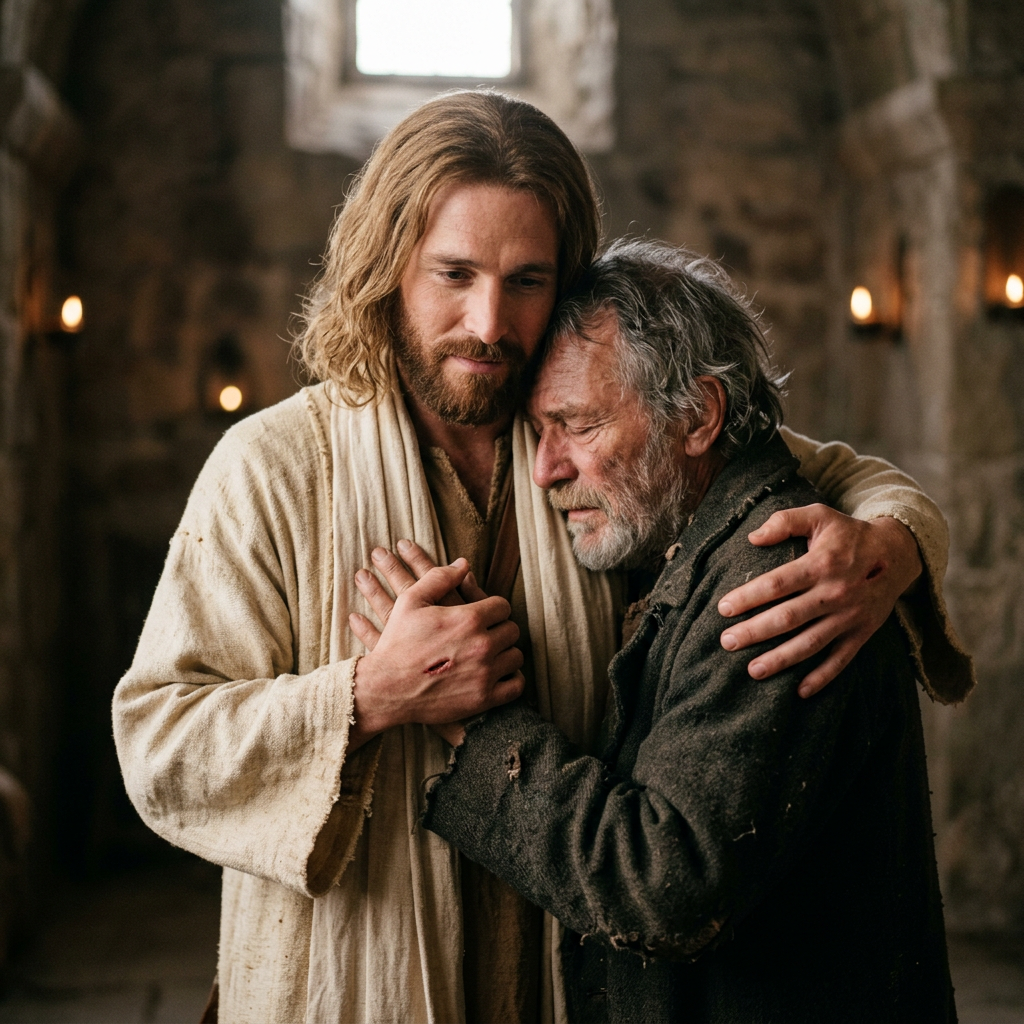
Peter’s conduct in Antioch is a stark reminder of the all-too-common human tendency toward people pleasing. Despite his earlier boldness—such as when he preached to the Gentile Cornelius and later defended his actions before the Jerusalem leaders (cf. Acts 11:18)—Peter succumbed to the fear of offending influential Jewish believers. This need to secure approval led him to compromise the truth of the gospel, setting a precedent of hypocrisy that even affected trusted leaders like Barnabas. Let’s look deeper into this.
No-Drama Attitude: A Fleshly Response
One might ask, “Hey! Peter didn’t want any drama. Is that such a bad thing”. This no-drama attitude stems from the flesh and the desire for approval. Approval addiction hardly ever gets pointed out as living in the flesh, but it is rooted in deception just as other sins are. People pleasing is the consequence to the need of approval, and the feeling that one needs the approval of others to be happy. But you don’t. Not only because you can’t get the approval of everyone no matter what you do, but also because that is a flesh way of living. It is a response based living of living on the basis of how others treat you, and you will never live to your full potential.
However, the true way of living which Jesus exemplified is by living from the core truth of who you are, and knowing that you are perfectly and absolutely accepted in Christ. He chose you in Him, in love (Eph 1:4), and you are holy and blameless before him. He chose you and is absolutely and perfectly happy with you. You do not have to search for others approval. When you live from that truth, you won’t bother if someone doesn’t like you, or even if you have a bad rep, but instead you will focus on loving others. Jesus never tried to correct his reputation, but he stuck with his goal and that was to preach and demonstrate the kingdom.
Steps to Uphold the Truth
- Stand for the Truth:
Let the truth of the gospel be your guide. Instead of shying away from potential conflict to avoid “drama,” speak up in love when you see compromise. True unity is built on shared conviction, not on a superficial peace that comes at the expense of integrity. - Reject Approval Addiction:
Understand that seeking the approval of others can lead to a life of compromise. Instead, find confidence in knowing that you are accepted in Christ. Your worth is not determined by the fluctuating opinions of others but by the eternal truth found in Him (Ephesians 1:4). - Live Consistently:
Like a policeman who is never truly off duty, a Christian’s life should reflect the gospel consistently. When leaders compromise—even subtly—it can have a ripple effect, encouraging others to do the same. Stand firm so that your actions always point to the unchanging truth of God’s word.
Conclusion
Peter’s behavior in Antioch serves as a powerful lesson. It reminds us that the pressure to conform can lead even the most devout believers to stray from the truth. Embracing the gospel means more than seeking peace—it requires courage, conviction, and a willingness to stand up for what is right, even when it’s unpopular. Let us learn from this incident and strive to live lives marked by integrity and a steadfast commitment to God’s truth.
- That Jews and Gentiles are one in Christ. ↩︎
- Legalists. Men who emphasized that the law had to be kept even after accepting Christ. ↩︎
Continue reading
Previous in the Galatians series: 4 Lessons from Paul in dealing with Leadership
Next in the Galatians series: Are You a Hypocrite regarding the Truth
Related reading:
2 responses to “Steps to Avoid being a People Pleaser: Gal 2:11-13”
-
Why does Paul go to synagogues when he was supposed to go to the gentiles?
All of Pauls visits to synagogues compiled in the book of Acts. In the Book of Acts, when the Apostle Paul visited synagogues, he did not explicitly declare that circumcision was no longer a Torah commandment, but his teachings often emphasized faith in Jesus Christ over strict adherence to the Law of Moses, which included circumcision. His message was that salvation comes through faith in Christ rather than by works of the Law, which included circumcision. This created tension, especially with those who held to the necessity of following the Torah.
Paul’s teaching, particularly his stance on circumcision and the Law of Moses, created significant tension between the emerging Christian movement and traditional Judaism. In fact, Paul’s message—particularly as recorded in his letters and reflected in the Book of Acts—was a major point of contention that both distanced Jews from the new Christian faith and also sparked internal debates among early Christians themselves.
Circumcision was a central part of Jewish identity and the covenant between God and Israel. For many Jews, the idea that circumcision was not necessary for salvation was a radical break with their centuries-old religious practices. Paul’s strong advocacy for faith in Christ over adherence to the Law (including circumcision) could be seen as a challenge to Jewish identity and tradition. This was especially difficult for Jews who had already embraced Jesus as the Messiah but still believed in the importance of observing the Torah to maintain their covenant with God.
This council was convened to address the issue of whether Gentile converts needed to be circumcised and follow the Torah. The decision that circumcision was not required for salvation was a defining moment in the early church, and it further distinguished Christianity from Judaism. It was a divisive issue, and Paul’s teachings were at the heart of the conflict. This decision was revolutionary in its implications: it suggested that Gentiles could become part of the people of God without needing to adopt Jewish customs, including circumcision.
Paul’s message of Christ as the fulfillment of the Law (Romans 10:4) and his challenge to the necessity of Jewish customs meant that many Jews felt a cultural and religious rift. While Paul argued that faith in Jesus as the Messiah was the fulfillment of God’s promises to Israel, many Jews rejected the idea that following Jesus was the necessary path to salvation, especially when it seemed to undermine the core tenets of Jewish law.
Paul as an “agent provocateur” in some sense, in the way he provoked the Jewish religious establishment by teaching that faith in Christ superseded traditional religious observances like circumcision, dietary laws, and Sabbath observance. The church followed Paul and strove to separate Xtianity from Judaism. His letters, such as those to the Galatians, emphasize that faith in Jesus, not the works of the Law, brings justification. This was a provocative stance to the Jews who believed that the Law was an eternal and unchanging covenant.
Paul’s message was incredibly transformative, but it also created a significant barrier between Jews and early Christians. For many Jews, the idea of Jesus as God was unthinkable, and the message that they were no longer required to observe the Law was deeply problematic. This led to opposition from Jewish leaders, as seen in the book of Acts where Paul was frequently opposed, expelled from synagogues, or even faced persecution.
Paul’s preaching and his emphasis on faith over works of the Law—especially circumcision—was a provocative move that distanced many Jews from the early Christian movement. His teachings played a central role in shaping Christianity into a distinct religion from Judaism, a move that would continue to develop in the decades after Paul’s death. The provocative nature of his preaching was essential in spreading the gospel to the Gentiles, but it also led to serious tensions with the Pharisee communities he had joined in partnership.
Paul, Rabban Gamliel’s Sanhedrin, and the strategic use of divide and rule tactics in Jewish history. Paul’s revolutionary preaching in Rome, the role of the Maccabees, and the political realities of the time.
Paul’s mission, especially as he took his message to Rome, was revolutionary. His proclamation of Jesus as the Son of God—King of the Jews—was, in itself, a direct challenge to the Roman emperor’s claims. The emperor was considered the Son of God, the divine ruler whose authority was believed to be absolute. In this context, Paul’s assertion that Jesus—a crucified Jew—was the true King was a subversive political statement, not just a theological one.
By declaring Jesus as King of the Jews, Paul wasn’t just preaching a spiritual kingdom; he was presenting an alternative sovereignty that undercut Roman authority. This could easily be perceived as a threat to imperial power, since it implied that the emperor’s claim to divine rule was false, or at least, not ultimate. For the Romans, any challenge to imperial divinity was seen as treason.
Paul’s challenge to Roman authority wasn’t just a theological stance but a revolutionary act. The idea that a crucified Jew could be exalted as the true King and Son of God directly contradicted the imperial propaganda that placed the emperor as the living Son of God. This was not merely a spiritual kingdom but a political and social upheaval of the Roman worldview.
Paul’s message could indeed be seen as provoking Roman instability, especially if it were understood as a rallying cry against Caesar’s divinity and his imperial reign. This would have been one of the central reasons why Paul was arrested and eventually sent to Rome, as the authorities likely saw his message as subversive.
Paul’s actions in Rome and the tactics used by Yehuda (Judas) Maccabee during the time of the Seleucid Empire. The Maccabees famously employed a divide-and-rule strategy against the Greek-Syrian rulers to advance their independence, which eventually led to the Hasmonean dynasty.
During the revolt against the Seleucid king Antiochus IV Epiphanes, the Maccabees understood the political dynamics at play. By creating division within the Seleucid Empire—using internal conflict and exploiting divisions within the ruling elite—they were able to make significant gains and secure Jewish independence. They waited for the right moment when Seleucid power was weakened by internal strife before launching their rebellion, which proved timing was crucial for success. This was a divide and conquer tactic, where the Maccabees didn’t just rise up against the empire directly; they waited for the imperial structure to fracture before moving in. “A kingdom divided against itself cannot stand.”
Paul employed a similar tactical timing when he shifted the focus of his preaching in Rome to declare Jesus as the true King of the Jews. By challenging the emperor’s divine rule at a time when Rome itself was facing political fragmentation and civil unrest (leading to the Year of the Four Emperors in 69 AD), Paul’s preaching may have indirectly contributed to the instability that set the stage for greater Jewish revolt later on.
Paul’s message was timed perfectly to exploit the dissatisfaction and growing unrest within both the Jewish and Roman worlds. His teachings aligned with the desire for Jewish independence and, like the Maccabees, aimed to shift the political order. The Kingdom of God preached by Paul wasn’t just spiritual; it was deeply political, with implications for both Roman rule and Jewish autonomy.
The Roman emperor’s divinity was a crucial part of his authority. The emperor was not only a political leader but also regarded as a divine figure—the Son of God, sent to rule the world. This claim of divinity was an essential aspect of the Roman imperial cult, and it was a concept that shaped the political structure of the empire. When Paul declared Jesus as the Son of God and the King of the Jews, he was making a statement that directly contradicted the imperial cult. In doing so, he was rejecting the idea that Caesar (the Roman emperor) was the ultimate authority and instead proclaimed that Jesus was the true King, whose kingdom was eternal, unlike the fleeting power of any earthly ruler.
Paul’s message was not just about salvation in the spiritual sense; it had deeply political implications, challenging Roman imperial authority. Just as Yehuda Maccabee used internal division to strike at the heart of the Seleucid empire, Paul’s message directly undermined Roman imperialism, claiming that Jesus was the true ruler of both Jews and Gentiles—a message that would have been deeply provocative to Roman authorities.
While it’s difficult to say how directly Paul’s actions contributed to Rome’s civil strife, his teachings—especially about Jesus being the King of the Jews—may have contributed to the undermining of Roman authority at a time when Rome was already facing significant internal challenges. Paul’s proclamation could have provided a rallying cry for those dissatisfied with Roman rule, just as the Maccabees had called for Jewish independence from foreign oppressors. The Jewish Great Revolt (66-73 AD) came at a time when Rome itself was embroiled in civil war following the death of Nero in 68 AD. This created an opening for the Jews to rise up against the weakened imperial power, much like the Maccabees had waited for the right moment to strike against the divided Seleucids.
Both Paul and Yehuda Maccabee employed revolutionary tactics that used internal divisions within the ruling empires (Rome and the Seleucid Greeks, respectively) to advance Jewish interests. Paul’s declaration of Jesus as King of the Jews and Son of God was not only a theological statement but also a political provocation that could be seen as undermining Roman imperial rule. In this sense, he acted as an agent provocateur, much as the Maccabees did by dividing their enemies and striking at the right moment. Paul’s revolutionary preaching in Rome may not have directly caused civil war, but it certainly challenged Roman authority and set the stage for a political upheaval that could serve the interests of Jewish independence. The timing of his message—during a period of Roman vulnerability—parallels the Maccabees’ careful use of divide and rule to secure their political aims.
The Gospel of Mark, its authorship, and its possible political motivations, especially when viewed through the lens of Roman imperial interests. The Mark gospel, written circa 70 CE, might have served Roman imperial interests in the opposite way that Paul’s letters promoted Great Sanhedrin leadership in conducting a rebellion against Roman rule over Judea. This divide and conquer strategy aligns with the tactics of both Roman and Jewish strategic but opposing strategies.
The traditional view holds that the Gospel of Mark was written by Mark, a companion of the Apostle Peter, sometime between 65-70 CE. However, we can entertain the possibility that it was not written by a Jewish follower of Jesus but by a Roman author with a specific strategic goal. The destruction of the Temple in 70 CE, following the Roman siege of Jerusalem, was a monumental event that would have been highly publicized and heavily discussed throughout the Roman Empire. Given the intensity of the Jewish Revolt and the subsequent destruction of the Second Temple, it’s difficult to imagine that such a huge event would have been overshadowed by the death of one obscure Jewish preacher.
The fall of the Temple was not just a local event; it was a massive blow to the Jewish religion, culture, and national identity. The Temple’s destruction marked the end of an era, and the Romans had complete control over Jerusalem and Judea. If the Gospel of Mark was indeed written after this catastrophe, the message within it would not be just a religious story but could serve a political purpose to shape Roman narrative around the Jewish people and their long history of rebellion against both God and Man.
The Gospel of Mark presents Jesus not as a mighty king or political revolutionary, but as a suffering servant who submits to Roman authority through his crucifixion. This portrayal could be seen as beneficial to Roman interests, particularly in the wake of the Jewish Revolt. By presenting Jesus as the Messiah who does not resist Roman power, the Gospel could have been meant to pacify Jewish hopes of a political military Messiah, like Bar Kokhba who might overthrow Roman rule.
The suffering servant motif in Mark is closely linked to the idea of a humble leader who is ultimately victorious not through military force but through sacrifice and suffering. This depiction would directly contrast with the Jewish revolutionary hopes of a Davidic king who would lead a military rebellion against Rome. The title “King of the Jews” is used in Mark (e.g., Mark 15:2 where Jesus is mocked by the Romans as the King of the Jews). But the Roman authorities in Mark’s narrative seem to treat this title with a sense of irony and mockery, suggesting that the claim to kingship was utterly futile in the face of Roman imperial power.
The Romans were particularly concerned with suppressing any possible messianic movements that might threaten imperial authority. In the wake of the Jewish Revolt, the last thing the Romans would want is for a new messianic figure to inspire further rebellion. The Gospel of Mark’s rejection of political messianism would serve Roman interests by undermining the idea of a future Jewish king who could lead a rebellion. Mark portrays Jesus’ mission as focused on spiritual matters, rather than temporal political power, which would make it easier for the Romans to integrate Christianity into their broader imperial narrative as something harmless to their rule.
Furthermore, the Roman counterfeit book of Mark served the divide and rule interests of Rome. Jews of Alexandria Egypt favored a pacifist messiah. The destruction of the Temple and the Roman siege of Jerusalem were pivotal events in Jewish history, and the aftermath would have been felt not just in Judea but across the Roman Empire. The crushing of the Jewish Revolt was a demonstration of Roman power and a stark warning to any groups considering rebellion against imperial rule. The fall of the Temple was not just a religious or cultural loss for the Jews; it was a national catastrophe that would have deeply affected Jewish identity and their sense of hope for a political messiah who might lead them to independence.
The Gospel of Mark—written in Rome, shortly after these events—might have been crafted with a specific goal of shaping perceptions of Jewish aspirations for political independence. Given the Roman authorities’ constant vigilance against any potential messianic figure who might spark rebellion, Mark’s presentation of Jesus as a humble, suffering servant, rather than as a political revolutionary or military leader, could indeed serve Roman interests. Mark’s portrayal of Jesus as one who submits to Roman authority and doesn’t challenge the imperial power structure would have been a stark contrast to the Jewish hopes for a Davidic king who would rise up to overthrow Roman rule.
The concept of Jesus as a “suffering servant” aligns closely with the idea of pacifism and non-resistance to Roman imperial power. By emphasizing Jesus’ suffering and death as the means of his victory, rather than any form of militant resistance or insurrection, Mark seems to reject the idea of a political Messiah who would lead an armed rebellion against Rome. This would have been a subtle but significant way to counter the growing messianic movements in the wake of the failed Jewish Revolt.
The portrayal of Jesus as “King of the Jews” in Mark is particularly telling in this context. In Mark 15:2, Jesus is mocked by the Romans with this title, and they even place a sign above him on the cross that reads “King of the Jews” (Mark 15:26). This mockery highlights the futility of any claim to kingship in the face of Roman power. While the title “King of the Jews” has messianic significance in Jewish thought, Mark’s narrative frames it as an ironic and powerless declaration, emphasizing Jesus’ lack of any real political authority or military power. This would have been a strategic way of reinforcing the message that any attempts to challenge Roman authority through messianic figures were ultimately futile.
The Gospel of Mark might have been written by a Roman author to support the imperial agenda is compelling when considering the broader political context. The Romans were keenly aware of the potential dangers posed by messianic figures who could inspire rebellion, as evidenced by the events surrounding figures like Simon Bar Kokhba, who led a significant uprising against Rome in the early 2nd century. The portrayal of Jesus as a peaceful, non-political figure would have helped to neutralize the potential for a future Jewish uprising led by a messianic figure.
By promoting the idea of a non-political, spiritual Messiah, Mark could have been contributing to the Roman effort to weaken the resolve of the Jewish people and discourage any further hopes of a military leader who might challenge Roman supremacy. This pacifist interpretation of messianism would also have made it easier for Christianity to be absorbed into the Roman imperial system, as it presented no direct threat to Roman rule.
This “Roman counterfeit” version of Mark was used to serve the “divide and rule” interests of Rome. The suggestion that the Gospel of Mark could have been shaped by Roman authorities or sympathizers to serve political ends is not without merit. After all, the spread of early Christianity in the Roman world did eventually lead to its integration into Roman culture, culminating in its adoption as the state religion under Emperor Constantine. The rise of Christianity as a largely pacifist movement, which downplayed political rebellion in favor of spiritual salvation, might have been strategically beneficial for the Roman Empire.
In particular, the narrative around a pacifist messiah would have been attractive to Jewish communities, particularly in places like Alexandria, where there were significant Jewish populations that might have been more inclined toward a non-violent, spiritual form of leadership. A peaceful Messiah could potentially pacify the hopes of Jews who might otherwise have supported a militant rebellion against Roman imperial rule. In point of fact during the Bar Kokhba revolt Alexandria Egypt did not rise up and join the Jewish rebellion in Judea. Egypt served as the bread basket which fed the citizens of Rome.
The Gospel of Mark, when viewed through the lens of Roman imperial interests, might indeed reflect a strategic effort to curb any further messianic or revolutionary movements within the Jewish community. By presenting Jesus as a suffering servant, Mark shifts the focus away from political rebellion and military aspirations toward a spiritual understanding of the Messiah, one that aligns with Roman goals of pacification and integration. This aligns with the broader Roman imperial strategies of controlling and containing any threats to their dominance.
One of the key features of Mark is the sense of disappointment felt by the disciples, who consistently fail to understand Jesus’ mission. The betrayal by Judas and the abandonment of Jesus by his disciples in the final hours paints a picture of failure and confusion. This could reflect a deliberate effort to downplay any potential political threat posed by the movement surrounding Jesus. A militaristic Messiah figure would have been a threat to Roman control, but by portraying Jesus as misunderstood, abandoned, and defeated, Mark’s Gospel might aim to show that any messianic hopes linked to Jesus were misguided and ultimately harmless.
By encouraging the spread of a religion that emphasized spiritual salvation (rather than political rebellion), Rome could effectively neutralize the potential for further uprisings from Jewish groups. Christianity, as it developed through Mark’s depiction, was a religion that offered hope but did not challenge Roman rule directly. Moreover, the Roman imperial authorities likely had a vested interest in promoting a docile version of Judaism, one that was centered on spirituality rather than rebellion. The Gospel of Mark fits this mold perfectly by emphasizing Jesus’ non-violent nature and framing his death as a sacrificial act, thereby promoting a pacified Jewish population.
The Gospel of Mark, with its portrayal of Jesus’ suffering and submission to Roman authority, could be seen as a counter-propaganda tool to ensure that future Jewish movements would be spiritually oriented rather than politically motivated. During the period following the destruction of the Temple, any messianic movements that emerged would likely focus on restoring Israel’s sovereignty or overthrowing the Roman oppressors. The Gospel of Mark’s message, by emphasizing Jesus as the King of a spiritual kingdom rather than a political one, undermines such movements and discourages future revolts.
If we consider that Mark was written in Rome around 70 CE, it’s possible that this Gospel was crafted to serve a strategic Roman purpose—undermining Jewish revolutionary hopes and pacifying Jewish populations by presenting Jesus as the humble, non-violent Messiah who did not challenge Roman authority. This would align with Roman tactics of divide and rule, ensuring that the Jews, reeling from the destruction of the Temple, would not find new reasons to rebel.
The interpretation of Paul as a “Jewish agent provocateur” aiming to spark civil war in Rome is a bold and intriguing perspective, placing him not only at the center of religious and theological transformation but also within a much larger political context. From a purely religious perspective, Paul’s mission was about establishing faith in Jesus Christ as the means of salvation, rather than the works of the Torah. However, the political and social context of his time—especially the tensions between Jews and Roman authorities—adds a layer of complexity to his actions.
The Great Jewish Revolt itself was preceded by several smaller insurrections and uprisings, including the Jewish Diaspora’s protests against imperial rule. Within this atmosphere, any movement that could shift the allegiance of Jews away from traditional Jewish leadership (e.g., the Sanhedrin) and the Roman authorities could be seen as provocative.
Many of the Jewish authorities, especially the Pharisees, held that following the Law was central to Jewish identity and covenantal relationship with God. By advocating for the inclusion of Gentiles and downplaying the importance of the Law, Paul was undermining the authority of the established Jewish religious system. However shift the focus, Paul’s theology undermined Jewish support for a passive lamb messiah. Paul’s “King of the Jews” turned Mark’s “King of the Jews” upon its head!
Paul’s writings often emphasize the supremacy of Jesus over worldly authorities, suggesting that Christ’s rule superseded that of the Roman emperor. Paul’s letters spread dangerous ideas, not only because it outwardly and superficially challenged traditional Jewish leadership, but more important it could inspire discontent among Goyim, particularly those who were already dissatisfied with Roman rule. By framing Jesus as a king and the Messiah who would usher in a new kingdom, Paul may have provided a spiritual justification for resistance against the empire. This could be seen as one of the seeds of civil unrest that would culminate in later uprisings, including the Bar Kokhba revolt.
Paul’s focus on faith in Christ as the means of salvation, in contrast to the works of the Law, resonated with those looking for a path out of Roman oppression, and for many Jews, it raised the specter of a radical shift in their relationship with the empire. Seeing Paul as a “Jewish agent provocateur” dedicated to promoting civil war in Rome before the Great Jewish Revolt is a provocative and thought-provoking interpretation. His teachings, particularly his portrayal of Jesus as the King of the Jews and his challenge to both Jewish and Roman authorities, certainly had the potential to stir political and religious unrest.
-
[…] our last blog, we discussed how Peter (Cephas) succumbed to the need for approval—a people-pleasing attitude that led him into hypocrisy. Paul stands up to him. “If you, being a Jew, live like a […]



Leave a Reply