
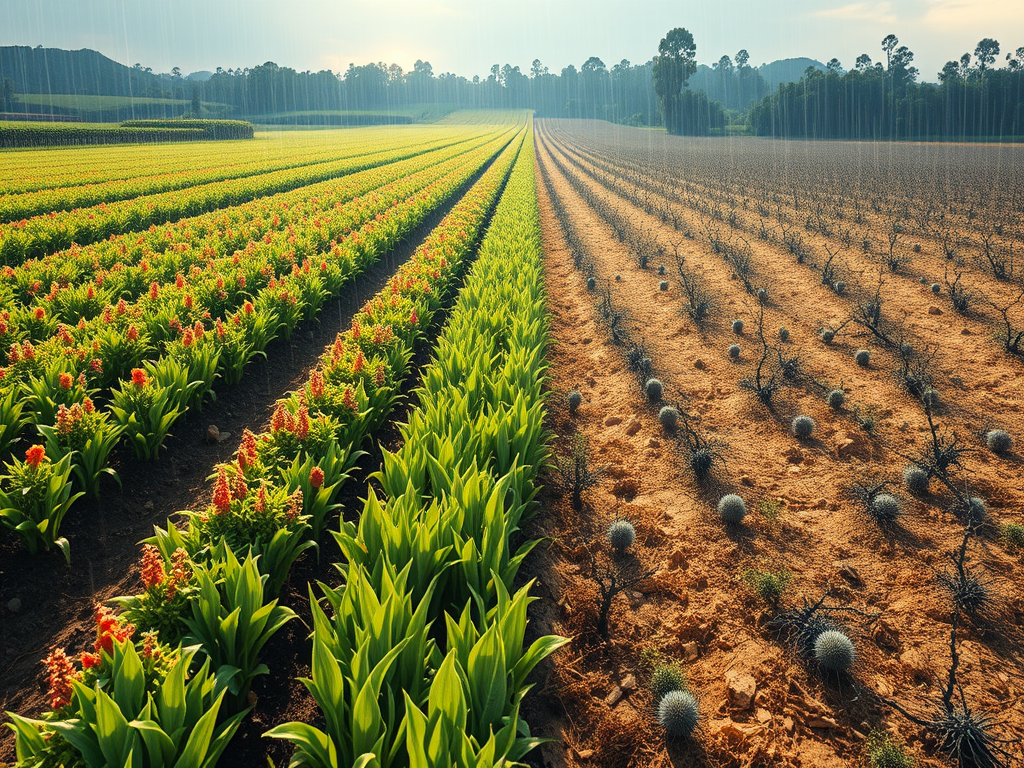
Hebrews 6:7–8 says:
“For land that has drunk the rain that often falls on it, and produces a crop useful to those for whose sake it is cultivated, receives a blessing from God.
But if it bears thorns and thistles, it is worthless and near to being cursed, and its end is to be burned.”
This imagery comes immediately after one of the most debated warning passages in Scripture (Hebrews 6:4–6). So verses 7–8 are not random — they are an illustration explaining what came before.
Let’s walk through it carefully.
1. The Picture: Two Types of Ground
The author uses agricultural imagery.
- The rain falls on the land.
- The land absorbs it.
- But the results differ.
One field produces useful crops.
Another produces thorns and thistles.
The rain is the same.
The exposure is the same.
The outcome is different.
This echoes Jesus’ parable of the soils (Matthew 13). The seed (word of God) is consistent — the condition of the soil determines the fruit.
2. What Does the Rain Represent?
Most interpreters understand the rain to represent:
- The grace of God
- The preaching of the Word
- The work of the Spirit
- Exposure to gospel truth
In Hebrews 6:4–5, the people described had:
- Been enlightened
- Tasted the heavenly gift
- Shared in the Holy Spirit
- Tasted the goodness of the word
In other words, they had real exposure to spiritual reality.
Just like rain falling repeatedly on land.
3. The Two Outcomes
Land That Bears Fruit
This land:
- Receives rain
- Produces a crop
- Receives blessing
This represents genuine response — perseverance, maturity, and spiritual fruit.
The author’s main concern throughout Hebrews is perseverance. True faith endures and produces fruit (Hebrews 3:14).
Land That Produces Thorns
This land:
- Receives the same rain
- But yields thorns
- Is “worthless”
- Is near being cursed
- Ends up burned
This is strong language.
But notice something carefully:
The text does not say the rain was fake.
It does not say the land never received it.
It says the outcome proved the nature of the soil.
Thorns in Scripture often symbolize:
- Curse (Genesis 3:18)
- Worldliness
- Unbelief
- Spiritual barrenness
The issue is not lack of exposure.
The issue is lack of fruit.
4. Is This About Losing Salvation?
This is where interpretation matters.
There are two main views among orthodox Christians:
View 1: True Believers Can Lose Salvation
Some argue the burning represents final judgment on someone who was genuinely saved but fell away.
View 2: The Passage Describes Those Who Were Exposed but Not Regenerated
Others argue the warning describes people deeply involved in the Christian community but never truly converted.
The agricultural metaphor leans heavily toward the second view.
Why?
Because fruit reveals nature.
Jesus said:
“A healthy tree cannot bear bad fruit, nor can a diseased tree bear good fruit.” (Matthew 7:18)
Hebrews 6 seems to say:
If years of gospel exposure produce only thorns, the root was never truly transformed.
Plus, when you look at Can a Believer Lose His Salvation?: Heb 6:4-6 we see that it is about those who were enlightened enough to be around, but not saved.
5. What Does “Burned” Mean?
The burning imagery is sobering.
In Scripture, burning can symbolize:
- Divine judgment
- Removal of what is useless
- Exposure and destruction of false profession
The phrase “near to being cursed” suggests warning, not final declaration.
Hebrews is filled with warnings meant to stir perseverance.
The author is not trying to create despair — he is urging seriousness.
In fact, in verse 9, he immediately says:
“Though we speak in this way, yet in your case, beloved, we feel sure of better things — things that belong to salvation.”
That’s important.
The warning is real — but so is pastoral confidence.
6. The Big Point of Hebrews 6:7–8
The passage is not primarily about losing salvation.
It is about evidence, of whether you are saved.
Spiritual exposure without transformation is dangerous.
The author is saying:
If you’ve been drenched in grace for years, what is growing?
Crops?
Or thorns?
7. Application: What Should We Take Away?
This text invites sober self-examination, not panic.
Ask:
- Has the gospel changed me?
- Is fruit growing, even imperfectly?
- Am I soft toward Christ, or hardened?
True believers may struggle.
True believers may stumble.
But over time, grace produces fruit.
Thorns without repentance reveal something deeper.
Final Thought
Hebrews 6:7–8 is not meant to terrify sincere believers.
It is meant to expose complacency.
The rain of grace is falling.
What is it producing?
Because the difference between fruit and thorns is not how much rain you receive — it is what kind of soil you are.
Continue reading
Previous in the Hebrews series: Can a Believer Lose His Salvation?
Next in the Hebrews series: What Are the Things That Accompany Salvation?
Related reading:

Leave a Reply