

This blog is inspired by a sermon I heard recently from Wes Huff —
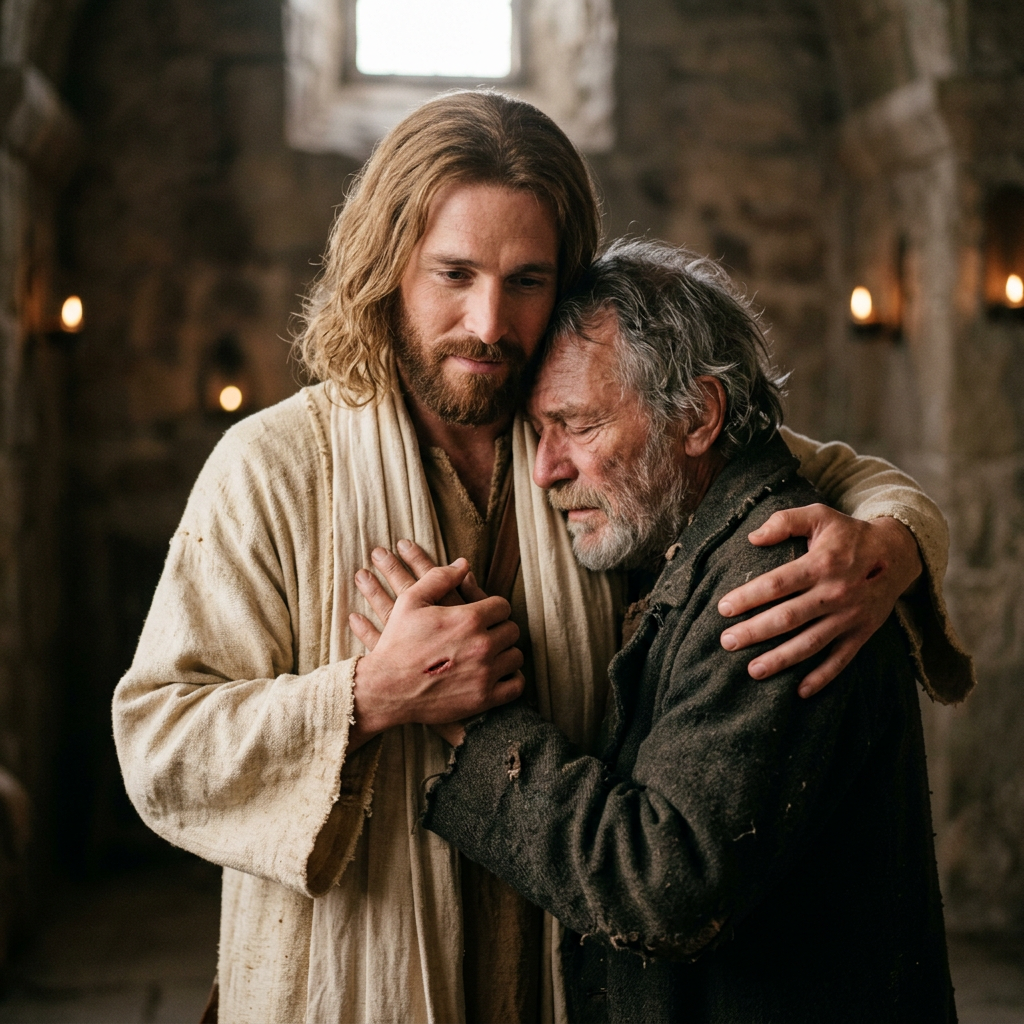
There are five gospels. Matthew, Mark, Luke, and John… and the fifth is you.
Most people around us may never open a Bible. But they are reading our lives. They’re watching how we respond under pressure. How we treat difficult people. How we forgive. How we carry hope when things fall apart.
And sometimes, that lived testimony becomes the invitation for someone to finally open Scripture.
And maybe they might ask you a question. How do you respond?
First, Be Prepared — But Gentle
Peter writes:
Always be prepared to give an answer to everyone who asks you to give the reason for the hope that you have. But do this with gentleness and respect.
I love that Peter doesn’t say, be prepared to win arguments.
He says, be prepared to explain your hope.
And notice the posture: gentleness and respect.
Before we ever speak, Christ must already be honored in our hearts.
Christian witness doesn’t start with words.
It starts with surrender.
Secondly, Know Everyone Already Has an Apologetic
Whether we realize it or not, every believer already has an apologetic.
The moment someone asks, “Why are you a Christian?” whatever comes out of our mouth is our defense of the faith.
It might be polished.
It might be messy.
But it’s still our answer.
That’s why this matters. Faith was never meant to stay private — but it also was never meant to be arrogant.
Thirdly, Don’t Fall Into the Trap
So often, spiritual conversations feel intimidating because we think we must have all the answers.
Someone says:
- “The Bible is illogical.”
- “Science disproved God.”
- “All religions lead to the same place.”
And suddenly we feel pressured to defend everything at once.
Here’s something I’ve learned: whoever makes the claim carries the burden of proof.
An assertion isn’t an argument.
Instead of rushing into defense mode, I’ve found it far more helpful to ask:
What do you mean by that?
How did you come to that conclusion?Those two questions alone can transform a confrontation into a conversation.
They slow things down.
They show respect.
They invite people to actually think about what they just said.
Jesus modeled this constantly. He often answered questions by reframing them — because sometimes the real issue lies beneath the surface.
And here’s something important:
The right answer to the wrong question is still the wrong answer.
Fourth, Sometimes the Question Needs Questioning
Apologetics isn’t just answering questions.
Sometimes it means questioning the question itself.
When someone says, “It’s illogical to believe in God,” I’ve learned not to rush into defending God. Instead, I ask:
What do you mean by God?
What do you mean by logical?
Often people are rejecting a version of God I don’t even believe in. Clarifying creates space for real dialogue instead of talking past each other.
Fifth, Roots Before Storms
I once saw a lone tree standing in an open field, completely exposed to wind and rain. What amazed me wasn’t what I could see above ground — it was what I couldn’t see below.
Deep roots.
That’s what kept it standing.
And I think it’s the same with us.
We live in a culture full of skepticism, confusion, and spiritual noise. If our roots are shallow, we’ll wobble the moment our faith is challenged.
Too many believers try to develop depth after the storm hits.
But by then, they’re already shaken.
Preparedness isn’t panic-mode Christianity. It’s daily grounding ourselves in truth, grace, and Scripture.
Sixth, Conversations Seasoned With Salt
Paul writes:
Let your conversations always be full of grace, seasoned with salt.
Salt preserves.
Salt purifies.
Salt seasons.
Salt changes its environment.
But salt can also irritate.
So balance matters.
If all we do is irritate people, we’re being salty in the wrong way.
Truth must travel with love.
Grace must carry clarity.
We speak honestly — but gently.
Boldly — but humbly.
Seventh, Know Your Life Is Already Speaking
One of the most powerful things I’ve realized is this:
People are often impacted far more by how we live than by what we argue.
Not by theologians.
Not by debates.
By ordinary Christians who love well.
By believers who forgive.
Who listen.
Who show up.
Who don’t pretend to be perfect.
That’s the fifth gospel in action.
People may argue with doctrine.
But they struggle to argue with transformed lives.
Summary: Know You Are Being Read
You are someone’s Bible.
You are someone’s first real encounter with Jesus.
Your patience.
Your humility.
Your kindness.
Your courage.
People may never read Matthew, Mark, Luke, or John.
But they are reading you.
So let’s live in a way that makes people curious about Christ.
Not loud.
Not pushy.
Not superior.
Just faithful.
Rooted.
Gentle.
Full of hope.
You are the fifth gospel.
Let your life point them to the first four.


Leave a Reply