

In Romans 14, Paul does something that still shocks our church culture today:
he redefines weakness and strength in a way that contradicts how many Christians talk and behave.
- Weakness, in the Bible, is the over-sensitive, rule-bound, restrictive conscience.
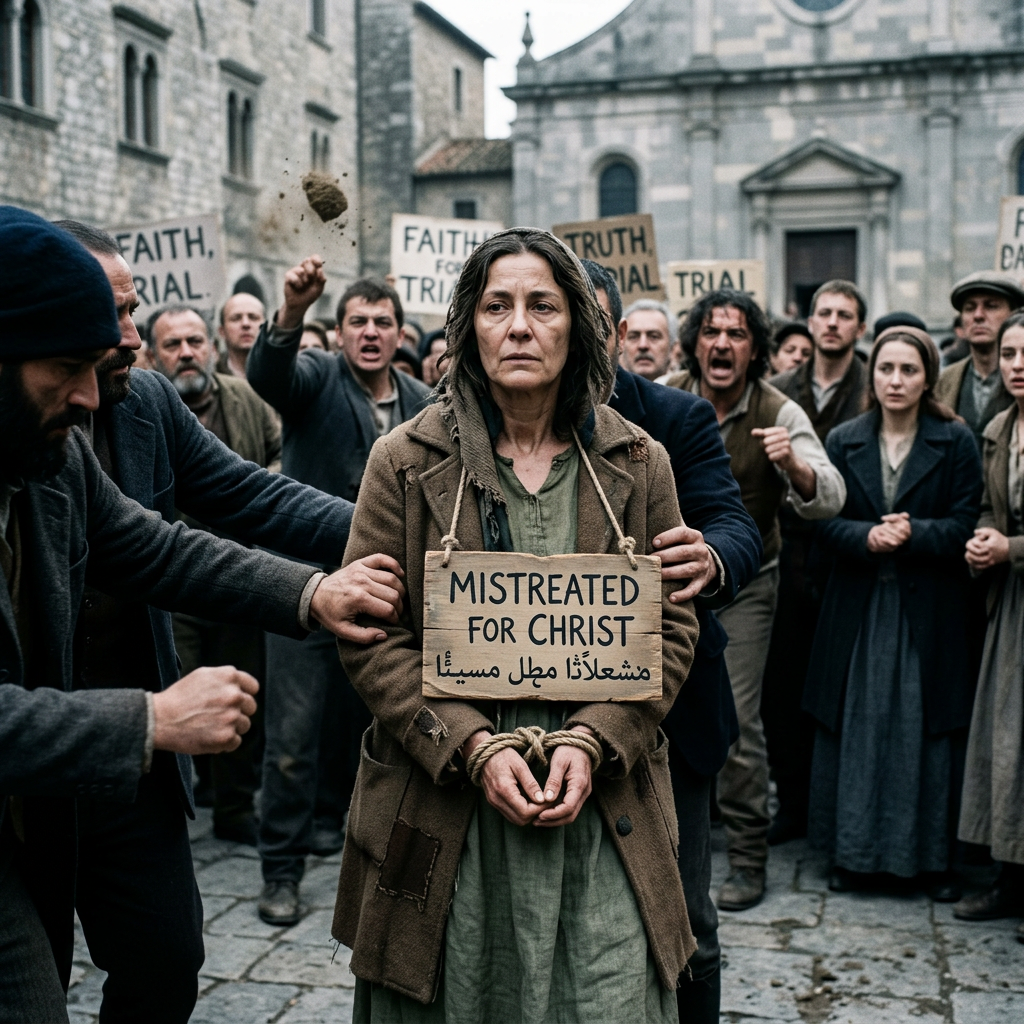
- Strength, in the Bible, is the confident, free, grace-resting believer who lives with a clean conscience before God.
But modern church culture has flipped this upside down.
Instead of honoring the strong, we often celebrate the weak.
And instead of gently guiding the weak into freedom, we often condemn the strong and pressure them into restriction.
Paul says the weak are the rule-keeping types.
Modern church culture calls them “the strong ones.”
Paul says the strong are the ones who enjoy freedom.
Modern church culture calls them “compromisers.”
How did we get here?
1. When Restriction Is Praised as Holiness
Many churches still measure spirituality by:
- how strict someone is
- how much they say “no”
- how many boundaries they keep
- how serious they look
- how intense their lifestyle appears
- how much they avoid anything “worldly”
And so:
- The person who abstains from everything is praised.
- The person with the most rules is admired.
- The one who refuses movies, caffeine, jewelry, or mixed company is labeled “devout.”
- The joyless Christian is called “deep.”
Meanwhile, the believer who walks in genuine freedom, gratitude, and rest is often labeled:
- immature
- shallow
- compromised
- careless
- unspiritual
- “not serious enough”
This mindset isn’t biblical.
It’s cultural legalism dressed as maturity.
2. When Personal Convictions Become Universal Expectations
One of the clearest patterns in modern church culture is this:
“God convicted me of this… therefore all Christians should avoid it.”
This is exactly what Paul forbids.
If something burdens your conscience, that burden is yours — not universal law.
But the moment a believer says:
- “Christians should never wear that…”
- “A real believer wouldn’t watch that…”
- “Strong Christians never listen to that…”
- “Holy people don’t do that…”
A personal scruple becomes a spiritual measuring rod.
The weak believer’s boundaries become the standard for the entire community.
This shifts the church’s center of gravity away from Christ and onto human sensitivities.
3. When the Strong Are Shamed Into Silence
One of the greatest ironies of modern Christian culture is this:
The strong — the ones Paul says understand freedom — often feel pressured to hide that freedom.
Why?
Because the weak have been elevated to unofficial spiritual referees.
The church sometimes functions like this:
- If you enjoy a glass of wine, you must “hide it” because someone will call you liberal.
- If you watch a movie, someone will judge your holiness.
- If you dress normally, someone will accuse you of worldliness.
- If you feel free to celebrate holidays, someone will tell you it’s pagan.
And so:
The free believers live quietly.
The rule-keepers speak loudly.
And the whole community bends toward the most fragile conscience in the room.
This is the opposite of Romans 14.
Paul is clear:
“Do not let the one who abstains pass judgment on the one who eats.”— Romans 14:3
But in modern church culture, the abstainer often becomes the moral authority.
4. When Sensitivity Becomes a Badge of Honor
Something subtle but dangerous has crept into church culture:
The more sensitive your conscience, the more spiritual you appear.
People begin to take pride in:
- how easily they are offended
- how quickly their conscience is triggered
- how many things they avoid
- how many scruples they maintain
- how serious their spiritual boundaries are
And then it becomes expected that everyone else tiptoe around those sensitivities.
But biblically, weakness is not a trophy.
It is not maturity.
It is not spiritual depth.
Weakness is a place to grow from — not a place to build a platform on.
Paul calls the weak to stop judging, not to enforce their convictions on everyone.
5. The Gospel Honors Freedom, Not Fear
Modern church culture sometimes treats the strong believer — the believer who lives in freedom — as if that freedom is suspicious.
But according to Paul:
- Freedom is strength.
- Confidence in the finished work is maturity.
- Walking without fear is spiritual clarity.
- Enjoying God’s gifts with thanksgiving is a mark of a full conscience.
It is the weak who still feel endangered by neutral things.
It is the strong who trust Christ enough to enjoy life without guilt.
This does not mean license.
This does not mean carelessness.
This does not mean sin.
It means exactly what Paul says:
“Nothing is unclean in itself.”
— Romans 14:14“Everything created by God is good.”
— 1 Timothy 4:4–5
Freedom is not compromise.
Freedom is confidence in grace.
6. What We Must Recover
If we want healthier churches, we must recover Paul’s categories — not cultural ones.
We must stop:
- elevating weakness
- spiritualizing restriction
- praising legalism
- empowering the most fragile consciences
- condemning those who live freely in Christ
And we must start:
- honoring Christian liberty
- treating the strong with respect
- protecting love, not legalism
- allowing believers to enjoy what God has called clean
- guiding the weak into confidence in grace
Paul never says the weak are more holy.
He never says they are right.
He says they must be loved —
but also taught
and gently guided
and matured in freedom.
The goal is not a church full of weak believers who impose many rules.
The goal is a church full of free believers who walk in love.
Because freedom + love = the kingdom of God.
Continue reading
Related reading:

Leave a Reply