

We were made alive in Christ. Paul talks about this in Col 2:13
When you were dead in your transgressions and the uncircumcision of your flesh, He made you alive together with Him, having forgiven us all our transgressions,
We were Dead
We were dead in our transgressions. The word “dead” in this context comes from the Greek word νεκρούς (nekrous), which refers to a state without life. What was this life? When Adam was created, he possessed spiritual life1 and a direct connection with God in his spirit, which served as his life source.
When Adam sinned, however, he experienced spiritual death. Spiritual death does not imply that the spirit ceases to exist but rather that it ceases to be connected with God as its source of life. This separation is described as alienation from God, leaving Adam and humanity far removed from Him in the spiritual realm (Isaiah 59:2; Ephesians 2:1). This death occurred immediately in the spirit, as his relationship and connection with God, the life source, were severed (Genesis 2:17). 2
We were Uncircumcised Or Slaves to Sin
This phrase relates to the concept in Colossians 2:12, which speaks of being crucified with Christ and describes this as the “circumcision of the flesh.” The “body of sin” was done away with in this spiritual circumcision. Before this transformation, our state was one of bondage to sin; the body of sin had not been crucified.
Prior to the crucifixion of the “body of sin,” humanity was under the dominion of sin, meaning people were enslaved to its power and influence. The Apostle Paul elaborates on this condition in Romans 7, where he describes the internal struggle of wanting to do good but being unable to carry it out due to the sin dwelling within (Romans 7:15–20). This passage vividly illustrates the grip sin had over individuals before they were set free through Christ.
However, through the death and resurrection of Jesus, believers are spiritually united with Him in His crucifixion, and the “body of sin” has been rendered powerless. Romans 6:6 states, “We know that our old self was crucified with Him in order that the body of sin might be brought to nothing, so that we would no longer be enslaved to sin.”
This crucifixion means that the dominion of sin has been broken. Believers are no longer slaves to sin but have been freed to walk in newness of life, empowered by the Spirit (Romans 6:4, 11). This transformation is not merely about emotions or subjective feelings but reflects a profound change in identity and reality. In Christ, believers are no longer slaves to sin but have become slaves of righteousness (Romans 6:18).
He Made Us Alive in Him
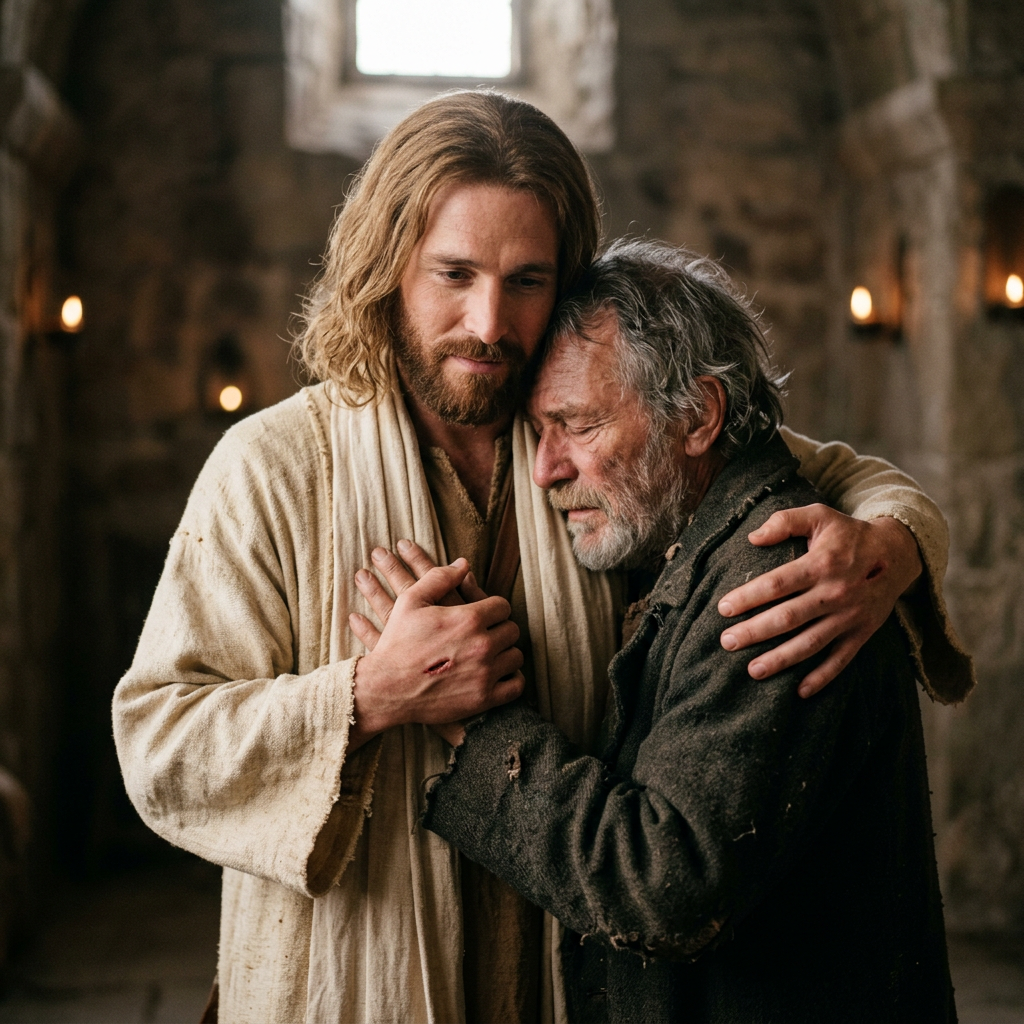
We were dead in our trespasses, but now we are alive together with Christ (Ephesians 2:5). Some people believe that when humanity sinned, God cast us away in anger, only to later call us back when we accepted Jesus, as though He arbitrarily “flipped a switch.” This view paints God as temperamental, which is inconsistent with His character. Instead, Scripture shows God could not reverse what happened, as every action in the spiritual realm has eternal significance. Instead, God provided a way to unite believers with Him through Christ, making them alive together with Him. That was the only way.
Union with Christ: The Source of Life
Through faith in Christ, believers are united with Him in the spirit and share in His life. This union is inseparable because God has joined them together (Romans 8:38–39). Adam prior to the fall had life through connection with God, but we outside of Jesus CANNOT have life. It is only through Jesus. Unlike Adam, whose righteousness depended on being connected to God as the supplier of life, believers in Christ have a deeper reality: they are one with the life-giver Himself.
1 Corinthians 15:45 (ESV) states: “Thus it is written, ‘The first man Adam became a living being’; the last Adam became a life-giving spirit.”
And this transformation has nothing to do with human effort; it is entirely based on faith in Christ. The moment you believed: You were baptized into Christ and united with Him in His Spirit (1 Corinthians 12:13, 6:17).
Through this union
You walked with Him, kept the law perfectly with Him. All the promises of the Old Covenant are yours, without the curses, because Christ kept the law perfectly (2 Corinthians 1:20). You were crucified with Him, died with Him, and were raised to resurrection life in Him (Romans 6:4–6). His death paid for all your sins—past, present, and future (Colossians 2:13–14). Also, his resurrection3 brought you into a new life, where His Spirit flows through you as a source of resurrection power (Romans 8:11).
Reconciliation Through Christ
Justification addresses being declared righteous, while reconciliation is the restoration of a relationship that was broken. It refers to the mending of the relationship between humanity and God, fractured by sin (2 Corinthians 5:18–19). Through Christ’s death, the barrier of sin is removed, and our relationship is empowered and confirmed with Him.
Our Past, Present and Future Sins are Forgiven
In Christ, all our sins have been forgiven (Colossians 2:13). All our past, present and future sins have been forgiven. It is such an amazing thing, that if we really understood it, we would leap in joy!
Footnotes
- Adam’s spirit was alive before the fall. The fact that Adam had life in him is supported by Genesis 1:26, where Adam is described as being created in the image of God, and Genesis 2:7, which states that God breathed the “breath of life” into him, making him a living being. ↩︎
- This spiritual death eventually manifested in his physical death, which took place 900 years later (Genesis 5:5). This clearly shows that what happens in the spiritual realm has ramifications into the natural. ↩︎
- Why Is the Resurrection Necessary for Justification?
The resurrection is essential to justification because it demonstrates that Christ’s work was complete and sufficient:
This is the Proof of Victory Over Sin:
“If Christ has not been raised, your faith is futile; you are still in your sins.” (1 Corinthians 15:17).
Without the resurrection, there would be no assurance that sin’s penalty was fully paid.
Affirmation of Christ’s Righteousness:
“He was declared to be the Son of God in power according to the Spirit of holiness by His resurrection from the dead.” (Romans 1:4).
The resurrection proves that Christ was sinless and that His sacrifice was accepted by God. His righteousness is the basis of our justification.
↩︎
Continue reading
Previous in the Colossians series: Does Col 2:12 Prove that Water Baptism Regenerates?
Next in the Colossians series: The Greatest Victory
Related reading:


Leave a Reply